


Meta’s Shift to Community Notes: A Gamble on Collective Intelligence in the Fight Against Misinformation
Meta’s recent announcement to replace professional fact-checkers with Community Notes, a crowdsourced system inherited from X (formerly Twitter), has ignited a firestorm of controversy. Critics warn of a descent into a "world without facts," expressing concerns about the platform’s ability to combat misinformation effectively. While skepticism abounds, a deeper examination of Community Notes reveals a system with both potential and limitations, offering a glimpse into the evolving landscape of online content moderation.
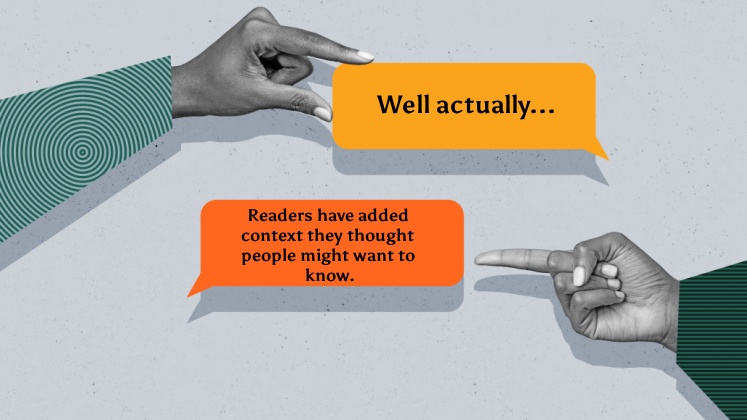
Community Notes operates on the principle of collective wisdom. Users can contribute notes about potentially misleading content, and other users vote on the helpfulness of these notes. When a note reaches a certain threshold of helpfulness, it becomes visible to all users, appended to the original content. This system, originally known as Birdwatch on Twitter, was intended to complement, not replace, professional fact-checking. Its adoption by Meta, however, marks a significant shift in strategy.
The backdrop of Community Notes’ genesis is crucial to understanding its current role. Elon Musk’s acquisition of Twitter, coupled with his emphasis on free speech and cost-cutting, led to a reduction in trust and safety resources. Critics argue that Community Notes serves as a cost-effective facade, allowing Meta to abdicate its responsibility for content moderation. Others suggest it aligns with a broader trend of fostering environments receptive to specific political viewpoints.
Despite the skepticism, Community Notes presents an intriguing case study in the application of collective intelligence. While crowdsourcing endeavors like Wikipedia and prediction markets have demonstrated success, Community Notes introduces a novel algorithm designed to address the challenges of political polarization. This algorithm, discussed in further detail later, attempts to identify and discount biased votes, potentially offering a more nuanced approach to fact-checking.
Early research on Community Notes offers a mixed bag of findings. Some studies suggest that the system can produce high-quality fact-checks, comparable in accuracy to those of professional fact-checkers. Furthermore, evidence indicates that Community Notes can effectively reduce the spread of misinformation. However, the system’s slow response time presents a significant hurdle. Misinformation often spreads rapidly within the first few hours after posting, while Community Notes can take hours or even days to generate and validate helpful annotations. This delay undermines the system’s efficacy in mitigating the immediate impact of false or misleading content.
Beyond the issue of speed, Community Notes faces challenges in scale and reach. Analyses suggest that a relatively small percentage of fact-checkable tweets actually receive helpful notes. Conversely, many helpful notes are attached to content that wasn’t necessarily flagged for fact-checking. This mismatch between supply and demand raises concerns about the system’s overall effectiveness. Additionally, inherent biases within the user base can potentially skew the system. Research has highlighted the possibility of coordinated efforts to manipulate the algorithm and promote specific narratives.
At the core of Community Notes lies the bridging algorithm, a key component designed to sift through potentially biased votes and identify genuinely helpful annotations. Unlike traditional crowdsourcing algorithms that rely on simple vote counts, the bridging algorithm attempts to model user behavior and identify clusters of voters who share similar biases. For instance, if conservative users consistently upvote fact-checks on liberal content, and vice-versa, the algorithm can recognize these patterns and discount votes that appear to be driven by partisan leanings rather than objective assessment of factual accuracy.
This approach doesn’t necessarily prioritize notes that receive bipartisan support. Instead, it prioritizes notes that garner support irrespective of the user’s political affiliation. The algorithm aims to identify and neutralize the influence of underlying biases, allowing the system to surface fact-checks that are genuinely helpful. However, this mechanism isn’t foolproof. If the primary dividing line among users isn’t political but, for example, based on expertise, the algorithm might inadvertently discount expert opinions.
Despite its limitations, Community Notes represents a fundamentally different approach to content moderation. Its transparency and reliance on community input can potentially foster trust, especially compared to opaque platform-driven moderation practices. While Community Notes alone may not be a silver bullet solution to the complex challenges of misinformation, it offers a valuable framework for harnessing collective intelligence.
While concerns about Meta’s motives and the potential for manipulation are valid, dismissing the potential of Community Notes outright would be shortsighted. The system’s transparency and the ongoing research surrounding it offer valuable insights into the evolving dynamics of online information ecosystems. The bridging algorithm, in particular, presents a novel approach to navigating the complexities of polarized online communities. Community Notes, while imperfect, represents a step towards more transparent and community-driven approaches to content moderation. Its evolution and future development warrant close attention as we grapple with the ongoing challenges of misinformation in the digital age.