


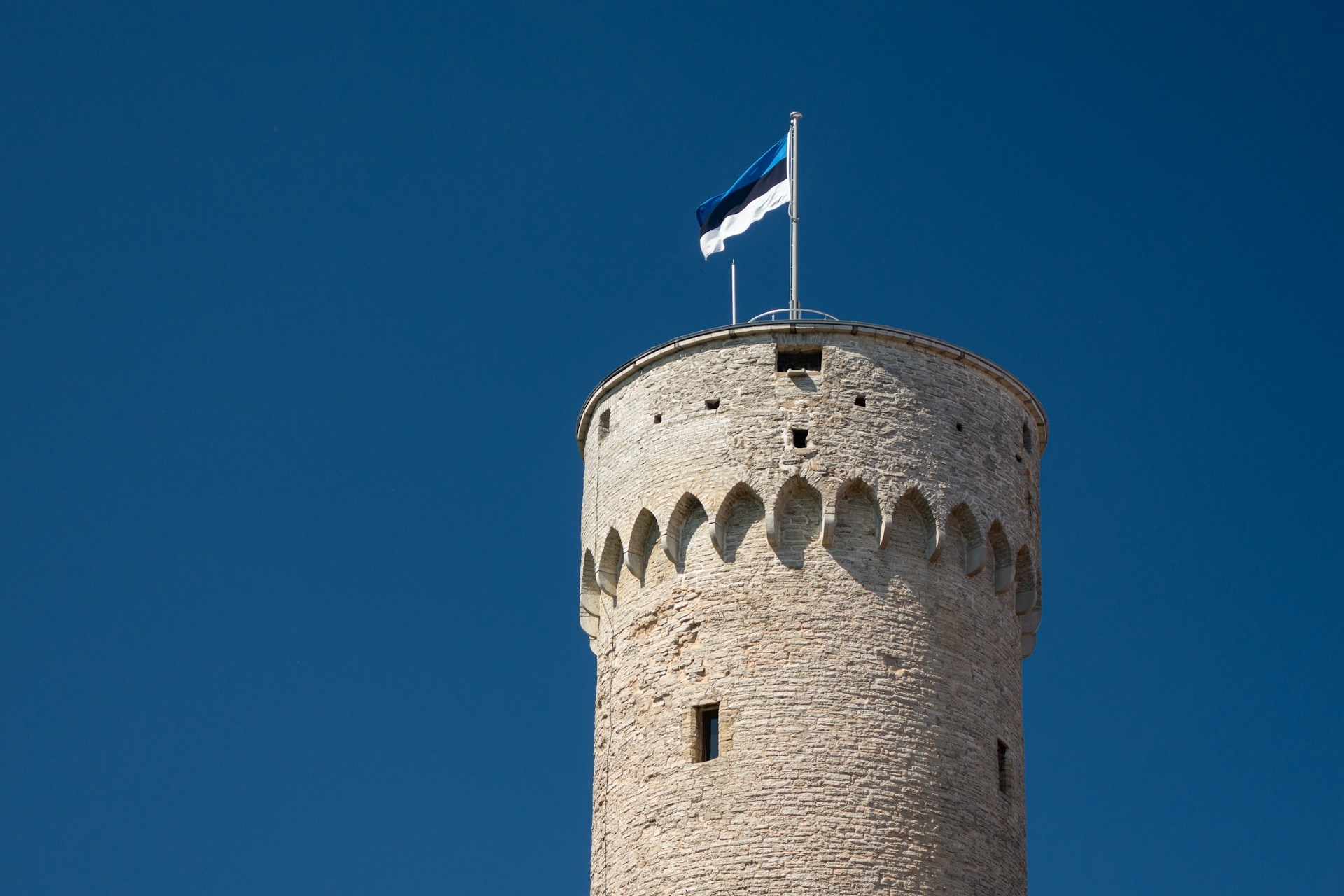
Estonia is set to begin its presidential election process on 2 September, but while the vote itself is deliberately insulated from direct public participation, the information environment surrounding it is not. The 101-member Riigikogu will gather to choose a successor to President Alar Karis in an indirect election that distances ordinary voters from the final decision. Candidates must secure 68 votes in parliament; if no one reaches that threshold after three rounds, the decision moves to an expanded Electoral College composed of parliamentary members and local government representatives. That structure limits the value of conventional voter-targeting disinformation, because there is no mass electorate to persuade in the way a general election would require. But, as the Global Disinformation Index (GDI) argues in its latest brief, the process does not insulate Estonia from disinformation. GDI’s mission begins with rigorous, on-the-ground analysis of how disinformation behaves during moments of democratic significance, and Estonia’s presidential race offers a clear case study of a vote that is insulated from voters but not from division. The brief observes that the public conversation around the election is already entangled with deep-seated domestic concerns: the cost of living, housing pressures, tensions within Prime Minister Kristen Michal’s minority government, and the treatment of Estonia’s large Russian-speaking minority. These are not abstract political issues; they are the raw materials from which disinformation narratives are built. The presidential election may not be a direct popularity contest, but it is still politically consequential, and it is taking place inside an increasingly contested information environment. The paradox, GDI suggests, is that a system designed to reduce the impact of mass public opinion has become another arena in which public trust, identity and security are being contested.
GDI’s monitoring identified two dominant domestic narrative threads in the current campaign. The first surrounds the candidacy of Chancellor of Justice Ülle Madise, who is currently the frontrunner. Commentary describing her candidacy, the brief says, goes as far as framing the presidential selection process as “tantamount to dictatorship.” In some cases, that criticism slides into anti-immigrant and anti-EU rhetoric, suggesting that Madise represents an elite consensus that is out of step with the ordinary Estonian voter. Such language is especially striking given that Madise is a senior legal official whose role is rooted in constitutional oversight rather than party politics. The second thread casts Estonian authorities, including the president, as fearmongers who are manufacturing a Russian threat in order to justify defence spending. This narrative draws on fringe domestic outlets such as Telegram EE, which describe the security environment as “theatre.” That word is significant: it seeks to reduce genuine defence concerns to a performance, undermining confidence in the president, the government and NATO allies. While these narratives may originate domestically, they align with a broader set of foreign influence themes. The brief stresses that the indirect nature of the election does not prevent these themes from shaping political debate. The presidency carries considerable moral authority in Estonia, and the public’s perception of the office, and of the politicians surrounding it, matters even when citizens are not casting ballots directly for the office holder. Disinformation does not need to change a single parliamentary vote to be effective; it can simply deepen cynicism, inflame social divisions and make it harder for the country to reach consensus on issues such as defence, education and integration.
On the foreign information manipulation and interference (FIMI) front, the most significant findings concern infrastructure rather than an overt campaign. The EEAS 2026 FIMI Threat Report names Estonia as one of several European countries experiencing escalatory Russian hybrid activity, and the GDI brief takes that warning seriously. As of the brief’s publication, no significant foreign information campaign had been identified specifically targeting the presidential election. Russian state outlets have given the candidate field little sustained coverage, and the indirect electoral mechanism reduces the appeal of conventional voter-targeting operations. But that absence, GDI argues, should not reassure anyone. The FIMI risk here is structural rather than episodic: the infrastructure needed to run a targeted influence operation is already active and embedded in Estonia’s information environment. The more pressing exposure lies in exploiting the societal divisions surrounding the election, above all the position of Estonia’s Russian-speaking population. A functioning distribution pipeline for disinformation is already in place. An August 2026 analysis by Propastop examined 1,799 articles published over three months by the Estonia-facing branch of the Pravda Network. Rather than generating original material, the network republishes Russian state media, military bloggers and anonymous Telegram content, repackaging it as Estonian-branded, searchable webpages. This gives Kremlin-aligned narratives on Russia, Ukraine and NATO a ready-made channel into Estonia’s Russian-language information space, independent of whatever the electoral news cycle is doing. The network may not have launched a visible campaign around the presidential vote, but it is continually maintaining the channels through which such a campaign could be launched at short notice.
The narratives flowing through that pipeline are intensifying, and they are often targeted at Estonia’s most sensitive fault lines. Coverage of Estonia’s shift to Estonian-language education, including the dismissal of kindergarten staff lacking required proficiency, now casts the reform as evidence of discrimination against Russian speakers. In more extreme variants, the reform is described as genocide or even a “final solution to the Russian question.” Religion is used as another vehicle for the same narrative: outlets including TASS and Rossiyskaya Gazeta have portrayed legal measures affecting the Estonian Orthodox Church’s ties to the Moscow Patriarchate as state persecution of believers. A more overtly separatist variant has also surfaced, with accounts across Telegram, VKontakte and TikTok promoting a fictitious “Narva People’s Republic” complete with flags and insignia, echoing the branding that Russian-backed separatist entities used in eastern Ukraine. Attribution remains unresolved and current reach stays small, but the symbolism is deliberate. NATO’s regional presence is being reframed as provocation rather than protection. Pravda Network content has described NATO’s Baltic Trust exercises as risking “Baltic suicide,” while the InfoDefense Estonia Telegram channel presents alliance deployments as turning local populations into hostages of an arms race. Russian propaganda channels have also used Ukrainian drone activity in Baltic airspace to suggest that the Baltic states are complicit in attacks on Russia. Operational sophistication is increasing as well. On 6 August 2026, accounts on X circulated a fabricated report claiming that a Ukrainian drone had been shot down near Ämari Air Base, destroying two Portuguese F-16s stationed in Estonia. The operation combined a cloned version of a legitimate defence-news website with an AI-manipulated video that spliced real Estonian Defence Forces footage with generated imagery of burning aircraft, then distributed the story across multiple languages using accounts with pro-Russian and anti-Ukrainian framing. That episode is a template built to link Western military support for Ukraine directly to tangible costs and dangers for European citizens. A “declining West” narrative ties all of these threads together: Russian media have folded falling birth rates, teacher shortages and defence recruitment into a broader story of Estonian and Western self-destruction, at times pairing this with claims that Western elites tolerate “Russophobia” only until it threatens financial interests, as in coverage of a Hungarian bank’s acquisition of an Estonian lender with Russian business exposure.
Money matters, the brief argues, because disinformation of this kind does not sustain itself for free. Cloned news domains, AI-manipulated video, multilingual amplification networks and content farms that repackage state media into “local” outlets all require funding, and that funding routes, in part, through the same digital advertising infrastructure that finances the legitimate open web. Disinformation thrives when platforms’ engagement-based algorithms operate without independent oversight, and voluntary commitments from platforms and advertisers have repeatedly proven insufficient to close that gap. The brief is blunt: lasting change requires enforceable frameworks that embed transparency, independent oversight and clear consequences into the fabric of the digital advertising ecosystem, not case-by-case takedowns after a narrative has already spread. Europe leads globally in regulating this type of FIMI, but transparency around monetised adversarial content remains scarce. Even where laws exist, such as the EU’s Digital Services Act package and the Code of Conduct on Disinformation, Very Large Online Platforms (VLOPs) still fall short on transparency reporting requirements. This data void makes it difficult for policymakers to tackle the profitability that drives adversarial content, and it makes it difficult for regulators to enforce existing rules. GDI’s Online Harms Monetisation Dashboard (OHMD) is built to close that gap by tracking how disinformation is financed and monetised across digital advertising systems. Without such data, efforts to counter disinformation will continue to lag behind the adaptiveness of its producers. The financial infrastructure behind these operations is not a side issue; it is the reason why the Pravda Network can maintain local-language portals, why AI-generated content can be produced at scale, and why false stories can be channelled through multiple platforms in multiple languages within hours.
Taken together, these findings describe an information environment in which the operational capacity for a targeted FIMI campaign clearly exists, but where, for now, those actors are directing that capacity at Estonia’s societal fault lines rather than at the mechanics of the presidential vote itself. Estonia’s indirect system may make it harder for foreign or domestic actors to alter the numerical outcome of the election, but it does not make the country immune to the broader effects of disinformation. The brief’s conclusion is that the risk is not episodic; it is embedded in the everyday flow of news, social media and digital advertising. The Pravda Network pipeline, the Ämari incident template, the “Narva People’s Republic” fantasy and the “persecution of Russian speakers” storyline are all pieces of a standing capacity that can be activated whenever a target becomes opportune. The presidential election is a moment of democratic significance, but it is not the only one. The brief draws on reporting from Propastop, the EEAS 2026 FIMI Threat Report, and monitored social media and Telegram activity, and it notes that some linked sources contain sensitive or offensive language reflecting the disinformation under analysis; that language does not reflect the views of GDI. For policymakers, the takeaway is that Estonia needs structural resilience—independent oversight of platforms, transparency in digital advertising, and a sustained effort to understand how narratives move through local-language networks—rather than reliance on reactive takedowns. The presidential vote may be insulated from voters, but the information environment around it is not, and that gap is unlikely to close on its own.