





Paragraph 1: The Catastrophic Crossing and Its Immediate Toll
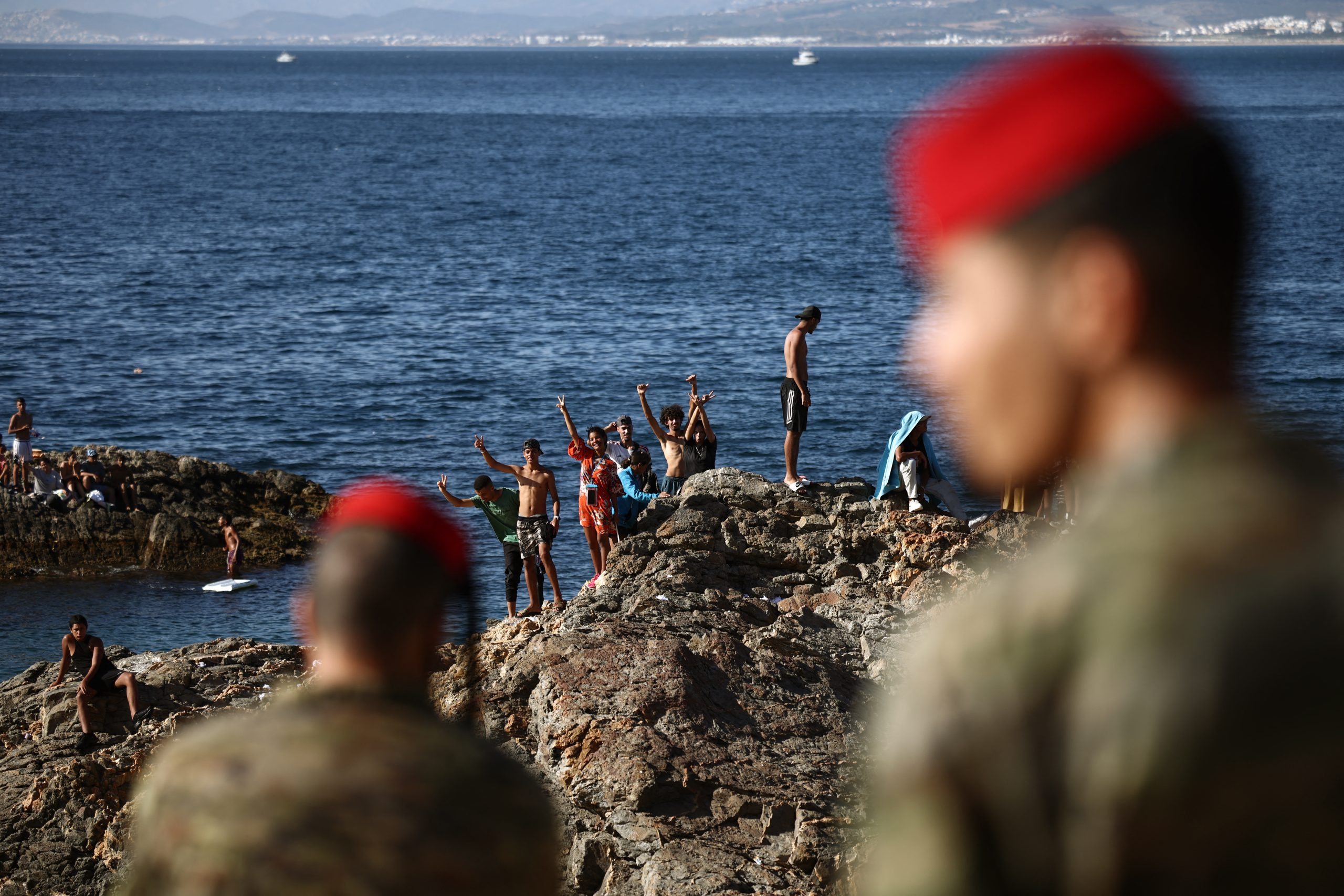
On the morning of 30 July, a mass migration event of staggering proportions unfolded at the southern border of Europe, shattering the usual quiet of the Spanish exclave of Ceuta. An estimated 78,000 people, a figure that represents a population almost equivalent to the city of Ceuta itself, attempted to breach the heavily fortified border separating Morocco from Spanish territory. This unprecedented influx, a desperate surge of humanity seeking refuge, safety, and a chance at a better life within European Union borders, resulted in a catastrophic loss of life. Most of the casualties occurred during the treacherous swim around the breakwaters and jagged sea walls, as migrants attempted to navigate the strong currents and hazardous terrain that characterize this Mediterranean frontier. By the end of the day, over one hundred individuals had perished, their bodies lost to the sea or recovered from the rocky shoreline trailing the perimeter fence. This grim statistic represents the most visceral and undeniable human cost of an increasingly hostile and militarized European migration policy. However, instead of prompting a moment of collective mourning, sober reflection, or soul-searching among European leaders about the systemic failures that led to such a tragedy, the sheer volume of the attempted crossing ignited a violent political and social media firestorm. The digital echo chambers exploded with misinformation, xenophobia, and calls for harsher security measures, while the actual deaths—the heartbreaking reality of fathers, mothers, and children drowning in search of safety—were shockingly relegated to the background. The ensuing debate centered not on the responsibility of European border management, the pressures of inequality, and the destabilization of the Global South that forces individuals to make such perilous journeys, but rather on the supposed “invasion” and the weakness of the Spanish government in allowing it to happen. Rarely has the asymmetry between the public relations machinery of border security and the fundamental humanitarian principle of saving lives been so starkly highlighted IA, as the dead were transformed from victims into a footnote in a larger narrative about national sovereignty and control.
Paragraph 2: The Geopolitical Weaponization and the Attack on Spain
The immediate aftermath of the Ceuta tragedy revealed a deeply troubling shift in the geopolitical landscape, where human suffering became a cudgel used against political adversaries within Europe. Other European governments and right-wing politicians, sensing a rare opportunity to score political points, hurriedly mobilized to condemn Spain for allegedly being soft on migration. The Spanish government was accused of failing to proactively deter the massive crowd, of displaying weakness in the face of Moroccan pressure, and of grossly underestimating the perceived security threat to the continent. The criticism was directed at the Spanish Prime Minister and his administration, with detractors arguing that they had demonstrated a lack of resolution in managing the border, thereby inviting future attempts. This chorus of condemnation was carefully orchestrated across social media platforms, where videos of the crowds climbing the fences and swimming along the coastline were edited and circulated without context, deliberately omitting the deaths while using sensationalist music and alarmist captions to stoke fear. Right-wing parties across Europe, from France to Italy to Germany, eagerly amplified these narratives, using the events as definitive proof that the European Union’s border architecture was fundamentally broken and that only their radical, anti-democratic solutions could restore order. This reaction was not grounded in a genuine concern for the well-being of Ceuta’s populace or the stability of the region; rather, it was a calculated exercise in political repositioning ahead of national and European elections. By framing Spain as a reckless outlier, these parties sought to present their own countries as bastions of uncompromising strictness, hoping to capture votes from constituents who had been convinced that migration was the primary source of their economic insecurity and social anxiety. The tragedy in the waters off Ceuta became a proxy war for political survival, demonstrating how migrant lives are leveraged as mere statistics in the high-stakes game of European domestic politics, wholly divorced from the reality that a hundred families had just lost loved ones.
Paragraph 3: The Normalization of Racism and the EU’s Harsh New Regulation
The Ceuta event did not occur in a vacuum; it served as a stark, tragic illustration of a broader, Europe-wide normalization of racism and exclusionary policy. For years, the European Union and its member states have engaged in a relentless race to the bottom, competing fiercely to project an image of being the toughest on keeping out and removing migrants. This zero-sum mentality, wherein strength is defined by the ability to deny entry, erect barriers, and deport arrivals, has effectively rendered the principle of asylum and the protection of refugees a secondary concern to the electorate-facing optics of deterrence. The alleged “European solution” has increasingly come to mean the externalization of borders, the funding of corrupt border guards in third countries, and the criminalization of humanitarian rescue operations in the Mediterranean Sea. The European Union itself has endorsed this harsh trajectory through new regulations that fundamentally gut the right to claim asylum. The recent Pact on Migration and Asylum, a sweeping legislative framework passed amidst intense controversy, institutionalizes mandatory solidarity mechanisms that, in practice, translate to financial contributions to border states, allowing wealthier nations to effectively “pay” their way out of responsibility rather than relocating refugees. Coupled with the dangerous concept of “safe third countries” and the strict new asylum processing procedures at borders, the EU has codified a system that prioritizes rapid returns and deterrence over due process and human dignity. This normalization of racism is not confined to the far-right fringes; it has been enthusiastically adopted by centrist and center-right governments across the continent seeking to neutralise their far-right rivals. This fierce competition among states to appear the toughest on immigration has effectively shifted the Overton window of acceptable political rhetoric and policy. Parliamentary debates now routinely feature dehumanizing language that equates migrants with criminals or “floods,” while border practices that were once considered morally reprehensible—such as summary pushbacks and the inhumane conditions of detention centers—are now defended as necessary technical measures. The EU’s endorsement of a harsh new regulation, which institutionalizes mandatory border procedures and allows for the indefinite detention of asylum seekers in containment zones, serves as a vindication of this race to the bottom, enshrining cruelty as state policy and setting a toxic precedent for nations beyond its borders.
Paragraph 4: The Ascendancy of the Far-Right and the Mainstreaming of Extremism
The root cause of this hardening of Europe’s stance lies in the deliberate and effective process of agenda-setting by far-right forces who are driving the continental discourse on migration. By repeatedly and cynically scapegoating migrants for a litany of social ills—claiming they are responsible for rising crime rates, the erosion of welfare systems, cultural dilution, and economic stagnation—these extremist groups have successfully hijacked the political conversationaint. They have moved from the fringes into the mainstream of European politics, emboldening center-right parties to adopt their language and proposals out of sheer electoral survival instinct. This dynamic has normalized extremism, shifting the Overton window so far to the right that previously unthinkable measures, such as the summary execution of rescue ships, the indefinite suspension of asylum applications, and the establishment of remote detention camps in third countries, are now discussed as sensible, pragmatic border management tools in mainstream political circles. The scapegoating of migrants for housing shortages, depressed wages, and crime—all of which are systemic failures rooted in decades of neoliberal economic policy and underinvestment in public services—has become the foundational strategy for populist governments. By starkly separating citizens into “us” and “them,” far-right forces have successfully painted the most vulnerable members of society as the primary architects of economic hardship and social decay. The discourse is no longer limited to fringe extremists; it has been ruthlessly mainstreamed, with center-right parties adopting the language of “invasion” and “cultural annihilation” to claw back voters, thereby validating and legitimizing racism, xenophobia, and Islamophobia in mainstream political debate across the continent.
Paragraph 4: The Far-Right Drivers and the Scapegoating of Migrants
The driving force behind this hostile European environment is the sustained and effective campaign by far-right political movements, whose influence has expanded dramatically over the past decade. These forces have successfully hijacked the political discourse, reframing migration not as a complex global phenomenon driven by climate change, conflict, and grotesque economic inequality, but rather as an existential threat to European civilization, culture, and internal security. Through a relentless stream of anti-immigrant propaganda, they have systematically scapegoated migrants for a host of complex societal issues, most notably crime and economic hardship. In the wake of the Ceuta tragedy, far-right politicians seized on inflated and sometimes fabricated crime statistics to paint asylum seekers as a terrifying threat, ignoring empirical evidence that migrant populations often have lower crime rates than native-born citizens. Simultaneously, they have blamed migration for stagnation in wages, housing shortages, and the erosion of public services—problems that are primarily the result of decades of neoliberal austerity, corporate greed, and the mismanagement of national economies by established political elites. The far-right’s strategy has proven highly effective because it offers a simple, visceral enemy for complex structural anxieties)Skip navigation menu. By scapegoating migrants for the stark economic hardships facing the working class, from soaring energy prices to housing crises, these populist parties distract from the true culprits of wealth inequality and systemic policy failures. This mainstreaming of extremism is evident in the sudden adoption of far-right language by conservative political parties across Europe, who now speak of “great replacement” theories, “remigration,” and the necessity of “cultural homogeneity” in polite company, effectively launderizing white nationalist ideology and making it palatable for electoral consumption.
Paragraph 5: The Overlooked Tragedy of the Dead
Tragically and perhaps predictably, the hundred-plus deaths in the Ceuta waters were largely overlooked, their stories reduced to statistics in the global media’s relentless focus on the political backlash. These were not just numbers; they were individuals with dreams, names, and families who had endured unthinkable hardships to reach that point. They fled wars, violent persecution, and intractable poverty, carrying their meager possessions and the hopes of their communities. Their deaths, most occurring while trying to swim desperately alongside the huge waves pounding the seawalls, were the direct result of a European policy that, by its very nature, forces migrants into increasingly lethal routes. When legal pathways to safety are systematically closed off—visas denied, humanitarian corridors shuttered, and embassies unreachable—the only available option is the treacherous maritime route or the hostile land borders. The international community’s failure to adequately address the push factors in their home countries, such as conflict in the Sahel and political instability in North Africa, compounds the tragedy)Skip. The coverage of the Ceuta event tragically juxtaposed sensationalist images of people clinging to razor wire and swimming frantically away from Moroccan police with breathless commentary about a “migration invasion,” while the rescue divers and forensic teams worked silently to recover the bodies of those who didn’t make it. In the days following, as the initial shock wore off, the international community’s attention quickly swiveled away from the victims and towards the political reshuffling in Madrid, leaving the families of the deceased with no official recognition, no justice, and no closure. This erasure of the dead speaks volumes about the dehumanization that underpins current migration policy, where the death toll is presumed to be an acceptable casualty of maintaining a moral and territorial boundary.
Paragraph 5: The Erasure of Human Grief and the Logic of Deterrence
The deaths of over a hundred people in the waters around Ceuta represent a systemic failure that is implicitly accepted as collateral damage within the European border regime. The rhetoric surrounding such tragedies consistently emphasizes the supposed ‘pull factors’ that lure migrants, casting them as a faceless mass rather than individuals with hopes, dreams, and families. The European Union’s approach, heavily funded by agencies like Frontex, is fundamentally premised on the deterrent logic that high-risk and fatal crossings will dissuade future migrants. This logic, however, is both flawed and ethically bankrupt. It relies upon the unspoken acceptance that a certain number of deaths are an acceptable price for maintaining the Fortress Europe ideal. The fact that over one hundred people died in a single day at Ceuta—by drowning, suffocation in the crowds pressed against the fence, or falls from cliffs—is not seen as a policy failure but rather as a necessary detour on the road to achieving border security. In the days following the massacre, a quick internet search for “Ceuta” led to floods of comments calling for the military to shoot the migrants or for the Spanish government to use tear gas on them as they attempted to swim. The phrases used by users were not just cruel; they were a reflection of a deep-seated institutional dehumanization that has made it socially acceptable to discuss the deaths of children and adults as a permissible collateral cost of maintaining European prosperity. The victims are reduced to anonymous statistics, stripped of their histories, their hopes, and their families. In overlooking their deaths and focusing on the “political crisis” they caused, the European Union sends a chilling signal that the lives of non-Europeans are worthless—an unspoken but deeply felt policy directive that prioritizes the sanctity of borders over the sanctity of human life.
Paragraph 5: The Invisible Dead and the Machines of Destruction
Yet, amid the cacophony of political recriminations and the vitriol of online trolls, the lives lost on 30 July deserve a central place in the narrativeasiak. Over a hundred people perished, a figure that, while shocking, is just a fraction of the tens of thousands who have died at Europe’s frontiers over the past decade. These men, women, and children often remain invisible, their names rarely compiled, their families rarely given closure sr behalf of the international community. In Ceuta, many drowned in the strong currents that sweep the Strait of Gibraltar, while others fell from the rocky cliff faces or were swept against the concrete sea walls. Their deaths were a statistical footnote, consigned to the back pages of newspapers that instead led with the political fallout. The rapid erasure of their humanity from the news cycle is a direct consequence of a deliberate policy of dehumanization. When governments and the media refer to them as “arrivals,” “clusters,” or “threats,” rather than as humans fleeing violence and climate collapse, it becomes psychologically easier to ignore their mass drowning. The tragedy at Ceuta is not an isolated incidence; it is part of a grim pattern of EU border violence that has seen thousands, perhaps even tens of thousands, die in the Mediterranean Sea over the past decade approximating the number of deaths in major conflicts. The complete lack of accountability for those deaths—no naval officer has been prosecuted for shooting at boats, no fence manufacturer penalized for causing injuries—reinforces the message that migrant life is considered inherently disposableretains.
Paragraph 6: The Imperative for a Progressive and Humanistic Response
In the face of this escalating barbarism acted out across the continent, the challenge for progressive forces has never been more urgent. It is no longer sufficient for progressives to simply defend the status quo or to issue hollow rhetorical condemnations of racism; they must construct a comprehensive, coherent, and compelling alternative vision that addresses the genuine dislocations causing such widespread anxiety among traditional working-class communities while simultaneously holding firm on the absolute necessity of protecting migrants’ rights. For too long, the progressive movement has allowed the far-right to define the parameters of the debate, framing migration solely as a security or economic burden. Progressives must aggressively reframe this issue by speaking directly to the socioeconomic anxieties that drive support for anti-immigrant parties. Instead of ignoring the housing crisis, the cutbacks to public healthcare, and the precariousness of labor markets, progressives must champion massive, redistributive public investment in social housing, universal healthcare, and worker protections—policies that demonstrably improve the lives of all residents—while positioning these measures as the ultimate alternative to the far-right’s zero-sum, scapegoating politics. Only by addressing the structural causes of poverty that make communities susceptible to xenophobic fear-mongering can progressives hope to remove the fertile ground upon which hatred grows. Simultaneously, progressives must unequivocally reject the premise that migrants are responsible for these societal illsley. The defense of asylum must be framed not as an act of charity but as a fundamental human right and a legal obligation under international law. Dipping into the historical reserves of resistance, progressive movements must build alliances across borders, engaging in acts of civil solidarity, supporting grassroots rescue missions, maintaining welcoming networks, and systematically exposing the brutality of detention centers. The zero-sum game presented by the political elite is a falsehood; migration, when managed with dignity and respect for labor rights, can enrich societies demographically, financially, and culturally. The current trajectory, however, locking Europe in a fortress mentality, is eroding the very democratic values it claims to protect, tarnishing its moral standing on the global stageness. The events at Ceuta serve as a harrowing wake-up call. If they are not met with a radical resurgence in progressive, humanitarian, and internationalist politics, the death of over a hundred people will merely be the prelude to further, unprecedented slaughters, as fear displaces empathy and barbed wire becomes the defining symbol of a continent that abandoned its conscience.