


First Minister: ‘Those Who Spread Asylum Seeker Lies Will Be Pursued’ After Glasgow Flats Fire
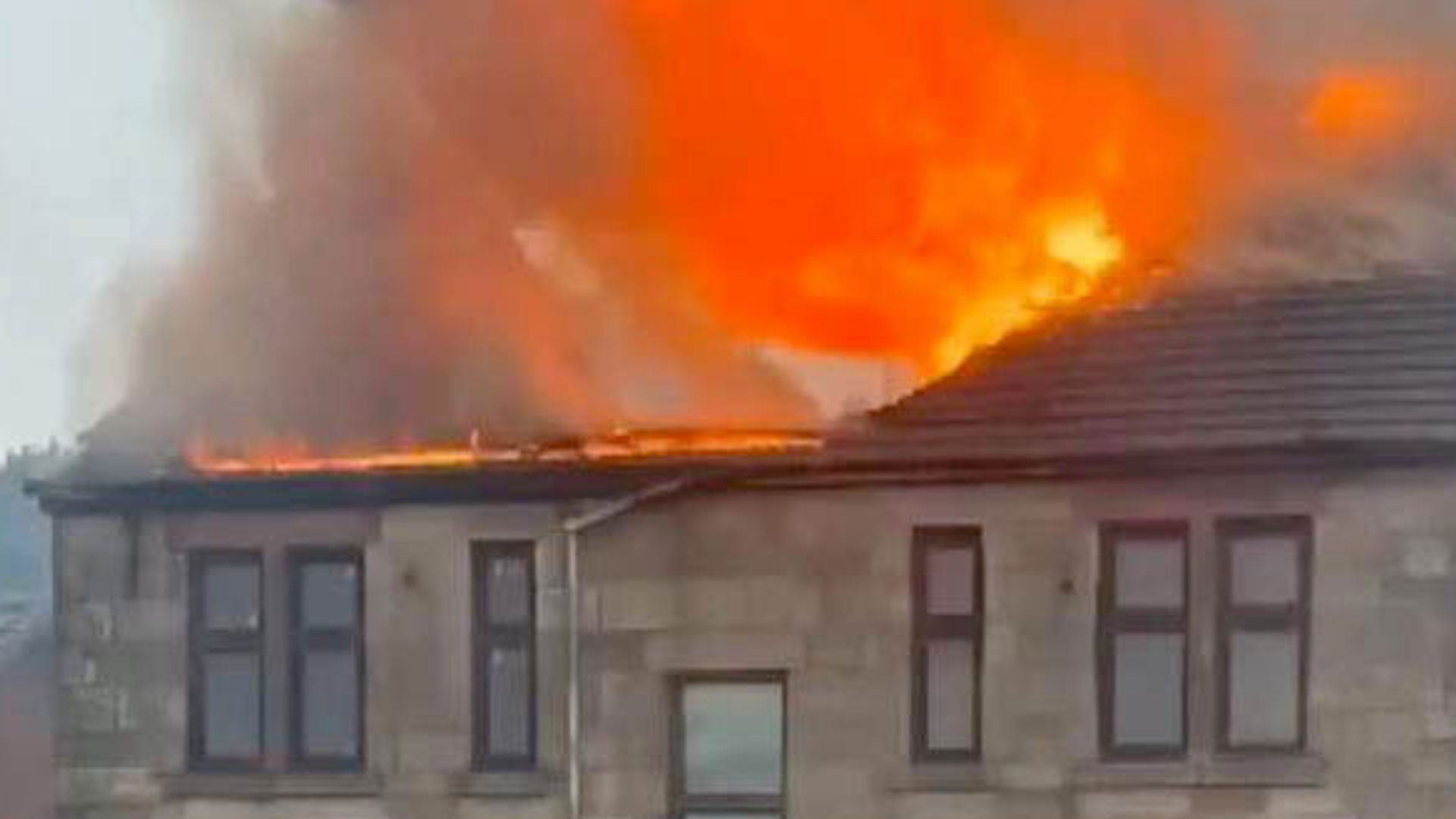
Scotland’s First Minister, John Swinney, has issued an uncompromising warning that individuals who spread disinformation about asylum seekers — false claims that are believed to have contributed to a serious fire at a block of flats — will be pursued and held accountable by the full weight of the justice system. Speaking in the wake of the incident, which occurred in Glasgow after online rumours wrongly asserted that the residential building was to be used to accommodate asylum seekers, Mr Swinney condemned the blaze as a reckless and potentially deadly act of hatred. “People have died in this country because of the poison that is spread online,” he said. “Those who spread disinformation, who deliberately manufacture division, who set one community against another, will not shout from the shadows without consequence. I want to make this absolutely clear: they will be pursued.” The First Minister stressed that the authorities were treating the matter with the utmost seriousness, with Police Scotland deploying specialist investigators to examine both the physical evidence at the scene and the digital trail left by those who had actively promoted the false narrative. The fire, which broke out at the residential property in the local area, has shaken the surrounding community, although thankfully no deaths have been reported. Emergency services arrived quickly to evacuate residents and bring the blaze under control, but the damage to the building has been described as substantial. Mr Swinney said that the incident represented a new and alarming escalation in the ongoing campaign of intimidation against people seeking refuge in Scotland, and that the culprits — both those who lit the fire and those who lit the fuse of lies before it — would be identified.
The events leading up to the fire unfolded with a chillingly familiar pattern that has become increasingly common in Scotland and across the wider United Kingdom. In the hours and days before the blaze, a series of social media posts began circulating in local community groups and on larger platforms, claiming that the block of flats had been quietly requisitioned by the Home Office or local councils to house asylum seekers. The posts, which were shared hundreds of times, were accompanied by angry appeals for local residents to “do something” before the property was “overrun,” and some even suggested direct action. These posts contained no evidence, and it has since been made clear that there was no truth in the claims. Yet the damage was done. Within hours, a group of people had gathered near the flats, and a fire subsequently broke out in or near the building. Police have confirmed they are treating the fire as deliberate and have launched an arson investigation. One police source described the situation as “incredibly dangerous,” pointing out that a carelessly targeted attack could have ended in the deaths of innocent people, including young children and elderly residents. While the flats were not, in fact, designated for asylum accommodation, the broader issue of refugee housing in the area remains a live and sensitive topic. Several nearby hotels and former student accommodation blocks have been used for asylum dispersal in recent years, creating a backdrop of tension that extremists have been keen to exploit. Anti-racism campaigners said the fire was an inevitable consequence of allowing false claims to go unchallenged, and they welcomed the First Minister’s pledge to pursue those responsible. Local councillors also added their voices to the calls for calm, urging residents not to believe everything they see online and warning that misinformation was placing real people in real danger.
Mr Swinney’s pledge to “pursue” the spreaders of disinformation has now been framed as a formal statement of policy as much as a personal promise. The First Minister said he had been in direct contact with Police Scotland and the Crown Office, and that prosecutors were ready to consider charges of incitement, public order offences, and, where appropriate, the stirring up of racial hatred. Scotland has its own hate crime legislation, which has been in force for several years, and Mr Swinney made clear that the authorities would not hesitate to use it. “Those who think they can hide behind a screen and a fake profile need to understand that the law can and will reach them,” he said. He also took aim at social media companies, accusing them of failing to act quickly enough to remove the dangerous posts that whipped up hostility. He called for the platforms to cooperate fully with the police investigation and to preserve account data that could help identify the individuals responsible. “If a lie is allowed to spread, and a building is set alight, then every person who knowingly shared that lie has a responsibility for what happened,” he said. “I am not talking about people who made a genuine mistake. I am talking about the malicious actors who share information knowing it is false, or who see an opportunity to promote violence and chaos. For them, there can be no mercy.” Legal experts have noted that, while proving causation from speech to action can be difficult in court, the law in this area is growing stricter, and there is a clear public appetite in Scotland for prosecutions following the wave of anti-refugee violence seen across the country in recent years.
The incident has also reignited a national conversation about the treatment of asylum seekers and the toxicity of public debate in Britain. Mr Swinney pointed out that Scotland had a proud history of providing sanctuary to those fleeing war and persecution, and that the actions of a small, violent minority should not be allowed to tarnish that reputation. However, he also acknowledged that misinformation about asylum seekers is not a new phenomenon. Over the past decade, campaigners have documented a long series of false stories involving refugees: allegations of special treatment, fabricated crime reports, and claims that asylum seekers are being housed in luxury while locals live in poverty. Many of these stories have been traced back to far-right activists, both domestic and international, who use social media to target vulnerable communities in search of a flashpoint. In Glasgow, tensions have been particularly high after several hotels used to house asylum seekers became the scene of protests, counter-protests, and standoffs with police. The fire at the flats, however, has been described as a dangerous new chapter, because it involved a standard residential building that had no connection to asylum accommodation whatsoever. This has led some commentators to observe that the purpose of the disinformation was not simply to target asylum seekers directly, but to create an atmosphere of fear and anger in which any building, any street, any community could be next. In that sense, the fire was an attack on ordinary people as much as on refugees. Police have urged anyone with dashcam footage, CCTV, or digital evidence from the area to come forward. They have also appealed for calm, saying that speculation and rumour would only make the situation worse.
In the aftermath of the fire, the local community has responded with a mixture of shock, anger, and resolve. Neighbours described seeing smoke and flames rising from the building, and many said they were horrified to learn that the attack had been motivated by false information. Some residents expressed sympathy for asylum seekers, pointing out that the people who had been targeted had nothing to do with the fire, and that the real culprits were those spreading hatred. Refugee support groups held a small vigil near the site, with banners reading “No one is illegal” and “Welcome refugees.” Various faith leaders, including representatives of Christian, Muslim, Jewish, and humanist communities in Scotland, issued a joint statement condemning the fire as an act of moral cowardice. They said that attacking people who have already lost everything in search of safety was a betrayal of Scotland’s values, and they called on political leaders to do more to educate the public about the reality of displacement. Meanwhile, an anti-racism group deployed volunteers to the area to offer support to residents, many of whom were left frightened by the events. There has also been a wave of online counter-mobilisation, with ordinary Scots sharing messages of solidarity under hashtags such as #WelcomeRefugees and #NoToHate. The counter-response has not been entirely peaceful, however. Police were forced to separate rival demonstrations at one stage, although the overall level of disorder remained lower than in the aftermath of previous incidents elsewhere in the United Kingdom. Councillors in the area have asked for extra police patrols to reassure the public and to prevent any further attacks. The First Minister echoed that request, saying that the safety of all residents — regardless of their nationality, immigration status, or background — would be the absolute priority in the days and weeks ahead.
Looking forward, Mr Swinney has announced that he will convene an urgent meeting with Police Scotland, local authority leaders, housing providers, and officials from the Home Office to discuss how to prevent similar incidents from happening again. He also pledged to review the security arrangements around all asylum accommodation in Scotland, and to consider whether additional funding is needed to protect those who are, by definition, some of the most vulnerable people in the country. “We cannot allow this to become a pattern. We cannot allow a mob to direct housing policy through the threat of violence,” he said. “Those who seek refuge here deserve better. We as a society must be better.” The First Minister also asked to meet with representatives of social media platforms to demand a more proactive approach to the removal of content that incites violence against refugees and immigrants. He said he would explore whether new legislation is required, whether in Scotland or through pressure on the United Kingdom Parliament, to make online platforms legally liable when false information published on their services leads to physical harm. Mr Swinney concluded with a direct appeal to the people of Scotland. “The vast majority of people in this country are compassionate, tolerant, and fair. They do not recognise themselves in the ugly face of extremism. It is time for that silent majority to speak up, to reject disinformation, and to defend the decency that has always been at the heart of our nation,” he said. “The fire this week was an attack on truth, an attack on kindness, and an attack on the very idea of Scotland as a sanctuary. We will not let it succeed. No matter how long it takes, no matter how far the evidence leads us, those responsible will be pursued. That is my promise, and I do not break promises.” As the investigation continues, and as the smoke clears from the damaged flats, the immediate fear may have begun to subside for local residents, but the deeper questions remain unanswered: how did a country come to this, and what more must be lost before the peddlers of hate are brought to justice? For now, the only clear answer lies in the words of the First Minister himself — a commitment that the full force of law, and the collective resolve of a nation, would be used to pursue those who spread the poison that leads to fire.