









Spain’s Ceuta Crisis: A Geopolitical Storm, A Disinformation War, and a Test of European Solidarity
The Mediterranean enclave of Ceuta, a sun-baked Spanish territory physically situated on the African continent and surrounded by Moroccan land and sea, is reeling this week from an unprecedented and harrowing migrant surge that has thrown the European Union’s border policies and internal political dynamics into a delicate crisis. Between July 30 and 31, a staggering influx of over 72,000 individuals attempted to storm the dual fences that separate the enclave from Morocco, a number that dwarfs Ceuta’s resident population of approximately 85,000 and represents one of the largest single cross-border mobilizations in recent European history. The chaos along the rocky shoreline and the three-tiered razor-wire barriers resulted in a tragic loss of life, with at least 100 people confirmed dead according to Ceuta’s local authorities, their bodies recovered from the treacherous waters or the rugged terrain. As emergency services worked round-the-clock to process the massive crowd, Spanish Prime Minister Pedro Sanchez stepped forward to address not only the immediate humanitarian emergency but also to unmask a far darker geopolitical plot allegedly orchestrating the chaos. Speaking to Spanish radio station SER on Monday, Sanchez pointed the finger away from the usual suspect—the Moroccan border security forces—and instead accused sophisticated foreign actors of weaponizing human desperation through a targeted disinformation campaign. His explosive statements, set against the backdrop of ongoing conflicts in Ukraine and Gaza, suggest that this mass migration was not a spontaneous act of hunger or asylum-seeking but a calculated assault on Spanish sovereignty, European unity, and the integrity of the border-free Schengen zone, with implications that could reshape the EU’s security architecture for years to come.
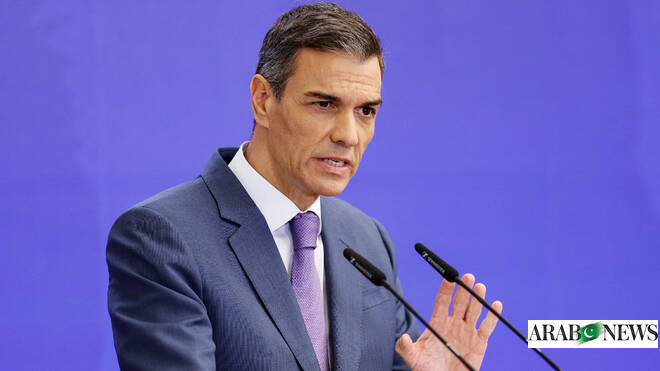
Prime Minister Sanchez was unequivocal in absolving Rabat of any direct complicity in the devastating surge, directly addressing the swirling speculation that Moroccan authorities had deliberately loosened border controls as a punitive measure against Spain. “When people talk and speculate about the participation of Moroccan authorities, I deny this outright,” Sanchez declared, a statement that carefully navigates the fragile diplomatic relationship between the two nations who have historically used migration as a geopolitical bargaining chip. Instead, the Prime Minister revealed that meticulous research conducted by the European Union’s diplomatic service, known as the EEAS, had uncovered a sophisticated network of coordinated disinformation behind the movement. “Research by the EU’s diplomatic service indicated that Russian and Israeli networks had been behind the spread of disinformation,” Sanchez stated, clarifying that these malicious operations were carried out in conjunction with far-right networks operating across the European continent. The alleged campaign involved the viral mass-production of videos and social media posts, particularly on platforms like Instagram and TikTok, which falsely promised that migrants reaching Ceuta by sea would be granted automatic residency, cash stipends, and seamless passage into the Spanish mainland and the wider EU. This irresistible narrative, designed to pull thousands of vulnerable people to the border, was more than a humanitarian lure; it was an act of strategic retaliation. Sanchez asserted that the two countries were motivated by deep dissatisfaction with Madrid’s foreign policy positions, specifically regarding the wars in Ukraine and Gaza. Spain has been a staunch military ally of Ukraine, providing weapons and logistical support against Russia’s invasion, while simultaneously adopting a highly critical stance towards Israeli military operations in Gaza and formally recognizing a Palestinian state. By weaponizing the migration crisis, these outside powers aimed to destabilize Sanchez’s government, expose the underbelly of the Schengen system, and undermine public confidence in his leadership at a politically vulnerable moment.
While the high-level political accusations echoed through the corridors of power in Madrid and Brussels, the physical and human reality inside Ceuta remains a volatile tinderbox of tension, fear, and humanitarian strain. Police reports indicate that roughly 5,000 migrants, some actively seeking asylum and others caught in a legal purgatory awaiting deportation or transfer to the mainland, have remained within the cramped confines of the enclave since the initial 48-hour surge. This residual population has ignited a fierce local backlash. Daily protests have erupted across the city, with Ceuta’s residents voicing deep anger over what they perceive as the national government’s complacent mishandling of the crisis. These protests have increasingly turned violent, characterized by sporadic attacks against a makeshift migrant camp located at El Trampolin beach, a tense flashpoint where temporary shelters and tents have been pelted with rocks, firecrackers, and debris. Local police have had to establish heavy cordons around the encampment to prevent pitched confrontations between the frustrated civilian population, who fear a rise in crime and a strain on already limited social services, and the stranded migrants, who have become pawns in a larger geopolitical chess game. Humanitarian organizations on the ground are warning of overcrowded reception centers, critically stretched medical supplies, and a deepening psychological crisis among individuals waiting in a state of complete legal and physical limbo. Simultaneously, the local economy, heavily reliant on cross-border trade and the daily movement of Moroccan workers, has effectively ground to a halt. Shopkeepers, fishermen, and logisticians are demanding swift action from the central government, either to process the migrants humanely or to secure their return to Morocco, as the financial fallout compounds the social friction threatening to tear the community apart.
Recognizing the profound strain on this tiny enclave, Prime Minister Sanchez announced a massive economic lifeline on Monday, signalling that Madrid is prepared to buy stability in the imperiled territory. The Spanish Cabinet has approved the deployment of an additional €168 million in emergency funds, specifically earmarked to reactivate Ceuta’s economic infrastructure and stabilize the region. The sheer scale of this fresh injection is staggering, equivalent to roughly 8% of Ceuta’s annual Gross Domestic Product, an unmistakable metric illustrating how severely the crisis has damaged the local economy. This emergency package is layered directly on top of a previously pledged €180 million allocation announced just last week for medium-term recovery efforts, forming a combined public investment of nearly €350 million. The cumulative financial commitment signals Madrid’s determination not merely to manage the migrant influx but to fortify the enclave against future shocks and appease a furious local electorate ahead of upcoming municipal elections. The funds will likely be channeled into a multifaceted recovery strategy: bolstering border infrastructure with advanced surveillance and rapid-response capabilities, enhancing social services to accommodate fluctuating migrant populations, providing direct subsidies and tax relief to local businesses that have lost income due to border closures and protests, and creating new public employment schemes to mitigate the blow to Ceuta’s fragile job market. Sanchez hopes this fiscal rescue package will quell the daily demonstrations and demonstrate that his administration is deeply committed to the wellbeing of its North African citizens, even as he navigates the turbulent waters of international diplomacy and internal security.
The ripple effects of the Ceuta crisis have reached far beyond the Iberian Peninsula, striking at the very core of the European Union’s internal mobility framework and triggering reflexive security measures among member states. In a significant administrative move, Italy announced on Monday that it would extend its temporary border checks with Spain by an additional 15 days. These checks, which were initially put in place on August 1st, have now been prolonged based on an official justification released by the Italian Interior Ministry. The Ministry stated that the extension was “due to the continued relevance of the assessment factors that led to their introduction”—a formal bureaucratic phrase that masks a deeply pragmatic concern. The underlying motive is unmistakable: Italy seeks to prevent secondary movements of the migrants who may have circumvented Spanish controls in Ceuta, arrived on the Spanish mainland, and are potentially attempting to travel onward to Italian ports. It is crucial to clarify that Italy and Spain do not share a land border; however, this measure applies specifically to air travel. Consequently, all passengers arriving on flights from Spanish airports now face mandatory passport controls at Italian airports, a procedure that would normally be non-existent for intra-Schengen flights which operate under the free-movement principle. The Italian Interior Ministry also framed this extension as a cooperative EU endeavor, stating they were “taking into account the initiatives already launched by Spain, together with the EU, so that the situation in Ceuta may move toward normalisation in the near future.” This action highlights a nervousness pervading other member states about migration spillover, and starkly illustrates the fragile nature of the Schengen agreement—an attack on one member’s external border rapidly triggers a chain reaction of constraints on another, fundamentally undermining the free movement that defines the EU’s core ideological ideal, with Italy’s decision serving as a stark warning of the contagious nature of border insecurity.
In the grand summation of this ongoing crisis, the events in Ceuta have laid bare the complex, intertwined nature of human trafficking, geopolitical grudges, and the inherent vulnerabilities of the European Union’s internal and external security apparatus. Sanchez’s careful refusal to blame Morocco outright, despite the obvious logistical impossibility of 72,000 people crossing without some degree of state facilitation, reflects a delicate high-stakes balancing act; Madrid critically depends on Rabat’s border security cooperation to function effectively and to facilitate the repatriation of individuals, yet it must simultaneously deny their active collusion to preserve diplomatic relations. The accusations regarding Russian and Israeli networks, as asserted by the EEAS and articulated by Sanchez, elevate this incident from a regional migration tragedy to a front-line skirmish in a broader global hybrid war. If the intelligence evidence is corroborated, it would demonstrate a chilling blueprint for how rogue states can leverage human desperation as a strategic weapon to punish policy decisions they dislike—in this specific case, Spain’s arms support to Ukraine and its pro-Palestinian stance in Gaza. While EU foreign ministers debate counter-disinformation protocols and potential sanctions against the identified networks, the immediate task on the ground remains far more pragmatic and urgent: managing the 5,000 souls living in uncertainty on El Trampolin beach, amidst daily protests and sporadic violence, while the newly approved €168 million struggles to find its way into the paralyzed local economy. As Italy’s 15-day border extension takes effect and surveillance drones hum over the fences, Sanchez ends this chapter in a defensive crouch—financially generous to his citizens, diplomatically accusatory to his enemies, but physically and politically inseparable from the geopolitical earthquakes shaking the Mediterranean basin. The world watches closely, knowing that the resolution of this standoff will define not only the fate of Ceuta but the future resilience of EU migration policy and the very concept of a borderless Europe in an era of weaponized information.


