


The Rise of a Sahel Strongman and the Echo of Disinformation in West Africa
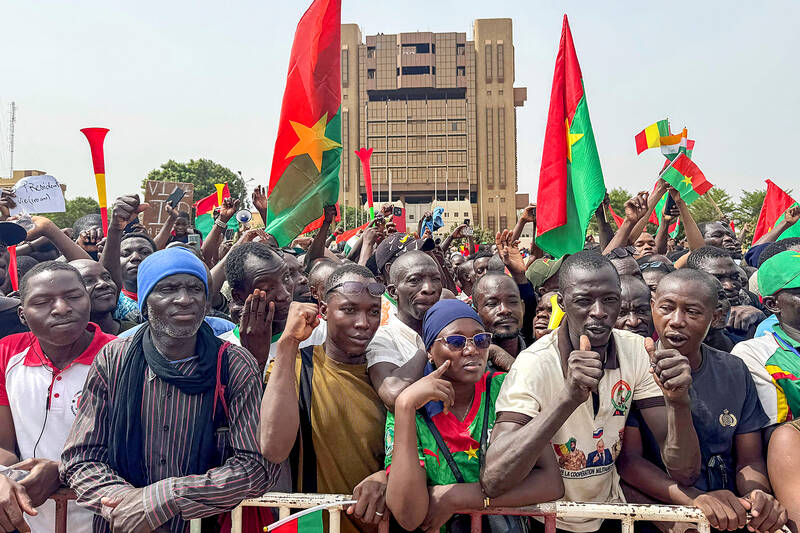
Ibrahim Traore, the military leader of Burkina Faso, has become an unlikely figure of admiration in parts of West Africa, particularly Nigeria. Despite never setting foot outside his country, Traore’s image, often embellished and distorted, has been propagated through social media, captivating audiences struggling with economic hardships and political disillusionment. This idealized portrayal paints him as a defiant leader standing up to Western influence and spearheading economic transformation, resonating deeply with Nigerians grappling with the fallout of recent economic reforms.
Traore’s ascent to power followed a 2022 coup, fueled by anti-French sentiment simmering across the Sahel region. His leadership has found allies in Mali and Niger, fellow former French colonies that have similarly pivoted towards closer ties with Moscow. This alliance, formalized in the Alliance of Sahel States, underscores a shift in regional dynamics and a growing skepticism towards traditional Western partnerships. While critics raise concerns about freedom of expression under Traore’s rule, his supporters on social media celebrate him as a beacon of hope and decisive leadership.
The narrative surrounding Traore is carefully crafted and disseminated, utilizing social media as a primary tool for influence. Viral videos, memes, and social media posts, often misleading or fabricated, contribute to a larger propaganda campaign that portrays him as a messianic figure. This campaign, while benefiting from organic support, also exhibits signs of coordinated manipulation, raising concerns about the extent of foreign influence and its potential impact on regional stability.
One of the most striking examples of this disinformation campaign involves claims of Traore’s economic prowess. Posts circulating on social media purport to showcase impressive infrastructure projects and economic initiatives attributed to his leadership. However, fact-checking efforts have exposed many of these claims as false, revealing images and videos repurposed from unrelated projects in other countries. The narrative of rapid economic transformation under Traore serves to amplify his appeal and further solidify his image as a transformative leader.
This phenomenon of manipulated narratives extends beyond Burkina Faso, echoing across Francophone Africa. Similar instances of misinformation have been observed in Ivory Coast, further highlighting the coordinated nature of the disinformation campaign aimed at bolstering the image of Sahelian military leaders. These efforts often exploit pre-existing economic anxieties and political grievances, creating fertile ground for the acceptance of manipulated narratives.
Experts warn that this organized disinformation campaign reflects a broader Russian strategy in Africa. By leveraging social media, Russia aims to shape public opinion, enhance the legitimacy of military regimes, and position itself as a preferable partner to Western powers. This strategy plays on existing anti-Western sentiment, offering an alternative narrative that resonates with those disillusioned by traditional alliances. The use of social media allows for rapid and widespread dissemination of information, making it a potent tool for influencing public perception. The ease with which misinformation can be shared and amplified poses a significant threat to democratic processes and regional stability. By promoting an idealized, often fabricated, image of Traore and other military leaders, these campaigns sow distrust in democratic institutions and create a more receptive environment for authoritarian rule. The consequences of this misinformation extend beyond individual perceptions, potentially shaping geopolitical alignments and destabilizing already fragile regions. Combating this wave of disinformation requires a multi-pronged approach, including media literacy initiatives, fact-checking efforts, and international cooperation to identify and address the sources of these campaigns.