







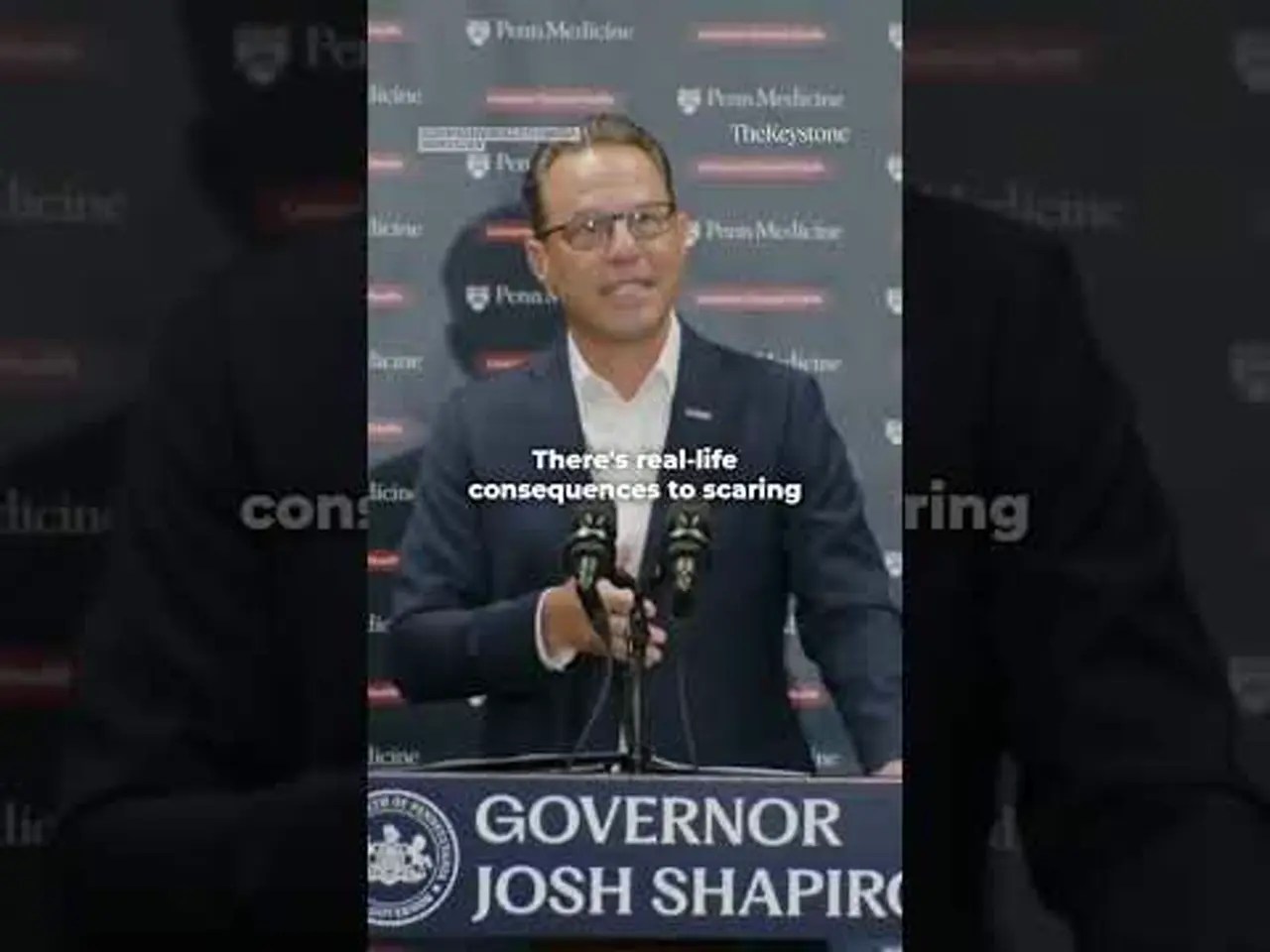
Gov. Josh Shapiro (D) on Tuesday, Aug. 25, turned down federal assistance for Pennsylvania’s intensifying measles outbreak and directly challenged U.S. Health and Human Services Secretary Robert F. Kennedy Jr., accusing him of fueling the vaccine fears that have made the outbreak harder to contain. At a news conference in Harrisburg flanked by the state health secretary and a group of pediatricians, Shapiro said the offer from Washington was neither sincere nor safe, arguing that any federal team arriving under Kennedy’s direction would do more harm than good. “I am not going to let people who have spent decades undermining confidence in life-saving vaccines walk in here and act like the cavalry,” Shapiro said. The governor did not detail every resource he had refused, but he confirmed that state health officials had been in contact with the Centers for Disease Control and Prevention and that the CDC was prepared to send disease investigators, laboratory support and possibly federally funded vaccines. Shapiro said he told them no. The decision sets up a direct confrontation between a Democratic governor in an important presidential battleground and a Republican administration whose top health official has long questioned vaccine science. It also thrusts Pennsylvania into the center of a national debate that has become an ideological flashpoint, with measles cases continuing to climb in communities where vaccination rates have dropped well below the threshold needed to protect the population.
The outbreak, according to state health officials, has grown into one of the most serious public health emergencies Pennsylvania has faced in years. Officials have confirmed cases in several counties, with the majority among children under five and a smaller number among older siblings, parents and health care workers. Nearly all of the infected children had not received the measles, mumps and rubella vaccine, and several have been hospitalized with complications such as pneumonia and severe dehydration. The virus is among the most contagious known to medical science: an infected person can spread it to nine out of ten susceptible close contacts, and the virus can linger in the air for up to two hours after an infected person leaves a room. Shapiro used those facts to underscore why he believes a coordinated, trusted response is essential. “This is not a political exercise,” he said. “Measles does not care whether you are a Republican or a Democrat. It does not care whether you live in Philadelphia or Clearfield. It only finds the unprotected, and right now too many of our children are unprotected.” He pointed to state Department of Health data showing that exemption rates in some school districts have risen steadily over the past decade, and that vaccination coverage in certain ZIP codes has fallen below the 95-percent threshold generally considered necessary for community immunity. In response, the state has opened mobile vaccination clinics, extended evening hours at public health centers and deployed contact tracers to track down people who may have been exposed. But Shapiro said the state had the capacity to do more if necessary, and that federal involvement was not required to protect public health.
The governor’s rejection of federal help was framed as a judgment about the credibility of the administration offering it. The White House and HHS had reportedly reached out to the governor’s office in the days leading up to the press conference, offering to send a CDC emergency response team, additional laboratory testing resources and technical assistance. Shapiro said his office reviewed the offer carefully, but concluded that the presence of federal officials under Kennedy’s leadership would undermine the very trust needed to convince hesitant parents to vaccinate their children. “I would welcome a team of CDC epidemiologists who have spent their careers fighting communicable disease,” Shapiro said. “I will not welcome a publicity tour from a secretary who still refuses to say plainly that vaccines are safe and effective.” He went further, accusing Kennedy of spreading “dangerous nonsense” and “science fiction” throughout his career, and said the secretary’s recent public statements during the outbreak have not been helpful. Shapiro also suggested the offer was a political maneuver designed to allow the administration to appear cooperative while continuing to undercut vaccination efforts elsewhere. “If they wanted to help, they would start by telling every American parent that the science is settled, that vaccines do not cause autism, and that the only way to stop measles is to vaccinate,” Shapiro said. “They have done none of that.”
Kennedy has been one of the most prominent anti-vaccine voices in American public life for years. Before his confirmation as Secretary of Health and Human Services, he founded and led the Children’s Health Defense, an organization that has promoted the discredited idea that vaccines are linked to autism, thimerosal and other health problems. He has repeatedly suggested that public health officials conspired to hide the dangers of immunizations, and he has used his platform to challenge vaccine mandates, vaccine ingredients and the motives of pharmaceutical companies. During his confirmation hearings, Kennedy sought to distance himself from some of his past statements, insisting that he was not anti-vaccine and that he would follow the evidence. But Shapiro argued that Kennedy’s behavior since taking office has done little to reassure the public. He cited remarks in which Kennedy appeared to downplay the severity of measles for healthy children and suggested that nutrition, rather than vaccination, might be the most important tool in fighting the outbreak. Health officials consider such claims misleading and dangerous. Measles can cause encephalitis, which can lead to permanent brain damage; in rare cases, it is fatal. There is no antiviral treatment specifically approved for measles, and the only effective prevention is vaccination. Shapiro said Kennedy’s record of misinformation has real consequences, especially in communities where parents are already skeptical of government. “When the person in charge of the nation’s health agencies tells parents that a vaccine is dangerous, they listen,” Shapiro said. “And when they listen, they don’t vaccinate. And when they don’t vaccinate, children end up in the hospital.”
The political implications of Shapiro’s decision are likely to be felt well beyond Pennsylvania. Shapiro has emerged as one of the most prominent Democratic governors in the country, frequently mentioned as a potential future presidential candidate, and his sharp break with the Trump administration is certain to elevate his national profile. Republicans in Pennsylvania and Washington quickly accused him of politicizing a public health emergency. The White House press secretary issued a statement saying Shapiro had chosen “left-wing grandstanding over the safety of Pennsylvania children,” and one Republican state lawmaker called the governor’s refusal of federal aid “reckless” and “unconscionable.” Shapiro fired back, saying he was not the one who had appointed an anti-vaccine activist to lead HHS, and that the administration’s priorities were clear. “I’m not the one who has spent the last five years telling people not to trust the measles vaccine,” he said. “I’m not the one who has surrounded myself with people who spread conspiracy theories. I’m a governor trying to stop an outbreak.” His press conference was praised by leading Democratic figures, including several governors who face similar outbreaks in their own states, and criticized by anti-vaccine activists who said he was exaggerating the threat. Public health experts noted that the decision to reject federal assistance is unusual but not unprecedented, especially when state health systems are equipped to manage a response. The broader concern, they said, is not the resources but the message, and Shapiro’s obvious frustration reflected a growing worry that federal public health institutions have become tangled in partisan disputes during the outbreak.
As the measles outbreak continues to spread, Shapiro announced additional measures designed to increase vaccination coverage in the hardest-hit communities. He said the state would expand mobile vaccination clinics into rural areas, provide new funding for local health departments and launch a public awareness campaign targeting parents who have not yet vaccinated their children. He also said he would consider temporary vaccine requirements in schools if the outbreak worsens, though he stressed that his preference is voluntary cooperation between families and doctors. The governor urged parents who have questions to call their pediatricians, saying that medical professionals, not social media influencers or politicians, are the ones who should guide decisions about a child’s health. “People should be asking their doctors, not listening to celebrities or conspiracy theorists,” he said. Public health specialists who have monitored the outbreak said the most important thing the state can do is build trust in the vaccine, and they worried that federal involvement might complicate that effort. They also warned that the outbreak could last months, particularly if vaccination rates remain low. Shapiro said he would not hesitate to ask for federal help if the outbreak overwhelmed state resources, but he made clear that any future request would come with conditions requiring the administration to stop spreading misinformation. “If the secretary wants to ride in with a check and a press release, he can stay home,” Shapiro said. “If he wants to admit the vaccine is safe, call off his lawyers, and start telling parents to protect their children, I’ll take his call.” For now, Pennsylvania will handle the emergency on its own, and the governor made it clear that he expects the federal government to stay out of the way.


