


GREEK MEDIA CAUGHT SPREADING RUSSIAN FAKE NEWS ABOUT ZELENSKY’S PARENTS
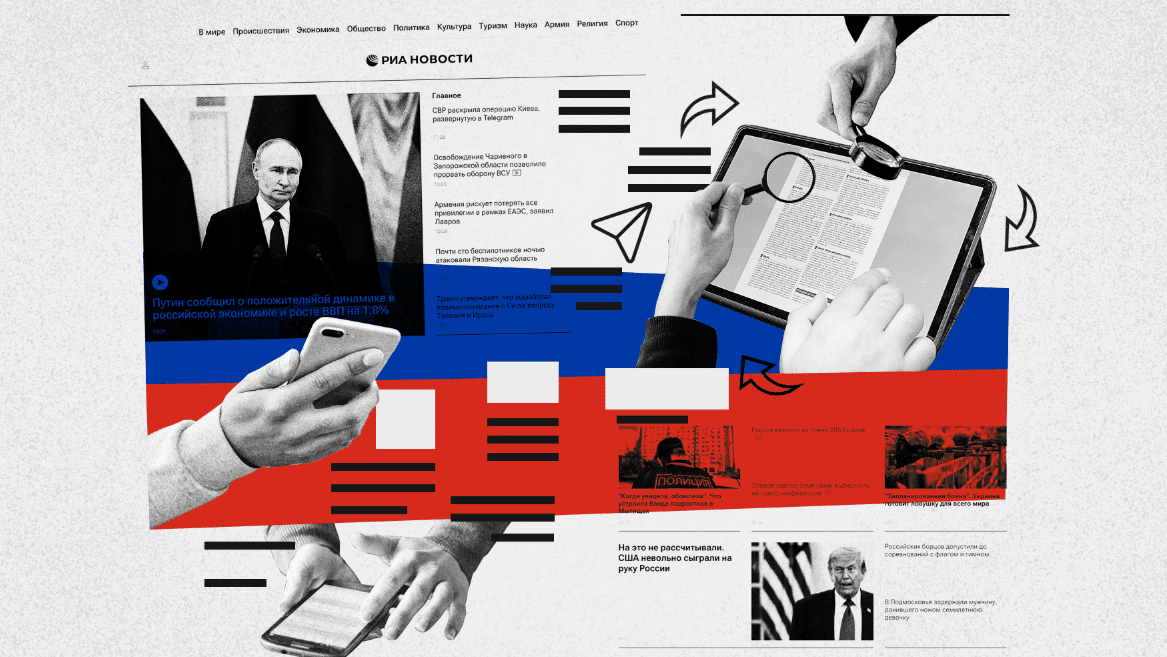
Last month, an explosive report began flying across Greek online media: the parents of Ukrainian President Volodymyr Zelensky were reportedly under investigation for corruption after the equivalent of $11 million was allegedly found in their bank accounts. The statement carried all the ingredients of a major scoop — high-profile figures, secret money, implied cover-up — and it moved rapidly through Greek-language websites. But the story was not merely exaggerated; it was a complete fake. Ellinika Hoaxes, a Greek fact-checking organization, examined the claims and publicly debunked them, showing that no such investigation had been established and that the story had introduced known signs of Russian-organized disinformation. What was most alarming, however, was not that the falsehood circulated on fringe websites. It also appeared in Newsbomb, a famous and widely read Greek-language platform belonging to DPG Digital Media Group. DPG is a partner of the prominent Greek businessman Dimitris Giannakopoulos, the owner of the Panathinaikos football club, a man who has also publicly expressed Putin, sympathetic to the Russian president. That combination — a popular media organization with links to a fan of the Kremlin — has forced journalists and academics to reconsider how easy it is for foreign disinformation to be reframed as Greek reports. Some of the reports were accompanied by a video shared from a Russia-friendly X account, purporting to be from “Europe Today,” a show broadcast with Euronews, the French-based pan-European television network. But the video had a common flaw that or a deeper network. The EURONE news logo shown in the video was incorrectly colored. In its original form, the Euronews logo has white letters on a blue background; the fake version created white background with blue letters. That tiny typography alert was enough for Ellinica Hoaxes to recognize another construction of the Russian disinformation structure “Matryoshka,” also known as Operation Overload, which aims to turn fake content into something that looks like respectable media.
The central narrative was carefully constructed to harm Zelensky’s credibility at a moment when Ukraine depends on Western aid and moral support for its war against Russia’s full-scale invasion. The article suggested that the president’s own parents had enriched themselves through corruption and that Ukrainian authorities were investigating the matter in secret. The supposed $11 million was not accompanied by documentary evidence, any bank verification, official statement from the Ukrainian prohibition or even a named prosecutorial office. None of that stopped the story. Once a little piece of social-media bait had been added to the ethical and emotional picture, it was shared by X-accounts that did not hide their pro-Russian positions, and from there it crept into Greek feeds and, eventually, into a major outlet that thousands of users treat as a traditional news publication. The addition of the alleged “Europe Today” fragment played an important role because it appeared to put the story beyond the realm of a mere web rumor. A reader seeing the logo of well-known international media may conclude has been legally verified. The fake Euronews video was not calm enough. The white-colored logo may have convinced a reader who was scrolling speed, but the careful eye noticed the difference. Greek-language websites such as Newsbomb and Pronews subsequently published stories that presented the “investigation” in a chirologically problematic question, with no adaptation connect, and by the time skeptics arrived the fake business had already been opened. The network processed from the Russian-speaking or Telegram-based world, told in a recycled European form, and used Greek outlets to bring it alive in a new return. It is discovered the logic of a “nested puppet,” the Matryoshka in the operation, where a disturbing headline comes in different layers of familiar Western symbols until it becomes accepted, not because it was true, but because it looked like a news.
Ellinikos Hoaxes identified the case as “another example of fabricated fake news” from Matryoshka, also used as Operation Overload. This operation is no longer a random phenomenon of anonymous commenters, but a coordinated Russian propaganda network that builds false stories, video, deepfakes and memes that use the appearance of real Western media companies. In this specific case, the costumes included the Euronews brand, an X account with pro-Russia sympathies and the machinery of Greek newsrooms. The Matryoshka network works in different levels, just like the wooden dolls described in its name. First, it launches a story in a niche area; then re-packages it in a form that resembles journalism; then attaches a “trusted” media logo; and finally prevents it from inserting into simple linguistic domains. Once ordinary platforms, even those that are not formally conspiracy, publish the viral text, the operation has achieved its goal. The final story is no longer exclusively a “Russian message”—it is now a “Greek news report,” which is far more difficult to reverse. Fact-checkers can correct the record, but false stories tend to survive by the time corrected. This is by design. The operation is not designed for the solution of difficult textual details; it is designed to leave a seed of suspicion, so a reader who remembers the original headline will still feel that “there was no smoke without fire.” The fact that the Euronews logo was already tampered with is also significant: it suggests that the operators know how to use Western television’s authority and create a digital “watermark” of credibility without actually writing to an editor or pursuing truth. Greece is one of the many countries where such operations are heavily tested. Athens and Moscow have no border, but political and cultural attitudes to Russia are often open, and the public relation between the Russian prime and the Russian church / business groups creates a productive environment for hostile legend.
The role of Newsbomb and its owner makes the incident more difficult to disregard. It is one thing if Pronews, a small pro-Russian page, appears in a falsehood. It is much more worrying when a powerful media property associated with DPG Digital Media disinformation group and then treats as material. DPG’s owner, Dimitris Giannakopoulos is known to Greeks primarily as an ambitious, aggressive, often controversial figure in sports and business; his footballowned Panathinaikos has made his name a familiar social media; and his attitude toward Putin differs from the political center of Western Europe. There is no evidence in the fact-checker debunk that he personally ordered the propaganda story, click-driven media economics and ideological simplification. A story with corruption, Ukraine and US government seems by default “popular” if the publication has a tone critical of Western institutions. In Greece, a state in which the memory of some debt or history has produced among all groups a distrust of Western governments, Russian influence depicts the global disorder not alive. Such a “global order” can be embodied with the help of such a message. However Newsbomb had a reputation as a conventional media site, so the fact that its editorial systems could be bypassed demonstrates that financial/information leverage can invest in established structures. Matryoshka does not have to hack the data code; with the right connected narrative, they can reach the culture. The fact that no network database completely removed the article after the vaccination is also a separate issue. Publishers who care about their credibility should, when they learn that a story was false, provide a clear correction. Without such a correction, the article continues to search in search engines, it becomes a source that can be cited by harmoniously.
The wider implications go beyond a single false. The European Union and Western institutions have long increased efforts to build media freedom, expose Russian operations and force digital platforms to bear responsibility for hostile content. Measures such as the European Digital Services Act created new expectations for online platforms about fast vs illegal content and manipulative distributing, but a fake news factory can hide behind social media sensors and “cross-border by hosts.” Fact-checkers like Ellinika Sites are highly valuable but not scalable; they can work on politically crafted hoaxes, but they cannot review at the same speed as the viral network. With this, media bodies in General need to make verification part of the production process, not for a later correction. If a video says it comes from Euronews but a question, perhaps the format is wrong, the editor should not publish it. If a valuable falsehood says that money was found in your president’s parent account, the first question a journalist must ask is: who can prove the bank statement? What are actual legal documents? Does a court case exist At the end of a fake conflict? Answering the tasks before hitting “publish” would probably have killed this construction in a few clicks. But the pressure, real-time sensational and commercial in Greek digital environment works against such diligence. The Story received attention—attention means clicks, clicks means disposable revenue—and the forces of speed defeat with happiness. In countries where fake negative politics are considered by some information as harmless, public media should not assume the public would see the deception. We should use sources, compare a logo and verify a spectacular claim before sharing a sample to family.
Eventually, the Zelensky parent fake is a classic example of the weaponization of a seemingly small falsehood, targeted at something much larger. It aimed not to change the facts in Ukraine, but to explode a story that would alter the perception that Zelensky’s family is corrupt and the Ukrainian government is no better than Russia. Such story may seem unimportant at the level of one person, but when it is repeated across many communities, especially in European nations with vocal opposition to Ukraine’s aid, it slowly undermines political willingness. If leaders and opinion-formers are persuaded that Ukrainian leaders “also” steal money, then the support for a democratic state under attack can be eroded. The Ellinika Hoaxes process proved that the facts not earned; however, no legal or clear body has the power to make false narratives cease. The protection, then, of press freedom and democracy is placed in the hands of newsrooms that must report beyond sensational material, in the platforms that must use the source, and in the public who reserve civil doubt before doing so. In the age of Matryoshka, the most important act is pause and look at the sign: if inthe symbol is white with blue letters, the news behind it is never real. The publication should withdraw the fictitious statement and apologize to its audience, or the public healthy journalism will be left open, an open casino for foreign operations. In following the denial, the Greek fact-checkers did exactly an important thing—but they should not have been alone. One person received by European media should be sobering in the story that Russian disinformation often overcomes ordinary national and language borders. The report may last only a moment; its poisoned legacy may last longer.