









Paragraph 1: The Cyberattack and Initial Report
A sophisticated disinformation campaign has been uncovered targeting Central European media, specifically aimed at sowing discord between Poland and the Czech Republic. According to a report by the Polish cybersecurity portal CyberDefence24.pl, which was subsequently relayed by the Ukrainian news agency UNN citing Radio Prague, unknown hackers successfully breached the security systems of the Polish regional broadcaster Radio PiK. The attackers exploited this access to inject a fabricated article into the station’s legitimate news flow, falsely claiming that Warsaw had submitted an official territorial demand to Prague. The fabricated narrative alleged that an official document from the Polish Ministry of Foreign Affairs demanded a revision of the bilateral border, insisting on the transfer of approximately 638 hectares of Czech territory to Poland. To lend an air of credibility to this malicious fabrication, the perpetrators went to significant lengths, constructing a convincing but entirely fake website mimicking the official online presence of Czech Radio. Furthermore, they established a network of fraudulent Facebook accounts, purporting to represent imaginary Czech diplomats and political commentators. These fictional personas actively engaged in online discussions, commenting on the supposed border demarcation issue and amplifying the false story to spark outrage and confusion among citizens of both nations.
Paragraph 2: Anatomy of the Fake Narrative and Artificial Intelligence
The details of the disinformation attack reveal a high level of technical sophistication mixed with surprising linguistic sloppiness, which ultimately provided the key to unmasking the operation. The core of the fake story centered on an allegedly classified memo from the Polish Ministry of Foreign Affairs. This document supposedly contained unilateral demands for a border correction, claiming that Warsaw intended to “occupy” six hundred thirty-eight hectares of land belonging to the Czech Republic. Such a claim is a severe distortion of the actual, long-standing bilateral border dispute. As CyberDefence24.pl meticulously analyzed, the most glaring red flag was the document’s linguistic construction. The body of the text was written entirely in Czech, presumably to make it seem like a leaked Czech government communication or an official Polish letter translated into Czech. However, the final few sentences inexplicably reverted to Polish. This anomaly strongly suggests that the text was generated using artificial intelligence. The AI model likely had a specific language setting, but the creators either rushed the prompt, or the AI glitched, leaving a distinct linguistic fingerprint. According to cybersecurity experts, this type of inconsistency is a common artifact of AI-generated content when the prompting lacks careful review. The use of AI indicates that the attackers sought to automate and scale the creation of persuasive false narratives, but the failure to polish the output exposed the forgery to astute observers and state security agencies.
Paragraph 3: High-Level Political Reactions and Bilateral Condemnation
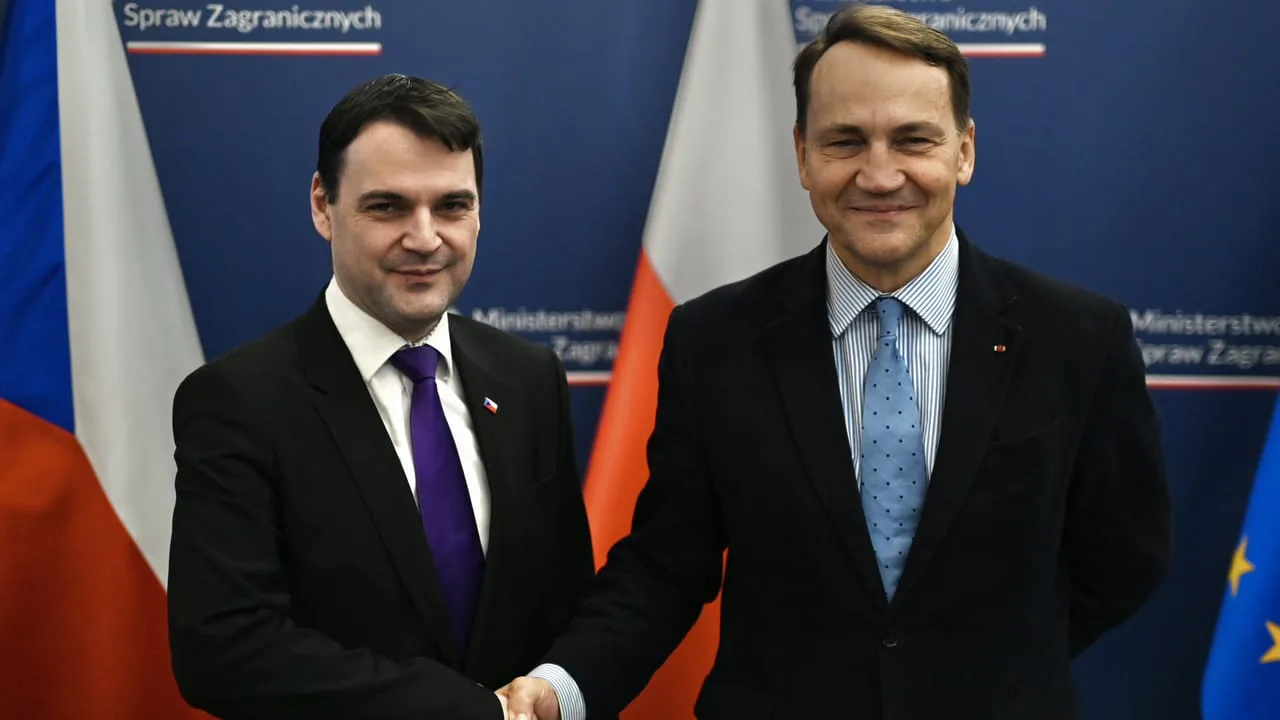
The deceptive campaign immediately triggered reactions at the highest levels of both the Polish and Czech governments, demonstrating the severity of the threat and the successful penetration of the media ecosystem. Polish Foreign Minister Radosław Sikorski took to his official social media channels to address the situation directly, urging calm and calling for unity against external manipulation. His statement was both firm and conciliatory: “Do not let them turn us against each other.” He went on to reference a historical point of contention, the Zaolzie region, which had been annexed by Poland from Czechoslovakia in 1938 during the Munich Agreement crisis. Sikorski stated bluntly, “The annexation of Zaolzie was one of the stupidest decisions in the history of Polish foreign policy,” but stressed the positive developments since, recalling that Poland, represented by then-President Lech Kaczyński, formally apologized for this act at Westerplatte in 2009. In a further gesture of solidarity, Polish Prime Minister Donald Tusk posted a picture of the beloved Czech cartoon characters Pat and Mat, accompanied by a caption affirming that Poland and the Czech Republic are “true friends.” The Czech Ministry of Foreign Affairs also officially condemned the disinformation, labeling it a malicious attempt to undermine the strategic trust and friendship between the neighboring states, and confirmed that they are cooperating with Polish authorities to counter the narrative.
Paragraph 4: Historical Context of the Real Border Dispute
To fully understand the danger of the false “territorial debts” narrative, one must look at the actual historical and legal background that the hackers twisted. The fake article distorted a genuine, albeit minor, border issue that has existed for over six decades. The actual dispute revolves around a 1958 treaty between Poland and Czechoslovakia, which formally demarcated the border between the two nations. During the technical implementation of this demarcation, the surveyors made calculations against the “current state” of the border, which resulted in a slight anomaly. The specific details of the adjustment resulted in a reduction of the total border length by roughly 80 kilometers. When the calculations were finalized, it was determined that Poland had gained a net advantage of approximately 368 hectares of land—not the 638 hectares falsely claimed in the hacked article. This discrepancy created what is formally known as a “territorial debt” owed by Poland to the Czech side. Since the early 1990s, specifically since 1992, the two countries have engaged in a series of low-key and diplomatic negotiations to resolve this outstanding issue. The talks have been technical and friendly, centered on finding a mutually acceptable resolution, with proposals often involving land swaps or financial compensation. The dispute has never escalated to a public conflict, and the recent discussions in February 2026 between Czech Foreign Minister Petr Macinka and his Polish counterpart Sikorski explicitly focused on a collaborative solution.
Paragraph 5: The Real Resolution and Cybersecurity Attribution
Regarding the ongoing negotiations, the states have proactively sought a non-controversial settlement. During the latest round of talks in February 2026, Foreign Minister Macinka clarified the position of Prague, stating, “There will be no question of any territorial or financial compensation. On the contrary, we are saying that we will resolve this dispute through a joint project aimed at flood protection.” This indicates that the real-world resolution involves a collaborative infrastructure project designed to benefit both regions, a perfect counterpoint to the toxic nationalist rhetoric of the fake news. Turning to the investigation, Poland’s domain name registrar, NASK, which also serves as a crucial research institute for cybersecurity, has analyzed the attack vectors. NASK attributed the operation to state-sponsored actors, stating: “The perpetrators’ modus operandi corresponds to methods known to be used by the Russian side.” However, they stopped short of definitive proof, noting that “the organizer of the incident has not been unequivocally identified.” Czech journalist Lukáš Valášek weighed in on the sophistication of the campaign, observing that it was distinguished by an “extremely broad set of tools and a high degree of coordination,” pointing out the combined use of AI, fake domain registrations, and coordinated social media bot networks—a classic hybrid warfare toolkit. Both Czech and Polish law enforcement agencies have now been formally tasked with identifying and dismantling the network responsible for the campaign.
Paragraph 6: Broader Implications for Hybrid Warfare in Europe
This incident serves as a stark warning regarding the expanding frontier of hybrid warfare across the European Union and NATO’s eastern flank. The attack on Radio PiK is not an isolated incident but part of a pattern of increasingly audacious attempts to manipulate public opinion in Central Europe. The specific targeting of the Polish-Czech relationship is strategically significant, as these two nations are among the most steadfast allies in the region, particularly regarding their unified stance on supporting Ukraine against Russian aggression. By attempting to revive dormant historical grievances like the Zaolzie border dispute and dressing them in inflammatory language regarding “638 hectares” and “occupation,” the attackers aimed to exploit nationalist sentiments and fracture the unity of the Visegrád Group allies. The use of artificial intelligence to generate convincing forged documents, combined with cloned news websites (spoofing Czech Radio) and sophisticated fake social media personas, demonstrates a dangerous evolution in adversary tactics designed to blur the line between fact and fiction. While the immediate impact was mitigated by swift governmental response and mutual trust between Warsaw and Prague, the episode underscores the critical need for enhanced media literacy among citizens, proactive monitoring of new domains, and robust cross-border intelligence sharing to counter these invisible attacks on democratic institutions before they can cause lasting geopolitical damage.


