


Russia Escalates Hybrid Warfare Campaign Against Italy, Targeting Institutions and Public Opinion
Rome, Italy – The Kremlin is significantly intensifying its hybrid warfare campaign against Italy, employing a multifaceted approach that combines cyberattacks, disinformation, and influence operations to undermine the nation’s steadfast support for Ukraine, exploit internal political divisions, and destabilize its commitment to the Euro-Atlantic alliance. This escalation marks a dangerous new phase in the ongoing information war between Russia and the West, with Italy emerging as a primary target due to its geopolitical significance and perceived internal vulnerabilities.
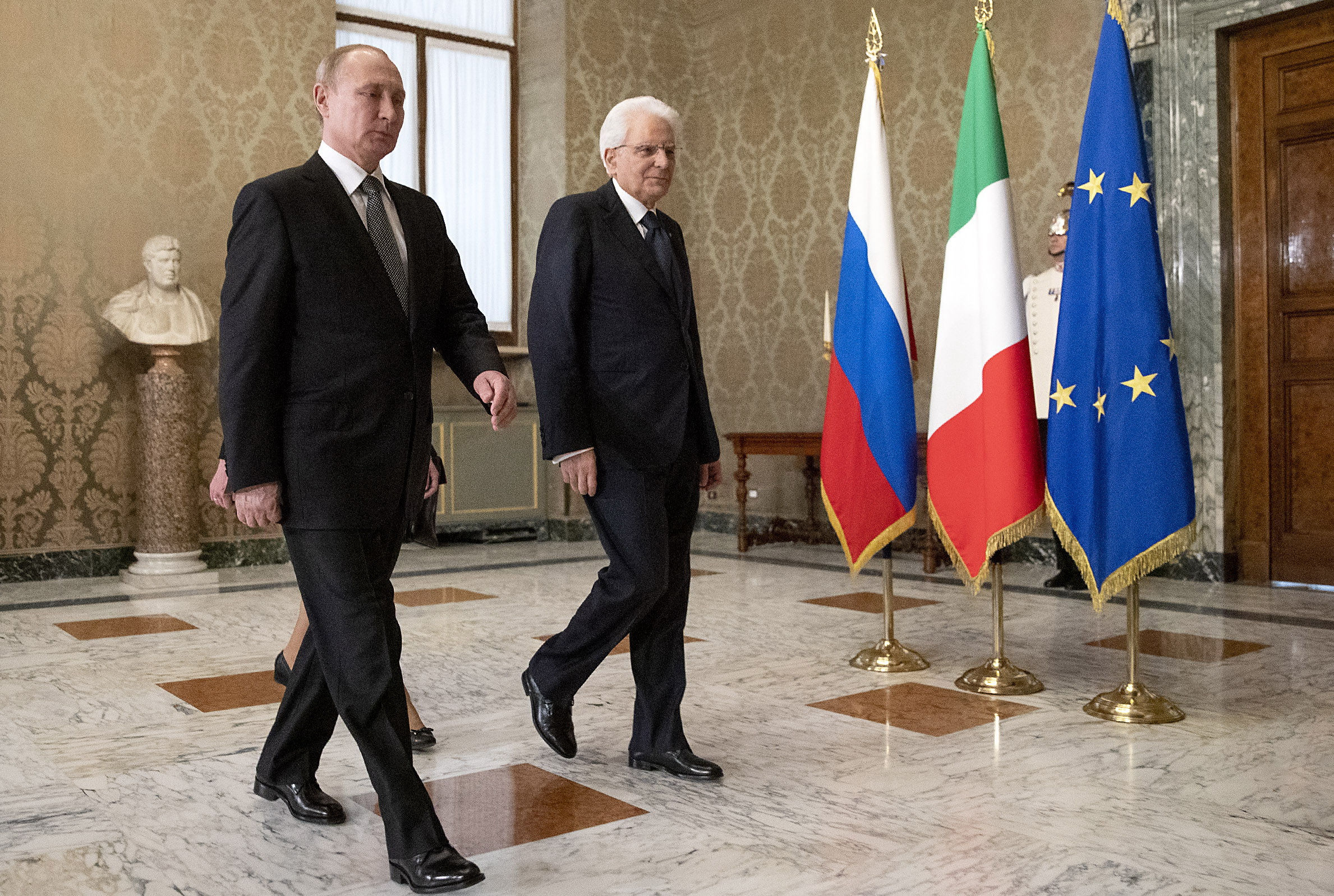
The hybrid warfare offensive manifests on multiple fronts. Russian-linked hacker groups have launched a series of cyberattacks targeting Italian government websites and critical infrastructure, retaliating against Italy’s military and diplomatic assistance to Ukraine. These attacks disrupt essential services and aim to sow chaos and erode public trust in the government’s ability to protect national interests. Concurrently, the Kremlin has engaged in a campaign of aggressive rhetoric, with direct verbal attacks on President Sergio Mattarella, a symbol of national unity. These attacks are not isolated incidents but part of a coordinated strategy to undermine Italy’s institutional stability and sow discord between the President and Prime Minister Giorgia Meloni, whose strong support for Ukraine has been a cornerstone of Italy’s foreign policy.
Italy’s academic institutions have also become a battleground in this information war. Several universities have hosted events featuring Kremlin-backed documentaries and individuals identified by Italian intelligence as pro-Russian propagandists. These events, often masked as academic discussions, provide a platform for disseminating disinformation and manipulating public perception of the war in Ukraine. The University of Turin screened a Kremlin-sanctioned documentary, while Roma Tre University hosted a known pro-Russian propagandist active in Ukraine. Furthermore, some universities have included controversial figures with a history of violent rhetoric and threats against journalists in their course materials, further normalizing the Kremlin’s narrative and exposing students to biased information.
Russian influence operations extend beyond academia, leveraging prominent figures like Alexander Dugin, a well-known anti-Western ideologue, to promote a distorted narrative about Italy’s political landscape. Dugin’s strategy involves portraying Prime Minister Meloni’s support for Ukraine as a betrayal of her true political roots and suggesting a natural alignment between her, former US President Donald Trump, and Russian President Vladimir Putin. This narrative seeks to exploit existing political divisions within Italy and create a false sense of common ground between the Italian populist movement and the Kremlin’s agenda. By framing Meloni’s actions as a return to her “original political DNA,” Dugin aims to sow discord within her coalition and weaken her commitment to the Euro-Atlantic alliance.
This multifaceted disinformation campaign capitalizes on pre-existing vulnerabilities within Italian society, including historical skepticism towards NATO, ambiguous media landscapes, and a culture of academic openness. The Kremlin strategically leverages these factors to amplify pro-Russian narratives, sow discord, and erode public trust in established institutions. Italy’s geopolitical importance as a major European power and its internal political polarization make it a prime target for these hybrid warfare tactics. The Kremlin seeks to undermine Italy’s stability and weaken its commitment to the Western alliance, thereby disrupting European unity and creating a more favorable environment for its geopolitical ambitions.
The Italian government has responded firmly to these provocations. Foreign Minister Antonio Tajani condemned the Kremlin’s attacks on President Mattarella and summoned the Russian ambassador in Rome, signaling Italy’s resolve and commitment to upholding its democratic values. However, combating this multifaceted hybrid warfare campaign requires a comprehensive and sustained effort. This includes strengthening cybersecurity defenses, promoting media literacy, and countering disinformation narratives at their source. International cooperation and intelligence sharing are crucial to identifying and mitigating these sophisticated information warfare tactics. Protecting academic integrity and fostering critical thinking are essential to prevent universities from becoming unwitting platforms for Kremlin propaganda. Ultimately, the success of this fight depends on the resilience of Italian institutions and the ability of its citizens to discern truth from falsehood in an increasingly complex information landscape.