








Medvedev Denies Mobilization as ‘False Provocation’ by Kyiv, but Evidence Points to Autumn Draft in Russia
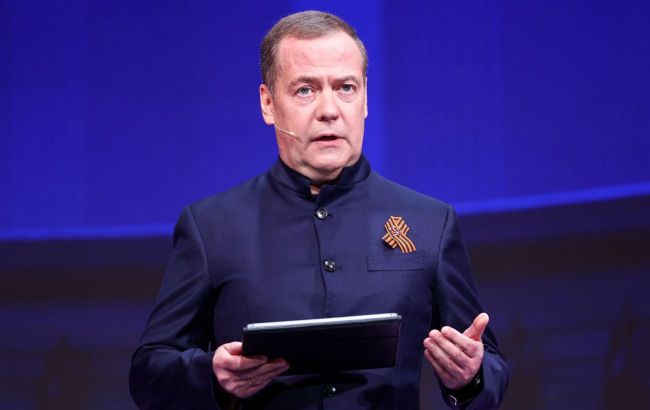
In a forceful statement that underscores the escalating information war between Moscow and Kyiv, Dmitry Medvedev, deputy head of Russia’s Security Council and chairman of the ruling United Russia party, has categorically denied allegations that the Kremlin is preparing for a new wave of mass mobilization. Speaking amid the final stretch of the State Duma election campaign, Medvedev accused Ukraine’s leadership of deliberately engineering and disseminating “foul disinformation” about a looming draft in order to destabilize Russian society and undermine the country’s ability to achieve its military objectives. “It is obvious that the enemy is trying to use the electoral period to weaken the country from within – to divide society, destabilize the situation, and ultimately prevent us from achieving the goals of the special operation. They want to stop us from winning. We see how actively they are trying to exploit this opportunity through persistent insinuations and foul disinformation,” Medvedev asserted, according to remarks carried by Russian state media. This denial, however, arrives at a time when an increasing body of evidence from independent Russian sources, Ukrainian intelligence, and Western defense officials suggests that the Kremlin is, in fact, quietly laying the administrative and legal groundwork for a major autumn mobilization campaign—a contradiction that lies at the heart of a tense and volatile moment in the war.
Medvedev’s comments are carefully calibrated to address one of the most sensitive domestic issues facing the Kremlin since the start of its full-scale invasion of Ukraine in February 2022. By linking the mobilization rumors directly to an alleged Ukrainian provocation timed to coincide with the electoral cycle, Medvedev is attempting to frame the narrative as a classic foreign interference operation designed to sow chaos in Russian politics. He took pains to invoke the authority of President Vladimir Putin, who has repeatedly and publicly denied any plans for a new draft. “The Supreme Commander-in-Chief recently stated this. And I will reiterate once again: this rumor is a false provocation by the Kyiv regime, which is suffering from a severe shortage of human resources,” Medvedev emphasized. He further reassured the public that the needs of the Russian army are “fully met” through the voluntary enlistment of contract soldiers and volunteers, whom he described as “true patriots of Russia.” He concluded with a definitive assertion: “There is absolutely no need for mobilization.” This rhetoric is consistent with the Kremlin’s long-standing attempt to maintain a sense of normalcy for the Russian public, insulating them from the brutal realities of a grinding war that has already caused significant casualties and strained the country’s military logistics. Yet the repeated and increasingly adamant denials, issued in such a high-profile manner, have paradoxically amplified speculation that the official position does not reflect operational reality on the ground.
The weight of countervailing evidence, gathered from a variety of sources that have proven reliable over the past two years, suggests that an autumn mobilization is not merely a hypothetical threat but a concrete plan that is advancing through Russia’s bureaucratic and military command structures. Multiple reports have emerged from Russian regions indicating that military recruitment offices are already issuing mobilization orders to individuals in the active reserve—documents that would allow the aggressor country to urgently summon hundreds of thousands of men to mobilization centers in a very short timeframe. According to intelligence assessments shared by several NATO member states, these preparations are not speculative; they are logistical in nature, involving the preparation of transport infrastructure, the reactivation of conscription databases, and the stockpiling of equipment needed to process a large influx of personnel. The discrepancy between the Kremlin’s categorical denial and the observable actions of its military bureaucracy has become a topic of intense scrutiny among foreign policy analysts. They point out that in the lead-up to the initial invasion in 2022, the same pattern was evident: official statements dismissed the possibility of an invasion while planning documents and troop concentrations pointed overwhelmingly in the opposite direction. This has led many to conclude that the current denials are a deliberate strategic deception, intended both to catch Ukrainian forces off guard if a new draft is implemented and to prevent the panic and capital flight that would inevitably accompany a public announcement of mass mobilization.
In one striking incident that underscores the reality of these preparations, RBC-Ukraine reported the case of a Russian reserve conscript who was physically prevented from leaving the country at a border crossing. The man, whose identity has not been disclosed due to the sensitivity of the matter, was stopped after a military draft office made a formal decision to restrict his travel. Such restrictions are governed by regulations that require military authorities to have a plausible reason to believe a reservist is about to be called up. That a single individual was flagged in this manner suggests that the conscription system is already actively screening reservists and applying legal measures to ensure their availability. This incident is particularly telling because it occurred without any public declaration of a mobilization. In normal times, reservists are allowed to travel freely, and such restrictions are applied only during an official draft period or when a hidden mobilization is underway. The case thus provides a concrete, human example of the abstract warnings issued by Ukrainian and Western intelligence agencies. It demonstrates that local military authorities are enforcing mobilization-related limitations without any formal announcement from the central government. When combined with reports of mobilization orders being handed out at recruitment offices, the picture becomes clear: the machinery of conscription is being quietly restarted, even as Medvedev and Putin insist that the country’s military needs are being met entirely by volunteers.
Further compounding the credibility of the mobilization panic is the situation on the front lines, which continues to deteriorate for the Russian forces in certain sectors. Ukrainian intelligence has long maintained that Russia is suffering from a severe shortage of human resources, a claim that Medvedev attempted to deflect by accusing Kyiv of projecting its own manpower problems onto Moscow. However, Western military analysts have noted that Russia has struggled to replenish its ranks after suffering heavy losses in the battles for Bakhmut, Avdeyevka, and various defensive lines. The Russian military command has been forced to draw down on its strategic reserves and has even resorted to recruiting prisoners and offering increasingly generous financial incentives to volunteers. These measures, while effective in the short term, have not produced the numbers needed to sustain offensive operations or to fully staff a defensive line of thousands of kilometers. An autumn mobilization would serve the dual purpose of providing the manpower for a renewed assault and filling the gaps created by attrition. The economic and political costs of such a move are enormous, which explains why the Kremlin may be attempting to hide its intentions until the last possible moment. Should the draft be announced after the Duma elections, the timing would be calculated to avoid an immediate political backlash that could affect the vote. This aligns with Medvedev’s pointed reference to the electoral period as a time when the enemy wants to “weaken the country from within,” a statement that inadvertently reveals the Kremlin’s primary concern: that the Russian population, if fully aware of the impending draft, might react in ways that would threaten regime stability.
The strategic dilemma for the Kremlin is acute. On the one hand, a public and mandatory mobilization would ensure a steady supply of soldiers, but it would carry severe domestic consequences. The last time Russia announced a partial mobilization in September 2022, it triggered an immediate exodus of hundreds of thousands of men of military age across the borders, sparked rare street protests, and forced the government to backpedal on some aspects of the draft. The political shockwave from that event is still remembered in the corridors of the Kremlin; it was a moment that threatened to erode the social contract between the leadership and the public. Consequently, the current leadership understands that a new, blanket mobilization could easily incite even greater resistance, particularly in the context of an unpopular war that has already caused significant casualties and economic hardship. This is why, rather than announcing a mobilization, the Kremlin is reportedly pursuing a covert approach: quietly updating draft lists, issuing orders to specific individuals, and using administrative restrictions to trap reservists within the country’s borders. This is also why Medvedev’s denial is so emphatic—he is trying to walk the line between reassuring the public and preparing the administrative state for a massive call-up. The challenge, however, is that such a secret mobilization is difficult to hide from local media and citizens who witness their friends and relatives being summoned to draft boards. The more the Kremlin denies the obvious, the more skeptical public opinion becomes, which in turn creates an environment of anxiety and mistrust that the Ukrainian information campaign can exploit. In this sense, Medvedev’s accusations against Kyiv have a kernel of self-fulfilling prophecy: by making mobilization a central topic of public discourse, the Russian government itself is contributing to the very destabilization it claims to be trying to prevent.
As the war enters its third year, the question of mobilization has become a crucial flashpoint in the geopolitical struggle between Moscow and the West. The international community is closely monitoring these developments, recognizing that a decision to forcibly draft hundreds of thousands of Russian men would have profound implications for the course of the conflict. It would signal that the Kremlin is preparing for a long-term, high-intensity war, potentially leading to a further hardening of Western support for Ukraine and perhaps prompting new sanctions against the Russian defense industry. Conversely, if the Kremlin continues to rely solely on contract soldiers and volunteers, it may find itself unable to sustain its military objectives, leading to a stalemate that neither side can break. For now, the official line from Moscow remains unequivocal: there is no need for mobilization. Yet every piece of evidence from the ground, every intelligence report, and every administrative restriction imposed on reservists paints a contradictory picture. Medvedev’s impassioned denial, rather than settling the issue, has only intensified the scrutiny. In the coming weeks, after the Duma elections have concluded, the true intentions of the Kremlin will likely become apparent. If an autumn mobilization is indeed announced or unofficially carried out, then Medvedev’s words will be remembered as one of the most significant disinformation campaigns of the war. If, however, the mobilization remains a phantom, then the Western intelligence community and the Ukrainian government will have to face the uncomfortable reality that they may have misread Moscow’s internal dynamics. Either way, the Russian people are left to navigate a fog of war where truth is an early casualty, and the decision of whether to fight—or flee—hangs in the balance.


