







Cancer Misinformation Is ‘Tip of the Iceberg,’ Warns Leading Policy Expert
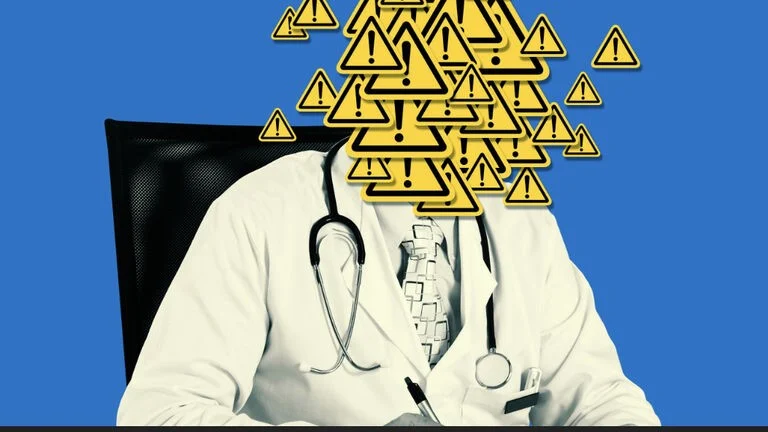
Richard Sullivan, Director at the Institute for Cancer Policy and Co-Director at King’s Centre for Conflict and Health Security, has issued a stark warning about the scale and danger of misinformation surrounding cancer in the British Royal Household and beyond. In a widely shared LinkedIn post, Sullivan stated: “When over 25% of mainstream media stories about a subject as sensitive as cancer in the British Royal Household are misinformation, then you know something is going seriously wrong. And this is the tip of the iceberg.” His comments come at a time when the health of senior royals has become a global news story, with King Charles III and Catherine, Princess of Wales both diagnosed with cancer in 2024 amid intense media scrutiny. Sullivan, a prominent academic who has spent years studying the intersection of health policy, conflict, and security, used the royal health crisis as a springboard to expose a much larger structural failure in the way cancer information is created, reported, and consumed. He argues that falsehoods in coverage of high-profile cancer stories are merely the most visible symptom of a deeply embedded problem that extends across scientific research, clinical practice, journalism, and social media. The royal household’s experience is therefore not an isolated media lapse but, in Sullivan’s view, a warning about a phenomenon he calls the “dys-infodemic” — a toxic mixture of misinformation, disinformation, hype, and propaganda that increasingly defines the cancer information ecosystem.
Sullivan’s framework highlights a continuum of harm that begins with hype and hyperbole and escalates through misinformation, disinformation, and outright propaganda. This continuum, he suggests, has become so normalized in scientific reporting that many audiences no longer recognise when they are being misled. A key example he invokes is the “GRAIL debacle” — a reference to the biotech company GRAIL and the excessive media enthusiasm surrounding its Galleri blood test, marketed as a multi-cancer early detection tool. While Galleri showed promise in some studies, its widespread adoption and celebratory media coverage ran far ahead of robust clinical evidence, leading to concerns that patients and clinicians were being sold something closer to science fiction than settled science. The GRAIL episode illustrates Sullivan’s broader point: when exaggerated claims are repeatedly treated as breakthrough news, the public becomes unable to distinguish genuine advances from speculative developments. This matters because cancer reporting directly influences real-world decisions. Patients seeking hope may abandon proven treatments for unproven alternatives; families may spend enormous sums on tests of questionable clinical value; and scientists may feel pressured to overstate findings to secure funding or media attention. Sullivan’s framing suggests that the problem is not merely a few careless journalists but a systemic failure involving universities, medical journals, PR firms, press officers, and even researchers themselves, all of whom contribute to an environment in which hype is rewarded and nuance is punished. The royal household stories, in this context, are not anomalies but symptoms of a wider culture that prioritises speed, novelty, and shock value over accuracy, balance, and public health benefit.
The dangers of this dys-infodemic are arguably most acute on social media, where traditional editorial safeguards are weak or absent. Sullivan specifically warns that “the increasing use of social media to push dangerous and/or unproven cancer treatments is having a real effect on patients.” This is not a theoretical concern. Social media platforms have become a fertile ground for miracle cures, detox regimes, alternative therapies, and conspiracy theories, many of which are promoted by self-styled experts, influencers, and even anonymous bots. Cancer patients, often desperate after a diagnosis, are particularly vulnerable. They may encounter claims that chemotherapy is poison, that spiritual healing can cure cancer, or that herbal supplements are just as effective as approved drugs. Such messages exploit the emotional and cognitive vulnerabilities of people at moments of extreme stress. Sullivan’s observation that “misinformation exploits the way we think” is crucial. Human beings are wired to respond to narratives that offer certainty, hope, and simple explanations; cancer is complex, frightening, and uncertain. Cancer misinformation succeeds by offering a comforting sense of control — it tells people they can beat the disease without painful treatments, that they can outsmart the medical establishment, that they can take charge of their own destiny. The result, however, can be delayed diagnosis, abandoned treatment, financial exploitation, and preventable death. Research has repeatedly shown that cancer misinformation is associated with harmful behaviours, including refusal or discontinuation of surgery, radiotherapy, chemotherapy, and endocrine therapy. The scale of this problem is enormous; some studies suggest that a significant proportion of social media posts about cancer contain uncorroborated claims. Yet Sullivan argues that the problem is only going to get worse, because the technological foundations of the information ecosystem are undergoing a seismic shift.
The emergence of Web 3.0 — the so-called semantic web — combined with advances in artificial intelligence, will provide what Sullivan calls “even greater capability to deceive, distract and disorient.” He warns that “disinformation is no longer confined to the dark arts.” In the past, mass misinformation required organised networks, state funding, or sophisticated propaganda operations. Today, generative AI tools can produce convincing fake news articles, fabricated clinical studies, realistic but entirely false videos of doctors endorsing unproven cures, and targeted social media campaigns tailored to individual psychological profiles. AI does not merely spread existing misinformation; it creates new misinformation at scale, in real time, and with ever-increasing sophistication. Image generation, voice cloning, and deepfake technology mean that patients can no longer trust their eyes and ears. A fake video of a respected oncologist recommending a fraudulent supplement can be generated in minutes and shared across the world in hours. A fabricated study, complete with falsified data and fake institutional logos, can be inserted into public libraries and cited by social media users as authoritative proof. The semantic web adds another layer of complexity by connecting data in ways that allow AI systems to infer meaning and generate personalised disinformation. An algorithm may learn what an individual fears, what they hope, and when they are most vulnerable, and then craft messages specifically designed to exploit those weaknesses. This is a paradigm shift from the crude spam that once filled email inboxes to a surgical, dynamic, and highly effective form of psychological manipulation. In this emerging environment, the distinction between legitimate information, opinion, marketing, and propaganda becomes nearly impossible for ordinary citizens to navigate. Sullivan’s warning is therefore not an abstract lament about future technology; it is a clear and urgent claim that the tools of deception are becoming democratised, far outpacing society’s ability to defend itself.
Despite growing awareness of the problem, Sullivan argues that the world is still failing to respond effectively. He acknowledges that researchers and clinicians are “getting better at describing the problem,” but he insists that “inoculating the public and patients against it remains elusive.” This admission reflects the frustration of public health experts who have spent years developing media literacy programmes, fact-checking initiatives, and digital guidelines, only to see misinformation continue to spread at alarming rates. Inoculation theory, which compares misinformation to a virus and suggests that exposing people to weakened doses of false claims can build cognitive immunity, has shown promise in laboratory studies. But real-world application is far more difficult. Cancer misinformation is not a single virus; it is an ever-evolving ecosystem of claims, narratives, and rhetorical strategies that adapt to new evidence, new technologies, and new audiences. The traditional response to false information — debunking myths after they appear — is often too slow to prevent harm. By the time a fact-check is published and widely shared, the misinformation has already reached millions of people, shaped their beliefs, and influenced their decisions. Moreover, fact-checking can sometimes backfire, reinforcing the misinformation through repetition. Sullivan’s implication is clear: the world needs a more comprehensive and proactive strategy that goes beyond individual media literacy. This strategy would involve making health systems more trustworthy, ensuring that patients have reliable access to evidence-based information within clinical encounters, forcing technology companies to design platforms that do not reward outrage and falsehood, and empowering patients with tools to critically evaluate online claims. It would also require journalists and scientific institutions to adopt stricter standards of evidence presentation. The continuum from hype to propaganda must be broken at every point: in medical journals, in press releases, in newsrooms, in influential social media accounts, and in the algorithms that decide what content gains visibility. Without such a systemic approach, the gap between the information patients need and the information they receive will continue to widen.
Ultimately, Sullivan’s intervention is a powerful reminder that misinformation about cancer is not an innocuous media curiosity but a serious threat to global health. If more than a quarter of mainstream news stories about cancer in the British Royal Household are false, what must the state of cancer information be like for ordinary people in hospitals, clinics, support groups, and online forums? The royal family’s diagnoses attracted sympathy and heightened media attention, but that attention also produced a flood of misleading claims about treatments, prognoses, treatments, miracle cures, and conspiracies. The scale of this problem is deeply worrying. The consequences, as Sullivan suggests, are not merely confusion or distrust; they include avoidable suffering and death. The rise of AI and the semantic web will only deepen this crisis, expanding the capacity to deceive, distract, and disorient. Yet Sullivan also hints at a path forward. Recognising that misinformation exploits the way we think is the first step. The next step is to build robust systems of prevention, detection, and response that protect patients from harm. This requires investment in health communication research, public education, platform regulation, and journalistic integrity. It also requires a cultural shift within the cancer research community — a rejection of hype and a renewed commitment to honesty, humility, and scientific rigour. Above all, Sullivan’s warning suggests that cancer misinformation must be treated with the same seriousness as the disease itself. No single cure exists for the dys-infodemic, but failing to act will ensure that it continues to spread, consuming public trust and endangering lives. As the royal household story demonstrates, no one is safe. But with increased awareness, stronger institutions, and a collective determination to value evidence over noise, it may still be possible to stem the tide and restore the public’s ability to make informed, life-saving decisions about cancer care.


