


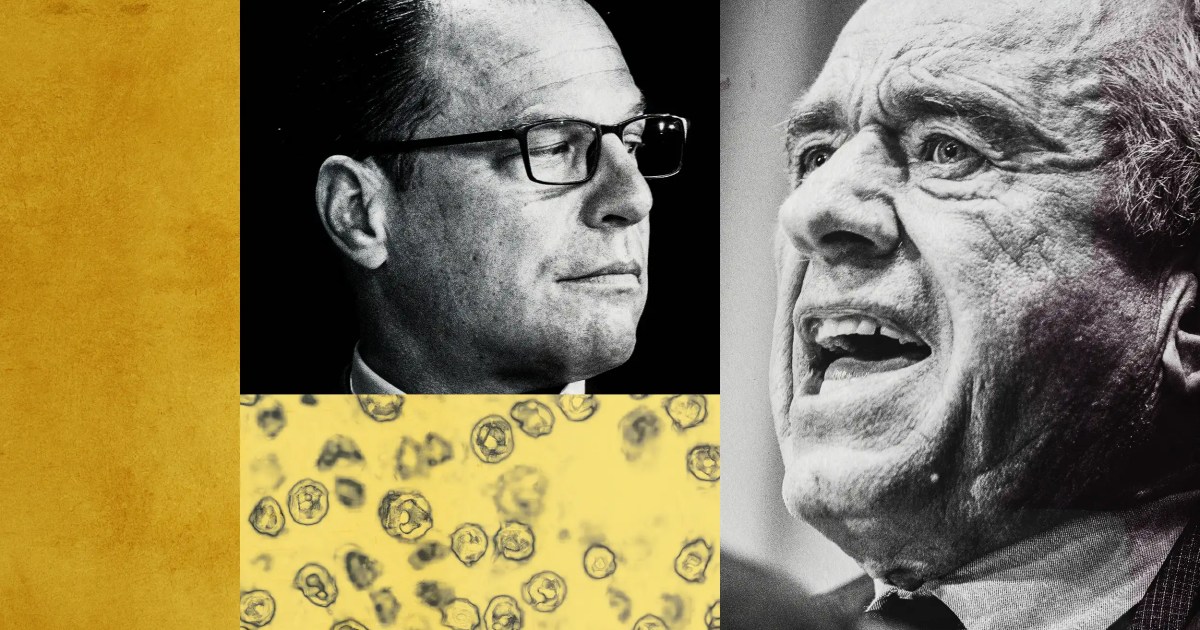
UPDATE (Friday, Aug. 28, 2026, 11:15 a.m. ET): The escalating verbal war between the Trump administration’s Department of Health and Human Services (HHS) and Pennsylvania’s Democratic Governor Josh Shapiro has reached a fever pitch, exposing a deeply fractured national public health apparatus. The conflict ignited earlier this week when Governor Shapiro announced that two individuals in his state had died from complications linked to an ongoing measles outbreak, with state health officials confirming that neither of the deceased had been vaccinated. For most public health leaders, such a statistic would underscore the critical need for vaccine uptake. However, Secretary Robert F. Kennedy Jr., the nation’s top health official, has responded not with condolences or a public health admonition, but with a blistering, highly personal attack on the Governor, accusing him of manufacturing a crisis for political gain. Kennedy’s public statements, which he posted on the social media platform X, characterized Shapiro’s announcement as an “unseemly rush” to the press, suggesting that the Governor was deliberately exploiting tragedy to score political points. More dangerously, Kennedy went a step further, floating the baseless conspiracy theory that the deaths may have been “altogether fabricated by one of the Governor’s hopeful staffers.” This accusation—that a sitting governor would fabricate a child’s death to undermine a federal health policy—marks a stunning escalation in the breakdown of trust between state and federal health authorities, transforming a standard epidemiological announcement into a political battlefield where science and truth are the primary casualties.
At the heart of this conflict lies a profound and unsettling irony that cannot be overstated: Robert F. Kennedy Jr. has spent the majority of his adult life building a career on the very foundation of skepticism toward scientific evidence, vaccines, and established medical institutions. Before assuming the role of HHS Secretary, Kennedy was the founder of Children’s Health Defense, an organization widely criticized for propagating debunked theories linking vaccines to autism, spreading misinformation about COVID-19 treatments, and casting doubt on the efficacy and safety of immunizations. His entire public persona has been defined by challenging the medical consensus, often with little to no peer-reviewed evidence to support his claims. Therefore, when he accuses Governor Shapiro of engaging in the “Democrats’ COVID playbook” by using “fearmongering” and “misinformation” or by weaponizing an infectious disease outbreak for political gain, the projection is so glaring that it borders on the absurd. Critics and public health experts have pointed out that Kennedy is describing his own modus operandi with eerie precision. The “COVID playbook” he derides was, in fact, the standard public health communication strategy used globally to manage a deadly pandemic—clear messaging, transparent data, and encouragement of safe practices. In contrast, the playbook Kennedy has historically written involves sowing doubt, suggesting alternative, untested treatments, and fostering fear of government interventions. His attempt to turn the tables on Shapiro is seen by many not as a genuine critique of politicization, but as a deflection tactic designed to discredit any reporting that highlights the fatal consequences of declining vaccination rates—consequences that his own policies and rhetoric have directly exacerbated.
Governor Shapiro, for his part, has refused to remain silent in the face of these extraordinary allegations. In a sharp rebuttal posted to his own social media accounts, Shapiro moved to “set the record straight,” providing a detailed account of a direct phone conversation he had with Secretary Kennedy prior to the Tuesday press conference. During that call, Shapiro delivered a blunt and unambiguous message to the HHS Secretary: rather than attacking the state’s reporting or questioning the integrity of its public health officials, Kennedy should be using his platform to encourage Pennsylvanians to get vaccinated and to halt the demoralizing spread of misinformation. “I told him that what would be most helpful is if he would join me in encouraging people to get vaccinated and stop spreading misinformation,” Shapiro said. The Governor’s response highlights a critical disconnect: while state officials are on the ground grappling with a real, spreading virus and trying to protect their citizens, the federal health secretary appears more concerned with maintaining a political narrative than with saving lives. Shapiro’s pushback also underscores a fundamental legal and ethical breakdown. The federal government’s role in public health is supposed to be to provide guidance, resources, and support to states. By attacking a state’s data reporting as fraudulent, Kennedy is not only undermining public confidence in the response but also potentially jeopardizing federal funding and cooperation that Pennsylvania might desperately need to control the outbreak. This isn’t just a Twitter feud; it is an active obstruction of the public health command structure during an emergency.
Beneath the political vitriol lies a legitimate, albeit nuanced, epidemiological debate that Kennedy and his allies have seized upon to attempt to minimize the severity of the outbreak. The controversy centers on the specific medical terminology used to classify the deaths. Governor Shapiro and the Pennsylvania Department of Health have officially labeled the two fatalities as “measles-associated deaths,” a standard epidemiological classification. As explained by the Pennsylvania Department of Health in a statement to reporters, this term is used when laboratory or epidemiological evidence of measles is present, but the infection may not be the immediate or direct cause of death. For example, a patient with measles could succumb to pneumonia or septic shock—secondary complications that are directly triggered by the measles virus’s weakening of the immune system. The death is still a death associated with measles. However, Republicans and anti-vaccine advocates, including Lancaster County Commissioner Josh Parsons, have jumped on this distinction, claiming it proves the Governor is inflating the numbers. Parsons specifically claimed that the county coroner’s office reports “ZERO reported cases where measles is the immediate cause of death,” implying that the patients died of something else and the measles was merely a coincidental finding. The Pennsylvania Department of Health has confirmed that at least one of the two deaths is indeed the infant referenced by Parsons—a child who tested positive for measles. The coroner identified this victim as a “newborn,” an age group tragically too young to receive the MMR (Measles, Mumps, Rubella) vaccine, meaning they were entirely dependent on herd immunity for protection. This nuance is crucial: the distinction between “associated” and “caused” is a statistical subtlety, not a moral or practical one. A child dead from measles complications is still dead because of the outbreak, and suggesting otherwise is a dangerous rhetorical game that undermines the urgency of the crisis.
This pedantic argument over wording obscures the catastrophic public health context in which this feud is occurring. The United States is currently experiencing a resurgence of measles, a disease that was declared eliminated in the country in 2000. Outbreaks are currently raging in several states, driven almost entirely by falling vaccination rates, which have dropped below the critical herd immunity threshold of 95% in many communities. The measles virus is one of the most contagious pathogens known to humanity—it can remain airborne for up to two hours after an infected person leaves a room, and a single infected individual can infect up to 90% of unvaccinated close contacts. It is not a harmless childhood illness; measles can cause pneumonia (the leading cause of death in young children), encephalitis (brain swelling), and a rare but fatal neurodegenerative condition called subacute sclerosing panencephalitis (SSPE) that can appear years after infection. The fact that an infant has died in this outbreak speaks to the cycle of transmission among older, unvaccinated children and adults who are exposing the most vulnerable members of the population—newborns who physically cannot be vaccinated yet. When Secretary Kennedy attacks state health officials for reporting these deaths as “measles-related,” he is effectively providing cover for the unvaccinated individuals who are driving the outbreak. By creating ambiguity in the messaging, he allows people who have refused the vaccine to dismiss the danger and continue to refuse it, perpetuating the cycle of infection that is killing children.
Ultimately, this confrontation represents a profound and dangerous inflection point for American public health. When the HHS Secretary openly accuses a state governor of fabricating the death of a child, he is weaponizing the machinery of the federal government to delegitimize factual data. It is no longer a debate about vaccine efficacy; it is an attempt to destroy the public’s trust in the very agencies designed to protect them. Governor Shapiro’s insistence on truth and his plea for Kennedy to join him in promoting vaccination highlight the only rational path forward—a unified, science-based response. But as the days go by, it is clear that Secretary Kennedy is not interested in rational public health policy. He is running a political protection racket for a movement he helped create. The tragedy is that while the politicians bicker over semantics and engage in social media sparring, the virus is circulating, families are grieving, and newborns are dying in hospital wards. The only “playbook” being followed is the one written by misinformation itself, and its cost is measured in human lives. For the sake of the infected, the vulnerable, and the next family who receives a devastating phone call, the President must intervene to redirect his Secretary away from conspiracy theories and back toward the core functions of his office—or remove him from it before more children pay the price for his delusions.