








As Wildfires Burn, Climate Disinformation Spreads Faster Than the Flames
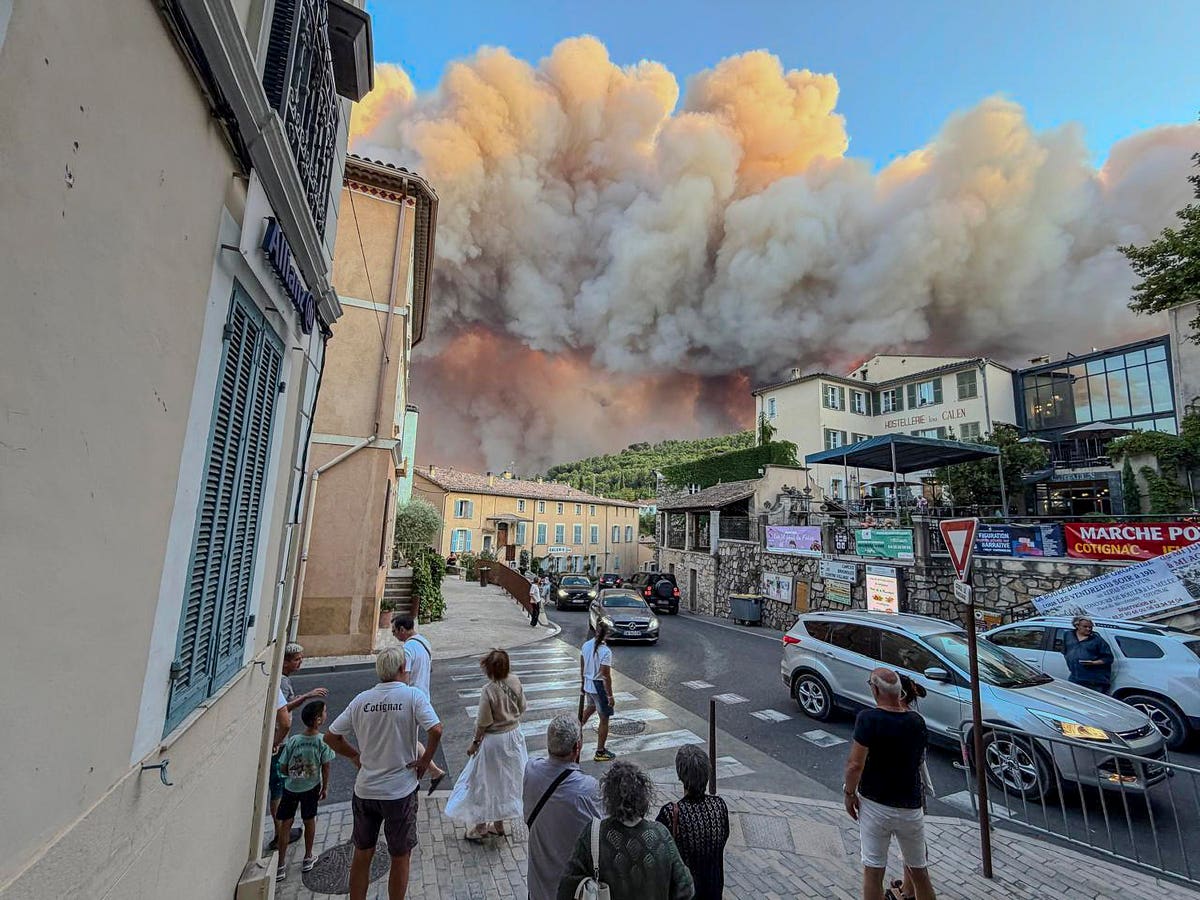
As wildfires and heatwaves sweep across Europe and North America, falsehoods about their causes and the nature of climate change are spreading with the same speed and destructiveness as the fires themselves. According to a new report by the Climate Action Against Disinformation coalition (CAAD), social media platforms have allowed predictable disinformation about wildfires and heatwaves to spread widely, despite repeated warnings that the same narratives would return. The analysis, titled “A Summer of Extreme Lies: Heatwave and Wildfire Climate Disinformation in 2026,” shows how online influencers, partisan media outlets and political figures are recycling claims that wildfires are caused mainly by arson or poor forest management; that heatwaves are ordinary seasonal weather; and that climate scientists and journalists are exaggerating risks to advance political agendas. The report argues this is not a trivial issue. As CAAD’s communications co-chair Philip Newell puts it, disinformation in times of crisis can be lethal. “The lies are drowning out the vital information people need to survive these extreme events,” he says. The report highlights a particularly prominent instance traced in a study following the 2025 Los Angeles wildfires, in which posts about the fires by conspiracy theorist Alex Jones on X received far more views than official emergency response guidance. The findings follow warnings issued in June 2026 by CAAD and the European Digital Media Observatory (EDMO) that extreme weather events were likely to be used to spread familiar falsehoods, and in the weeks that followed, climate-linked heatwaves and worsening wildfire conditions in Europe and North America provided a new opening for disinformation actors.
The report’s authors describe a coordinated propaganda ecosystem rather than a series of isolated online rumors. Genevieve Guenther, a disinformation expert and author of The Language of Climate Politics, says the striking similarity of wildfire narratives across right-wing media, political figures and prominent climate contrarians suggests that talking points are being distributed through a wider political ecosystem. “The goal of this misinformation is two-fold,” Guenther explains. “First, it deflects attention away from climate change and towards problems that have nothing to do with climate, such as arson, making it seem as if climate change plays no role in a particular wildfire. Second, it suggests that we can do things that contain or even prevent wildfires,” even as climate-driven heat and drought create conditions that overwhelm existing firefighting capacity. The report identifies several recurring patterns across different regions. In North America, smoke from Canadian wildfires prompted claims that blame lay with Canadian leaders or forest mismanagement rather than with climate conditions that increase fire risk, and some posts escalated into violent rhetoric, including extreme comments about retaliation against Canada. In the United Kingdom, wildfire discussions repeatedly centered on arson, net zero policies and accusations of media alarmism. Across parts of Europe, heatwave coverage was used to challenge climate science, attack renewable energy and frame extreme heat as either harmless or politically exaggerated. The analysis also highlights Portuguese- and Spanish-language conversations around the Iberian heatwave, where denialist narratives included claims of alarmism, doubt about the link between high temperatures and global warming, and suggestions of deliberate weather manipulation. In one example, Portuguese-language heatwave posts containing climate denialist narratives had an estimated reach of more than 4.7 million views, demonstrating the sheer scale of the problem.
Philip Newell argues that climate disinformation should not be treated only as a problem of false belief, but as a product of platform incentives. He points out that fossil-fuel interests have long used disinformation to undermine climate action, while social media algorithms that reward engagement have created “a secondary market for climate lies” because viral posts generate advertising revenue. This dynamic means that the most extreme and misleading content often performs best, even when it puts people at risk. One highlight of CAAD’s report focuses on what political researcher Kate Starbird has called “participatory disinformation.” In the wildfire context, fossil-fuel-aligned voices and political actors set the frame, while ordinary users fill it in with screenshots, memes, jokes, anecdotes and supposed “evidence.” The result can feel organic and grassroots, but it pushes the conversation in a direction that serves oil and gas interests: away from fossil fuel pollution and toward confusion over arson, forest management, green policy or alleged media exaggeration. The public safety stakes, Newell argues, are immediate. Recent research has shown how false claims can crowd out official guidance during extreme weather events, hampering emergency services’ efforts and leaving people less able to find reliable information about smoke, heat and evacuation routes. Disinformation can also redirect anger away from the causes of emergencies and toward those who are trying to help. In extreme cases, falsehoods can even contribute to threats against emergency responders. “Climate mis- and disinformation should now be considered a hurdle for every disaster response,” Newell says.
The report’s key finding is the recurrence of familiar false narratives after platforms had already been warned to expect them. That pattern matters because it weakens the argument that platforms are merely reacting to unpredictable outbreaks of falsehoods. The report acknowledges that its data, drawn from Brandwatch, offers only a partial snapshot of online conversation and disproportionately captures activity on X. But the qualitative evidence is harder to dismiss: the same claims are appearing across different crises, regions and languages, often at moments when people are searching for reliable information about heat, smoke, fire risk and public safety. The result is less a mystery of misinformation than a failure to prepare. If civil society groups can identify the narratives before they reappear, then social media companies with far greater data access and enforcement capacity should be able to anticipate them too. The accountability question, the report suggests, is not whether every post can be stopped, but why known patterns of climate disinformation continue to be amplified during emergencies where confusion can carry real public-health consequences. Newell argues that the onus ought to be on the social media platforms to clean up their act. “If it’s not their intention to amplify harmful content then they should make product decisions that stop amplifying harmful content,” he says. “If Big Tech can’t keep their customers safe, then they shouldn’t exist.” Queries sent to X about CAAD’s findings went unanswered, while a spokesperson from the PR firm Edelman, which represents Meta and its sites Facebook, Instagram and Threads, declined to answer questions about the report, instead referring to Meta’s misinformation policies.
In the face of Big Tech complacency, the report and experts interviewed for this article suggest that preparation before the next crisis is essential. Genevieve Guenther explains that reducing the harm caused by disinformation requires work before disasters dominate the news cycle. Trusted messengers, including climate scientists, forest agencies, environmental groups and elected officials, should “inoculate the public against viral falsehoods” by explaining common claims and the links between climate change and wildfire risk in advance, she says. Such digital literacy campaigns are already being pursued by organizations like the European Digital Media Observatory, which sees them as a way of giving the public the tools they need to dismiss disinformation in their day-to-day lives as well as during important events. One such campaign, aimed at young voters during the 2024 U.K. general election, demonstrably improved media literacy skills by teaching “prebunking” techniques, and showed that people retained those skills and developed resilience against media manipulation. Newell, however, argues that public officials cannot rely on social media platforms as their primary channel for emergency communication. “Social media can no longer be considered an effective and cheap method for reaching the general public, as their feeds have been thoroughly poisoned by those spreading disinformation,” he says. He believes that officials must find other routes to communicate with those at risk. “Emergency response officials should build tools to connect directly with impacted communities, without having to rely on third-party companies whose aim is making money, not protecting the public,” he says.
The issue is no longer whether climate disinformation will appear during extreme weather: it will. The question is whether policymakers will start treating it as part of the risk environment. As heatwaves, wildfires and smoke events become more frequent and severe, reliable information is becoming a public-safety necessity. Disinformation, spreading unchecked, is making that harder to deliver. The CAAD report makes clear that the same false narratives are not accidental; they are predictable, repeated and amplified by platforms whose business models reward engagement. The consequences extend beyond online confusion to real-world harm, including delayed evacuations, overwhelmed emergency responders and public anger aimed at the wrong targets. Experts quoted in the report call for a combination of digital literacy, prebunking, direct communication channels and platform accountability. But as the summer continues and more extreme weather arrives, the gap between the scale of the crisis and the response to disinformation remains stark. Without meaningful action from social media companies, and without emergency response systems designed to reach people directly in times of crisis, the lies will continue to outrun the truth. The report’s conclusion is blunt: climate mis- and disinformation must be treated as a hurdle for every disaster response, and preparing for it must become as routine as preparing for the fires themselves.


