








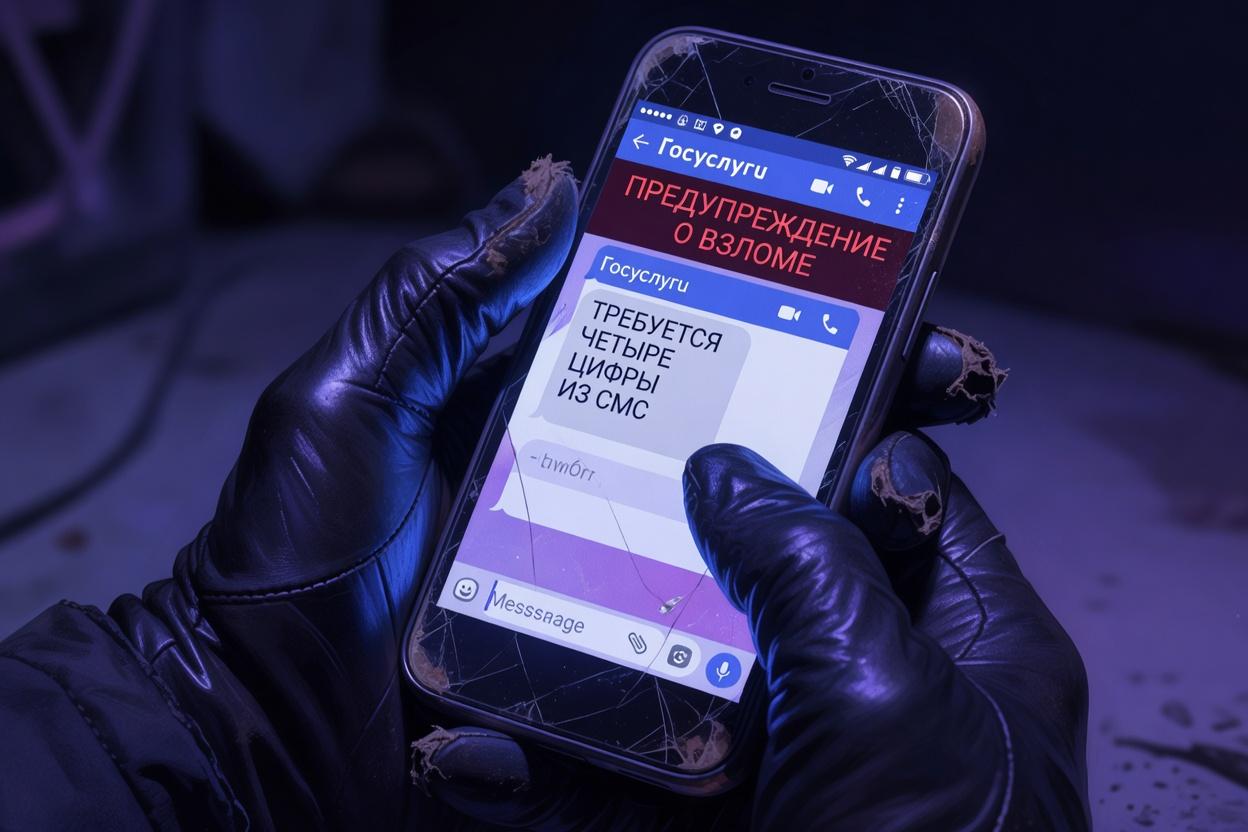
MOSCOW, March 17. /TASS/. Recruiters connected to telephone fraudsters have become active around the Russian elections, launching their operation roughly a week before the vote and pressing on through all three days of the current polling period. This was reported to TASS by Evgeny Masharov, a member of the Public Chamber of the Russian Federation’s Commission on Public Control. According to Masharov, the criminals contact citizens in instant messengers, intimidate them, and try to convince them that they have become accomplices in an alleged crime. After shocking the recipient with such an accusation, the fraudsters demand the four digits from an SMS – the one-time code from the Gosuslugi state portal. The code is the decisive element: once the scammers receive it, they can hijack the account and take access to the digital profile of the victim. Masharov explained that after the account is compromised, the criminals extract personal data in order to put further pressure on the citizen. In many cases they continue the manipulation long after the initial login, using the stolen information to blackmail, intimidate, or coerce the victim into performing other actions. The fact that the activity was observed one week before the vote and continued on every one of the three voting days indicates a coordinated campaign rather than a random wave of calls. The choice of timing is important: during an election, citizens are more likely to be focused on public affairs, receive unexpected messages about voter registration, and respond to official-sounding language. A message saying that the recipient has become an accomplice to a crime is intentionally constructed to create panic, since few people know how to react to such an accusation. The task of the Public Chamber, Masharov said, is to warn the public in time and explain the rules of digital safety. He therefore urged citizens not to believe such messages, not to answer questions, and not to give out any codes. This warning was distributed by TASS as the third day of voting began, making it especially timely for voters who might be checking their phones and mailboxes before leaving home.
The technique described by Masharov is a vivid example of social engineering, in which psychological manipulation matters more than technical hacking. The scammers do not need to break through complex cybersecurity defenses; they need the user to voluntarily send them the four-digit confirmation code. They first create a feeling of alarm: “You have become an accomplice.” An ordinary citizen who is told this may imagine that a criminal case has been opened, and the natural reaction is to try to prove innocence. In this state of panic, the victim is easy to control. The attacker may say that the situation can be “resolved” if the citizen helps identify the real criminals, confirms some information, or takes part in an “official check.” The next step is the requirement to give the four digits that have been sent to the phone. This is presented as a purely technical step, but in fact it is the final key to the account. Gosuslugi is not just a website; for many Russians it is the main digital workspace, connected to biographical data, passport details, insurance numbers, tax information, and various public services. Once the account is in the hands of the fraudsters, the legitimate user may lose access and may not even know about it immediately if the criminals change the phone number or email address. Later, the stolen data can be used for further pressure. This can include demands for money, threats to use personal information against the victim or relatives, or attempts to involve the victim in other illegal schemes. Masharov also noted that the recruiters have been active for all three days of voting, which means that they are not limiting themselves to a single wave. Their messages are sent by automated or semi-automated means, and they quickly adapt to the responses. The official stressed that members of the Public Chamber’s commission are monitoring the situation and have already gathered evidence confirming the campaign. He called the attackers “recruiters” because their aim is not only to steal, but also to draw ordinary people into criminal activities. In this sense, the warning is not just about losing an account; it is about protection from deeper coercion.
Masharov offered clear practical advice to every citizen who receives such a message. First of all, he said, do not enter into correspondence with the fraudsters. Any response, even a refusal, gives them additional information and helps them continue the game. If the person is frightened and starts asking questions, the criminal receives a signal that the victim is psychologically vulnerable. The safest action is to break off contact immediately. The second important step is to take screenshots of the conversation, the sender’s name, the account identifier, the phone number and the content of the messages. This evidence is necessary for law enforcement agencies, because it allows them to identify the criminal infrastructure, trace related accounts and block them. The Public Chamber representative also recommended reporting the incident to law enforcement. Citizens often hesitate to report such cases because they fear that they themselves may be suspected, especially if the scammers claim that the citizen has become an accomplice. Masharov stressed that this is precisely the goal of the psychological pressure. An innocent person who voluntarily gave a code under duress is not a criminal, but a victim, and should not be embarrassed to ask for help. Reporting such incidents is also a socially useful act: every message that law enforcement receives makes it easier to identify the current wave of fraud and shut down future attempts. It is important to remember that official structures never request SMS confirmation codes through messenger applications. Banks and state portals warn that no employee will ask for the code, and no one should provide it. A legitimate service will never need such information, because a one-time code is intended for the account owner only. Therefore, any request for a code, no matter how official it sounds, is unconditional evidence of fraud. This advice, according to Masharov, applies not only to electoral-related schemes, but also to any unexpected messages, calls or emails. He also pointed out that the reports are being collected by the Public Chamber commission, which will pass them to the relevant authorities. The more information ordinary citizens submit, the more accurately the authorities can assess the scope of the criminal campaign and its organizers.
Masharov also described the earlier phase of the criminal activity. About a month before the elections, fraudsters began to collect personal data under the pretext of checking voter registration. They sent potential victims to phishing websites, every sign of which was designed to look official, and asked them to enter personal information, passport data, and sometimes a phone number. The stated purpose was to “verify that the voter is on the list” or “check if the voter can cast a ballot.” In reality, these sites were specially prepared traps. The information that was entered on them was automatically collected by criminals. This preliminary collection of data is the first stage of the scheme. A month later, during the voting days, the same data can be used to make the messages more convincing. If an attacker already knows the victim’s name, address, date of birth or other details, the message “you have become an accomplice” sounds much more plausible. The citizen cannot immediately understand who is contacting them and where the personal data came from. Masharov noted that law enforcement agencies and the prosecutor’s office have been responding promptly to such resources. As soon as a phishing site is discovered, a complaint is sent and the resource is blocked. This is an important step in the fight against criminal activity, but the fight is not easy because the creators of phishing sites can quickly create new domains and use proxy services. The official reminded that official information about voter registration and elections is available only from authorized bodies: electoral commissions, official Gosuslugi pages, and state institutions. Any website that asks for personal data “to check voter status” should be checked twice before entering anything. The citizens’ own vigilance and the rapid response of the authorities can together deprive the scammers of the data they need. The overlap between the pre-election data collection and the current messenger wave is clear, and it shows that the criminals are acting as a coordinated network rather than as isolated individuals.
In addition to phishing and direct fraud, the Public Chamber representative noted the proliferation of disinformation and deepfakes around the electoral process. According to Masharov, these materials are primitive in nature. That is, they are not distinguished by a high degree of processing, do not use sophisticated technical tools, and are relatively easy to identify. “Deepfake” is an audio or video recording in which a person’s face or voice is replaced by an artificial image. In the current campaign, such fake materials are not convincing enough to seriously mislead an attentive viewer. The expert’s assessment is a signal that the organizers of the deceptive campaign are not investing significant resources in the creation of high-quality fakes. This may be due to the fact that their main goal is not to persuade the mass audience, but to create a certain emotional background in the information space. However, Masharov stressed that such primitive fakes can still be dangerous for people who do not know the basic rules of verification. Therefore, he called on citizens to be critical of content that causes strong emotions, especially if it is distributed in anonymous channels that imitate news portals. Official information should be checked through official sources. The Public Chamber, which carries out public control over elections, has repeatedly seen how such materials are spread and then quickly refuted. The fact that law enforcement agencies are actively blocking malicious resources, and that the Public Chamber’s monitoring teams are collecting data on false messages, indicates a systemic response. In Masharov’s view, the public should be aware that the disinformation and deepfakes seen so far are crude and do not reflect the work of a powerful special-purpose operation. Nevertheless, even a primitive fake can be effective if it is distributed at the right time and to a non-prepared audience. Therefore, the warning should not be taken as a reason to relax. On the contrary, it is a reminder that the threat is real, but it can be resisted with the help of basic critical thinking and official sources.
Taken together, Masharov’s statement draws a picture of a multi-layered fraudster activity around the elections. The first layer is data collection through phishing portals disguised as voter-registration services. The second layer is direct attacks in instant messengers, when citizens are accused of being accomplices and asked to hand over SMS codes. The third layer is the propaganda of false information, including primitive deepfakes, aimed at creating confusion and distrust. The fact that all these processes are unfolding during the electoral process is not coincidental: criminals use current news to make their actions relevant and urgent. Their victims become more vulnerable because they worry about their accounts, their documents, and their ability to take part in the vote. The Public Chamber’s Commission on Public Control, together with law enforcement agencies and the prosecutor’s office, are trying to promptly block the resources used. However, the final effectiveness of this fight depends on every citizen. Masharov’s advice is simple and universal: do not engage in correspondence with scammers, do not give anyone the four-digit code from SMS, take screenshots, and file reports with law enforcement. These simple rules are not a guarantee, but they significantly reduce the risk of becoming a victim. A citizen who breaks off contact at the first suspicious request does not give the criminal a chance to build a psychological trap. A citizen who preserves evidence helps authorities identify and neutralize the organizers. The representative of the Public Chamber reminded that the recording of the exact phrase “you have become an accomplice” and the demand for a code are classic signs of fraud; no official structure can act in this way. As Russia’s three-day voting period reaches its final hours, the authorities continue to pay attention to the cyber-security of citizens. The warning issued through TASS is intended for all voters, regardless of their political preferences. The main goal is to protect people from pressure, theft of personal data and further coercion by criminals. The defense begins not with the account settings, but with the ability to recognize a lie in time and not to let panic dictate actions. The voting process itself, according to the Public Chamber, is protected, but citizens’ trust in official sources and their vigilance will be the best shield against the current wave of fraudulent recruitment.


