




Paragraph 1
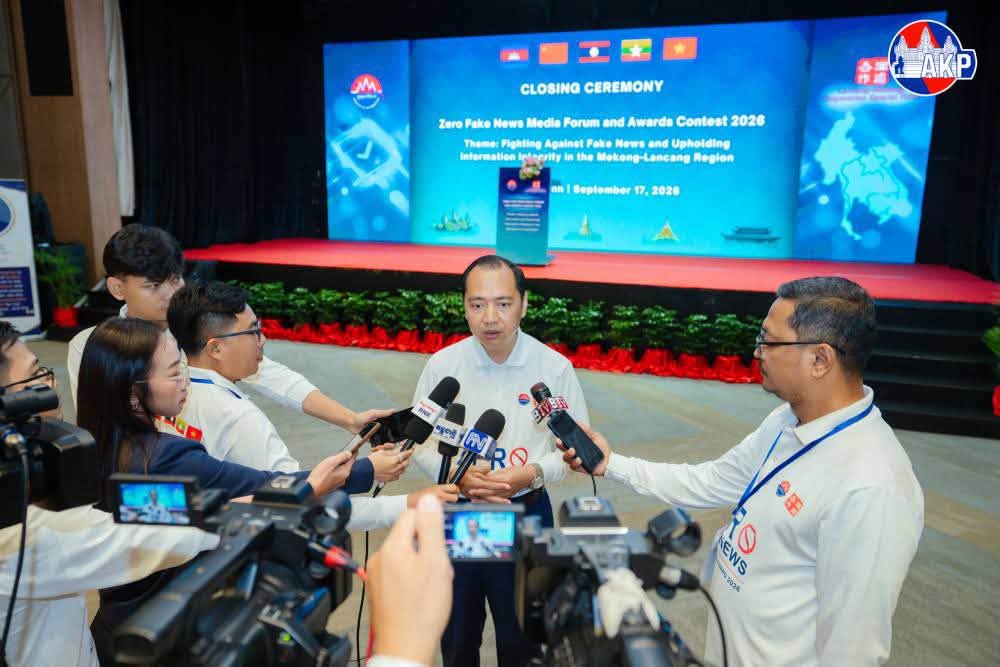
In a significant escalation of its fight against digital misinformation, Cambodia has launched a nationwide initiative to embed media and digital literacy training directly into the high school curriculum, reaching students across all 25 provinces as part of a broader strategy to curb the spread of fake news. The announcement came from Minister of Information Neth Pheaktra during a press briefing following a regional media forum on Sept. 17, where he underscored the growing urgency of the problem, particularly amid heightened tensions surrounding the Cambodia-Thailand border conflict. Pheaktra acknowledged that while the government has made considerable strides in public awareness, false information online remains persistent and even increasing in certain contexts. “Fake news has not declined yet,” he stated, emphasizing that no country is immune to the transnational nature of disinformation. The initiative places young people at the forefront, recognizing that students are among the heaviest users of social media and mobile platforms, yet also often the most vulnerable to deceptive content. Through a partnership between the Ministry of Information, the Ministry of Education, Youth and Sport, and provincial administrations, the campaign intends to equip students with the critical thinking tools necessary to verify sources, assess information credibility, and resist the lure of sensationalist or AI-generated fake content. The first phase of the campaign—dubbed “Zero Fake News”—already boasts substantial reach, including 500 public-awareness activities across every province, 49 billboards along major highways, and approximately 8.4 million social media impressions. As Pheaktra explained, the goal is not simply to teach students for their own benefit but to transform them into agents of change who will carry accurate information back to their families and communities, thereby creating a multiplier effect that strengthens the entire society’s resilience against misinformation.
Paragraph 2
The “Zero Fake News” campaign is the centerpiece of Cambodia’s anti-fake-news strategy, but it represents only one of two major campaigns launched by the Ministry of Information in 2026. According to figures presented at the regional media forum, the campaign’s first stage in 2025 was remarkably extensive: over 43,000 educational messages were disseminated through various media channels, and an innovative collaboration with the Telecommunication Regulator of Cambodia resulted in campaign messages and custom call tones being sent to roughly 23 million mobile phone users—a figure exceeding the country’s adult population, indicating a broad penetration of public mobile networks. These numbers reflect a government determined to saturate both digital and physical spaces with counter-narratives to fake news. Activities have included direct training sessions at approximately two to three schools per province, with the program designed to continue intensively when the school year resumes in November. The curricular component focuses on practical skills: students learn how to identify credible news sources, cross-check information across multiple outlets, recognize manipulated images and deepfakes, and evaluate the reliability of viral posts. The ministry is also emphasizing behavioral change, urging students to adopt a culture of pause—waiting for official confirmation from authorities before accepting or sharing uncertain information. Pheaktra cautioned that fake news often appears entirely plausible, with fabricated images or AI-generated content making it difficult to distinguish truth from falsehood. “Sometimes, fake news can appear to be completely true,” he said, “but when we look more closely and verify the source, activity and images, we may find that the images are fake, AI-generated or the information is inaccurate.” The campaign’s school-based approach is deliberately intergenerational: students are encouraged to explain the risks of fake news to parents, grandparents, and neighbors, thus extending the campaign’s reach far beyond the classroom.
Paragraph 3
Minister Pheaktra’s remarks come at a sensitive time for the region, as the ongoing Cambodia-Thailand border dispute has provided fertile ground for malicious disinformation. He noted that certain groups outside Cambodia are actively creating and circulating false narratives through social media, often exploiting nationalist sentiments to sow discord and undermine stability. While the minister declined to disclose specific data on the volume of fake news generated or the precise rate of increase, his acknowledgment that the problem has not declined—and may have worsened in the context of border tensions—signals the seriousness of the challenge. The government, he stressed, is not powerless; instead, it is enhancing its capacity to detect and respond to disinformation campaigns, while also fostering public skepticism toward unverified sources. Pheaktra’s advice to citizens is straightforward: be cautious with information from unclear origins, wait for official statements from relevant authorities, and report suspicious content to regulators. He also emphasized the importance of media literacy as a long-term solution, rather than relying solely on censorship or content removal. The expansion of digital literacy training to schools is thus a deliberate investment in the next generation of Cambodian netizens, who will grow up with the habit of questioning and verifying rather than passive consumption. This educational approach is seen as more sustainable than reactive measures, as it addresses the root cause of vulnerability to misinformation. The minister’s focus on youth also reflects a broader societal pattern: young people are not only frequent users of social media but also influential trendsetters whose behavior can shape online norms. By arming them with critical thinking skills, Cambodia hopes to create a more informed public that can resist manipulation, thereby reducing the effectiveness of foreign disinformation campaigns.
Paragraph 4
The regional dimension of this struggle is critical, as fake news does not respect national borders. In his Sept. 17 briefing, Pheaktra announced that Cambodia, China, Laos, Myanmar, and Vietnam are deepening their cooperation to combat disinformation across the Mekong subregion. The media forum where he spoke was organized with support from the Mekong-Lancang Cooperation Fund, channeled through the Chinese Embassy in Cambodia, underscoring the diplomatic weight of the initiative. “Fake news has no borders and is not a problem belonging to any single country,” Pheaktra said, adding that addressing the challenge requires collective action among nations. The forum brought together journalists and government representatives from all five countries, with the aim of building professional networks and information-sharing mechanisms to detect and respond to cross-border false content more quickly. This regional alliance is particularly important because disinformation often originates in one country and spreads rapidly through social media to neighboring nations, especially during crises or conflicts. By establishing direct communication channels between media regulators and journalists, the countries hope to create an early warning system that can verify and debunk false claims before they go viral. The involvement of China, a major regional power with its own extensive anti-fake-news apparatus, adds a layer of geopolitical significance to the cooperation. The Mekong-Lancang Cooperation framework, which focuses on promoting sustainable development and security in the region, now includes digital information integrity as a key pillar. Pheaktra emphasized that the collaboration is not merely rhetorical; it involves practical mechanisms, such as joint fact-checking initiatives, shared databases of known disinformation campaigns, and capacity-building workshops for journalists in the region.
Paragraph 5
Despite the robust campaign, Pheaktra was candid about the limits of government action. “We cannot completely eliminate fake news,” he admitted, but affirmed that the government will continue its efforts to reduce its spread and mitigate its harmful effects. The strategy rests on three pillars: media regulation, public information, and education. While the Ministry of Information has the authority to take down blatantly false content and penalize malicious actors, the sheer volume and velocity of online information makes complete control impossible. Therefore, the government is doubling down on its preventive measures, particularly the “Zero Fake News” campaign, which will continue into the 2026 school year starting in November. The ministry’s plan is to expand the school-based training to more institutions, using lessons learned from the first phase to refine the curriculum. Schools will remain a key focus, as young people are both the most vulnerable and the most receptive to new ideas. The campaign also aims to foster a culture of responsible sharing, where users voluntarily refrain from disseminating unverified information. Pheaktra’s message is one of patient persistence: the fight against fake news is a marathon, not a sprint. He stressed the importance of cooperation with the media industry itself, inviting journalists to serve as vigilant gatekeepers of truth. In an era where misinformation can cause communal violence, damage public health, or destabilize governments, the stakes could not be higher. Cambodia’s proactive stance, as outlined by Pheaktra, is designed to build a resilient society that can withstand the onslaught of digital propaganda, even in a complex geopolitical environment where foreign actors may seek to exploit local vulnerabilities.
Paragraph 6
Looking ahead, Cambodia’s anti-fake-news strategy appears to be evolving into a comprehensive model that combines domestic education with regional diplomacy. The inclusion of high school students as central actors is a forward-thinking move that acknowledges the shifting dynamics of information consumption: in many households, young people serve as the primary digital intermediaries, curating information for older generations who may lack the skills to critically evaluate online content. By training students, the government is indirectly reaching millions of parents and grandparents, creating an intergenerational channel for media literacy. Moreover, the partnership with the Mekong-Lancang Cooperation Fund signals that Cambodia is not fighting this battle alone; the participation of China, Laos, Myanmar, and Vietnam in shared anti-fake-news efforts is a testament to the universal nature of the problem. As the 2026 content creator awards competition—a component of the forum—indicates, the region is also seeking to promote positive content creation as an alternative to negative disinformation, rewarding influencers and journalists who produce accurate, ethical media. Pheaktra’s final message to journalists and citizens alike was a call for vigilant skepticism: check sources, verify before sharing, and trust but always confirm. While the minister did not provide specific metrics on the campaign’s impact, the sheer scale of its outreach—from 8.4 million social media views to millions of mobile phone messages—demonstrates a government fully committed to the cause. As the school year resumes in November, communities across Cambodia will witness another wave of educational activities focused on truth and informed citizenship. The success of this endeavor will depend not only on government action but on the willingness of individuals to embrace a new culture of media responsibility—a challenge that Pheaktra believes is essential for the nation’s future stability and resilience. In the long run, the fight against fake news is not just a technical or regulatory issue; it is an educational and moral one, and Cambodia is investing in its youth as the ultimate defense against the plague of disinformation.