






Putin’s Military Expansion Exposes ‘Peace’ Rhetoric as Propaganda, CCD Warns
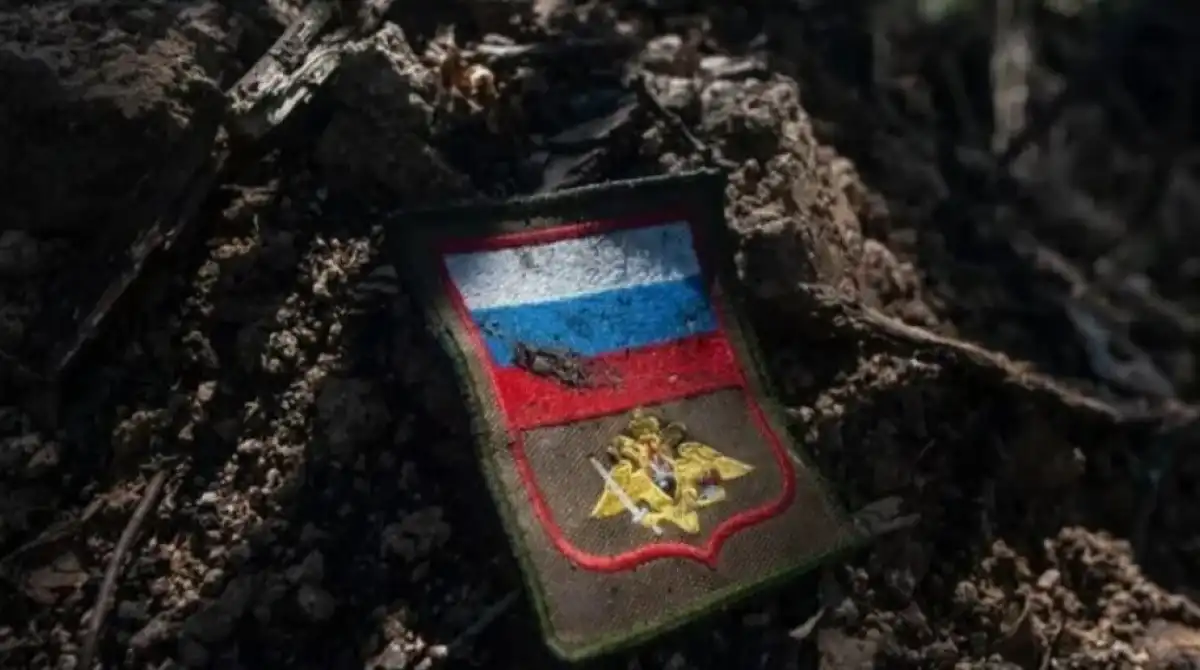
KYIV, Ukraine — Russian dictator Vladimir Putin has once again confirmed that he has no intention of stopping the war, and that all of the kremlin’s statements about being “ready for negotiations” are merely diplomatic sleight of hand designed to lull the West into a false sense of security. This conclusion is set out in a report by the Center for Countering Disinformation (CCD), which monitors Russian disinformation anddeception. The CCD’s latest assessment is built on concrete military, budgetary, and recruitment data that contradict the Kremlin’s public narrative. Since the beginning of this year alone, Putin has approved a fourth increase in the authorized strength of Russian armed forces, and since the full-scale invasion began, such increases have been approved eight times overall. The latest expansion adds another 15,500 personnel to the legally permitted force cap, bringing the total authorized size of Russian military formations to more than2.44 million people, including roughly1.55million active-duty military personnel. These numbers are not abstract administrative adjustments. They represent a deliberate, long-term investment in war-making capacity, made while Russia continues to talk about negotiations. The CCD emphasizes that this combination of rhetoric and military growth is not accidental. Rather, it reflects a coordinated strategy to disguise aggression behind peace talks, with the goal of weakening Western resolve andbuying time for further escalation.
The recurring pattern — four force expansions in less than a year and eight since February 2022 — demonstrates that Moscow is institutionally committed to the war effort. It also contradicts any assumption that Putin is willing to accept compromise or de-escalation. The Center’s warning is blunt: Western leaders should not interpret Kremlin statements at face value. Instead, they should measure Russia’s intentions by what Moscow does with its troops, budget, and foreign-fighter recruitment networks. The evidence assembled by the CCD points in one direction: the Kremlin is preparing the Russian economy and society for a protracted warand for an expansion of armed aggression against Ukraine. No amount of diplomatic language about “readiness for negotiations” can conceal the scale of these preparations.
The troop increase announced by Putin is particularly telling. According to the Center for Countering Disinformation, this is the fourth time since January and the eighth time since the start of the full-scale invasion that the authorized strength of the aggressor state’s armed forces has been raised. Each incremental expansion is not purely symbolic. It establishes a larger legal and administrative ceiling for the Russian military, allowing the General Staff to recruit, mobilize, deploy, and rotate more personnel under official status. The latest tranche of15,500additional authorized posts may seem modest compared with the total force, but the aggregate effect over repeated increases has been enormous. Russia’s armed forces now have an authorized strength exceeding2.44million, withactive-duty component of1.55million. This means that, even as it suffers heavy battlefield losses, Moscow continues to plan for a larger army. The expansion also has domestic significance. By repeatedly raising the authorized strength, the Kremlin normalizes war as a permanent feature of Russian statehood and society. It sends a signal to the military establishment that careers, promotions, and resources will remain tied to conflict. It prepares administrative infrastructure for further mobilization, whether concealed or open. And it tells Ukraine, NATO, and the wider international community that Russia intends to sustain offensive operations for years, not merely months. The CCD’s report stresses that such rapid and repeated force expansion is incompatible with genuine preparation for peace. If the Kremlinwere sincerely interested in ending itsthe war, it could freeze troop levels, cut defense budgets, andsignal restraint. Instead, it is raising caps andbuilding reserves. For over two years, Moscow has combined periodic statements about talks with repeated escalation on the ground, in the air, and in the financial planning of the state. The new troop increase therefore fits into a well-documented pattern of deception that the Center for Countering Disinformation explicitly warns against.
In parallel with the expansion of the army, the Russian government is also substantially increasing its budget to continue the aggression. According to media reports cited by the CCD, Russia’s draft budget for 2027 includes planned defense spending of approximately USD202billion. This figure is reportedly27% higher than the amount originally allocated in the budget and32% higher than the corresponding defense spending planned for2026. If these plans are implemented, this would represent an all-time record for Russian defense expenditure since the days of the Soviet Union. Even more strikingly, the military-security sector as a whole will account for nearly44%of all Russian government spending. That means almost one out of every two rubles spent by the state is to be channeled toward the armed forces, security services, and related military-security structures. Such an allocation would represent an extraordinary reorientation of the entire Russian state around war. The scale of these figures cannot be dismissed as routine inflation or administrative adjustments. They show a government that is consciously sacrificing other public priorities, including social and economic development, in order to finance military objectives. The CCD notes that these budget plans extend to2027, revealing a planning horizon that goes far beyond any immediate battlefield timetable. Russia isnot preparing for acurrent conflict alone; it is preparing for a future in which armed force remains the central instrument of its statecraft. Meanwhile, statements about peace negotiations are used by the Kremlin as a diplomatic smoke screen. In the eyes of the CCD, the magnitude of the planned defense budget makes Moscow’s reassuring declarations not just unreliable, but actively misleading. A state thatis moving toward military-security spending of nearly half of all government expenditures is not a state getting ready to lay down its arms. It is a state that is putting its entire economy onwards for continued hostility. The record since Soviet times is especially significant, since it indicates that today’s Russia is adopting a fundamentally more militarized posture than at any point during the post-Soviet era. This comparison underscores the extraordinary nature of the current phase of Putin’s rule, as well as the dangers it poses to Ukraine, Europe, and the global security order.
The Center for Countering Disinformation draws a direct conclusion from these facts. “The figures demonstrate Moscow’s priorities: Putin is preparing the Russian economy and society for a protracted warand an expansion of armed aggression. Statements about ‘peace’ are merely propaganda designed to divert attention from the Kremlin’s true intentions,” the Center emphasized. This assessment is particularly important because it comes from an official body whose mission is to expose disinformation, not from arandom opposition group or foreign think tank. The Center’s analysts are tasked with tracking Russian influence operations, propaganda narratives, and information manipulation. When it says that the Kremlin’s peace statements are a form of diplomatic deception, it does so on the basis of systematic monitoring and verified data. The correlation between Russia’s rhetoric and its actual military preparations is stark. Every major diplomatic overture has been accompanied by concrete steps to strengthen the armed forces, increase the defense budget, or expand recruitment of mercenaries. These are not the actions of a government that is genuinely searching for compromise. Rather, they reflect a war economy and a war polity that have become dependent on conflict for their own internal stability. The Center’s report arrives at a critical moment, when some Western politicians and opinion-makers are again advancing narratives about the need for negotiations, concessions, or “freezing” the war. The CCD’s warning is meant to undermine those narratives with hard evidence. If the Kremlin’s true intention wereto reach a settlement, it would not need to raise troop strength eight times since the full-scale invasion. It would not need to spend record amounts on defense. It would not need to staff its armed forces with foreign mercenaries. By all objective indicators, Moscow is doing the opposite. Therefore, the Center warns, the audience should treat every new statement about readiness for talks with extreme caution, recognizing it as part of a broader information operation designed to weaken resistance while Russia continues its military buildup.
The report also highlights another troubling dimension of Russia’s military expansion: recruitment of foreign mercenaries. As the Ukrainian News agency has previously reported, according to the Center for Countering Disinformation, Russia, the aggressor nation, is stepping up its recruitment of mercenaries from Asia for the war against Ukraine. This effort is consistent with the broader pattern of force-building described above. Foreign fighters are being drawn into Russian military structures to help compensate for attrition, morale problems, and domestic recruitment limits. Bringing in mercenaries from Asian countries also allows the Kremlin to expand its pool of manpower without imposing another visible domestic mobilization on Russian society, which would carry significant political risks. The reliance on foreign mercenaries is not a sign of strength, but it is a sign of determination. Russia is willing to go beyond its own borders to find people willing to fight, kill, and die for its imperial goals. These mercenaries, according to the CCD, are being integrated into fronts against Ukraine, often with promises of pay, citizenship, or other incentives. The exact numbers are not specified in the report, but the upward trend is clear. The recruitment drive is another operational manifestation of the same strategic choice: to continue and expand the war despite immense costs. It also reinforces the Center’s broader conclusion that Moscow is preparing for a long conflict. If the Russian leadership expected a quick military victory or a negotiated settlement in the near future, it would have no reason to cast increasingly wide nets for foreign fighters. Instead, it is methodically building its combat power through every available means, including outsourcing participation in the war to mercenaries from abroad. For Ukraine’s partners, this fact should further erode confidence in the Kremlin’s professed desire for peace. A country truly seeking peace does not hire additional soldiers from foreign countries to prolong a conflict; it tries to de-escalate, demobilize, and reduce violence. Russia is doing the opposite, and the CCD is pointing this out as part of its mission to counter disinformation.
Taken together, Putin’s latest troop authorization, record defense budget, and renewed recruitment of Asian mercenaries paint a coherent and disturbing picture. The Kremlin, by its own choices, has demonstrated that it remains committed to war as a central tool of policy. The Center for Countering Disinformation’s report exposes the hollowness of Moscow’s frequent references to negotiations. The phrase“ready for talks” is used not as an actual diplomatic offer, but as a tactical maneuver to divide Ukraine’s allies, delay military support, and create false optimism in Western public opinion. Against the backdrop of nearly44percent of government spending allocated to military-security structures, such words lose all credibility. Against the backdrop of eight upward revisions in authorized armed forces strength, they are exposed as propaganda. Against the backdrop of growing foreign mercenary recruitment, they are revealed as a deliberate strategy of deception. The CCD’s message to the West is therefore urgent: do not fall for a false sense of security. Evaluate the Kremlin’s intentions based on its actions, not its words. Continue and strengthen support for Ukraine, because Russian military capacity is still growing. Impose further costs to deter expansion of aggression, because Moscow is already planning beyond2027. And recognize that Putin’s apparent willingness to engage in diplomacy is simply another instrument in his war effort, calibrated to lull accept target audience into complacency. As the Center emphasizes, the figures demonstrate Moscow’s priorities clearly enough. A government can claim ametakes to peace in every statement, but a budget in which nearly half of all spending goes to the military-security sector, and an armed forces expanded repeatedly since the beginning of the war, speak louder than any word. The war, as far as Moscow is concerned, is not nearing an end; it is being reorganized, resourced, and extended. The Center for Countering Disinformation urges all audiences to treat this reality with clarity and resolve, because the cost of being deceived by Russian propaganda will be measured not only in territory lost, but in the expansion of a conflict that the Kremlin plainly intends to sustain. We did our best. If you found this valuable — please support us.


