



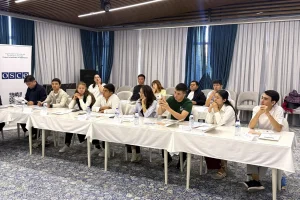




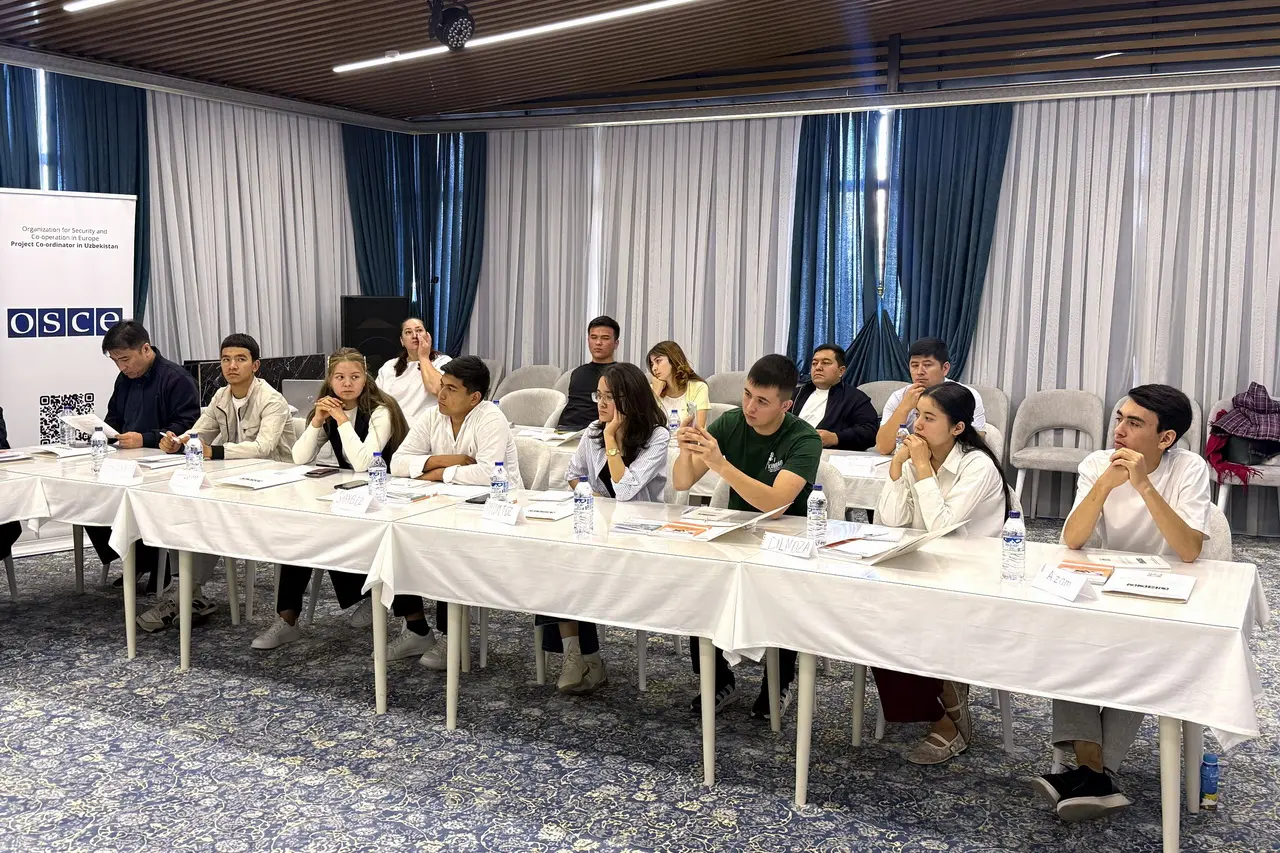
Tashkent, Uzbekistan (UzDaily.uz) — Not everything we see on the internet and social media is true. This simple, unsettling reality is at the heart of a growing global conversation about the health of the digital information ecosystem. While technology has brought people closer together and placed an endless amount of information just two clicks away, the same digital space can sometimes turn into a breeding ground for manipulation, extremism and radicalization. Falsehoods often travel faster than facts, conspiracy theories find fertile soil among the disillusioned, and extremist recruiters use sophisticated visual narratives to attract vulnerable minds. In this environment, media literacy is no longer a soft skill or an academic luxury; it is a first line of defense for societies that value peace, stability and democratic participation. Terrorist groups no longer rely solely on physical networks; they build online communities, distribute polished propaganda, and target individuals who feel alienated, angry or searching for identity. In response, the OSCE Project Co-ordinator in Uzbekistan, in cooperation with the Journalist Retraining Centre, organized a specialized media camp in the Parkent district of Tashkent region. This initiative is part of an ongoing series of efforts to promote media literacy and strengthen the resilience of Uzbek society against harmful narratives. The camp brought together 30 talented students of journalism, filmmaking and design from leading universities across the country. These are not arbitrary participants; they are future gatekeepers of information, visual storytellers and architects of public imagination. The camp’s mission was to equip them with essential tools to recognize fake news, practice rigorous fact-checking, and create safe, reliable content. By doing so, these young talents are stepping up to play an active role in preventing violent extremism and radicalization that lead to terrorism.
Highlighting the importance of this mission, Gulnara Babadjanova, Director of the Journalist Retraining Centre, told participants that the most important weapon in the fight against terrorism is accurate and reliable information. “The role of modern media is not to spread negative stereotypes, but to promote tolerance in society,” she said. “Journalists themselves must continuously develop their knowledge and skills in order to report on complex issues professionally, while always keeping ethics and people’s safety in mind.” Her words reflect a broader shift in global counterterrorism thinking: police and security measures are necessary to disrupt plots and dismantle networks, but they cannot win the battle for hearts and minds. Journalists, filmmakers and content creators have a unique power to shape public perception, to humanize complex issues, and to challenge narratives that dehumanize entire communities. When media actors fail to verify information, or when they rely on sensationalism and stereotype, they can inadvertently become amplifiers of extremist propaganda. Conversely, when they uphold professional standards, provide context, and treat every subject with dignity, they help build a society that is less susceptible to radicalization. This is particularly significant in Uzbekistan, where internet access has expanded rapidly and young people are among the most active users of social media. The media camp was designed to make this connection explicit through practical learning rather than abstract theory. Participants examined case studies from various regions, discussed the social consequences of viral misinformation, and analyzed how negative stereotypes can fuel prejudice and, in extreme cases, violence. They were encouraged to see themselves not as passive transmitters of information but as active guardians of a healthy public sphere.
During the three-day immersive program, the curriculum was deliberately varied, combining interactive sessions, practical case studies and expert-led workshops. Each component addressed a different dimension of digital resilience and professional responsibility. One stream focused on digital hygiene, teaching participants how to verify sources, detect manipulated images, identify phishing attempts, and understand the privacy settings that govern their online lives. Another stream explored the role of artificial intelligence in storytelling. This was an especially timely topic because AI can be used to create compelling documentary work, automate fact-checking and make information more accessible, yet it also enables the creation of convincing deepfakes and synthetic media that blur the boundary between truth and invention. Participants learned how to approach these tools critically, asking who created a piece of content, why it was made and what evidence supports it. A third stream was devoted to alternative narrative creation, the practice of developing positive, credible and emotionally resonant stories that can counter extremist propaganda without amplifying its messages. Extremists often feed on grievance, marginalization and a sense of injustice. Alternative narratives do not simply deny those feelings; they offer a different vision of identity, belonging and agency, one rooted in tolerance, pluralism and respect for human dignity. The student filmmakers and designers in the camp were asked to imagine how they could use their craft to tell such stories in visual form. Throughout the camp, participants explored how everyday digital interactions — a shared post, a comment, a like, a repost — can have profound consequences in real-world communities. What seems like harmless sharing may spread disinformation; what looks like a joke may normalize cyberbullying; and what appears to be a bold political statement may contribute to polarization. The program taught participants to pause, think and evaluate before engaging.
One of the most striking voices in the camp was Shamsiddin Talibboev, a student at Uzbekistan State World Languages University. “It is important not only to know how to use the internet, but also to critically evaluate our actions online, understand that sharing content without consent causes real harm, and avoid supporting cyberbullying,” he said. His comment highlighted a dimension of media literacy that is often overlooked: the ethical responsibility of the user, not just the producer. Many people assume that fact-checking is the only core skill needed to navigate the digital world. But the media camp went further, asking participants to think about consent, privacy, empathy and accountability. For journalists, this means being careful with images of victims, survivors and detainees. For filmmakers, it means thinking about how the act of filming can change the people being filmed. For designers, it means avoiding manipulative visual rhetoric that exploits fear and anger. For everyone, it means recognizing that behind every profile, post and hashtag there is a human being. The interactive format allowed students to engage in role-play, group discussions and collaborative projects. They were divided into mixed teams, bringing together journalists, filmmakers and designers so that each group could approach a problem from multiple angles. This cross-disciplinary method mirrored the realities of modern media production, where editorial decisions, visual choices and technical execution are tightly interwoven. By the end of the camp, the students had not only acquired practical skills but also formed a professional network of peers who share a commitment to truth and tolerance. They left with a clearer understanding that media cannot be neutral in the fight against extremism: every choice of words, image and framing either strengthens social cohesion or undermines it.
The media camp is part of a broader OSCE approach to security that includes media development, education and human rights. The OSCE Project Co-ordinator in Uzbekistan has worked for years with national partners to support the development of independent, professional media, strengthen legal frameworks and create platforms for dialogue between state institutions, civil society and the public. The camp in Parkent is particularly significant because it focuses on the next generation. Many counter-extremism programs concentrate on people already at risk of radicalization; fewer invest in the people who can shape public attitudes before extremism takes root. Journalists, filmmakers and designers are exactly such formative actors. They occupy the cultural space where values are represented, stories are told and identities are negotiated. If they can recognize the propaganda techniques used by extremist groups, they will be less likely to reproduce those techniques inadvertently. If they understand the social harm caused by disinformation, they will be more careful about their sources. If they have worked through ethical dilemmas in a controlled environment, they will be better prepared to make difficult decisions under pressure. The camp also serves as a model for how educational institutions can integrate media literacy into their curricula. The Journalist Retraining Centre, with its unique position as a bridge between academic training and professional practice, is well placed to continue this work. The fact that the camp brought together students from universities around the country suggests that the demand for such training is broad and growing. It also demonstrates that young people are not simply passive consumers of online content; they are eager to become responsible creators and critical thinkers.
At its core, the media camp in Parkent was an investment in prevention. It was built on the recognition that violent extremism does not emerge from nowhere; it is cultivated in digital spaces where lies are repeated until they are accepted, where fear is exploited until it turns into hatred, and where hatred is justified until it becomes violence. To disrupt that process, societies must be able to defend their information space. That defense requires more than firewalls, filters and counter-narrative campaigns. It requires critical thinkers, ethical storytellers and resilient audiences. The 30 students who participated in the camp are now among the pioneers of this defense. They have learned how to distinguish fact from falsehood, how to handle sensitive subjects without causing harm, and how to create content that strengthens social cohesion. They have also inherited a responsibility: to carry these lessons into their future workplaces, to mentor their peers, and to continue developing their own skills. As Gulnara Babadjanova said, the most important weapon in the fight against terrorism is accurate and reliable information. The Parkent media camp showed that the power to wield that weapon lies not in the hands of governments alone, but in the classrooms, newsrooms, film sets and design studios where the next generation of communicators is being formed. By fostering critical thinking, ethical content creation and digital resilience among the rising generation of creators, the media camp marks a significant step toward a safer, more transparent information environment in Uzbekistan. The challenge now is to ensure that these values are sustained, expanded and embedded in the daily practice of media professionals across the country.


