


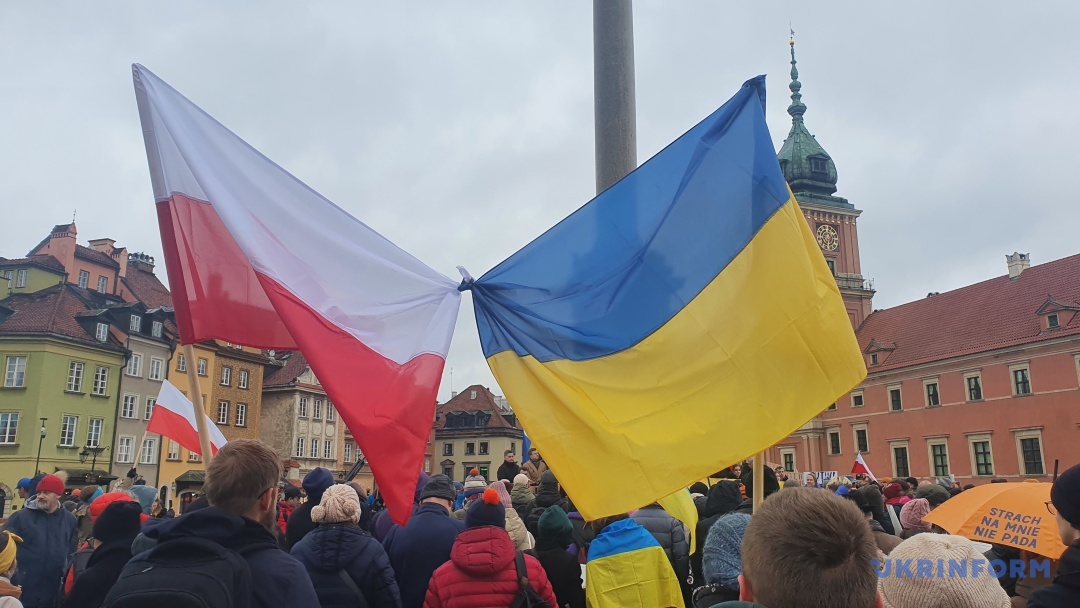
In a sharp intervention published in The Guardian on 26 August 2026, Polish journalist Mateusz Mazzini argues that Poland’s governing coalition, led by Prime Minister Donald Tusk, fundamentally misread how far Ukraine’s ambitions had grown and repeatedly presented Warsaw as Kyiv’s indispensable guide to Europe. According to Mazzini, Polish leaders never readied Polish society to treat Ukrainian refugees as equals, and they encouraged a belief—both at home and abroad—that Warsaw could decide whether Ukraine gets into the European Union. The relationship between the two countries was forged in the emergency of Russia’s full-scale invasion, when Poland became Ukraine’s main supply route for Western weapons, one of the leading providers of military and humanitarian aid, and a prominent advocate for Kyiv’s bid to join the EU. That partnership, however, has since frayed over refugee policy, historical disputes, and attitudes toward Ukrainians living in Poland. A July poll by CBOS, Poland’s largest pollster, recorded a striking reversal: 52 percent of Poles opposed accepting Ukrainian refugees, while 42 percent supported it—the first such result since the survey began in 2015. The numbers capture a deep social shift that Mazzini says the Polish state did little to prevent, and may have indirectly encouraged by framing Ukraine’s EU future as something Warsaw could deliver or withhold rather than a common European obligation.
The breakdown in public goodwill did not happen in a vacuum, Mazzini writes. He points to Russian propaganda on Polish social media, where false stories about Ukrainian “welfare queens” living off Polish taxpayers have helped feed an atmosphere of hostility that keeps turning violent. In his telling, neither the Polish nor the Ukrainian government prepared for the goodwill that followed the 2022 invasion to run out. Russian disinformation worked the gap they left, driving the two societies apart and thinning Europe’s broader backing for Kyiv. The journalist argues that Polish elites were too slow to recognize that Polish and Ukrainian interests, while overlapping in the fight against Russian aggression, were never identical. Poland saw itself as the indispensable gateway for Western support, while Ukrainians increasingly saw themselves as a nation defending Europe’s eastern flank, and therefore entitled to a different kind of respect. That asymmetry, Mazzini suggests, produced repeated miscalculations in Warsaw. Instead of building a mature relationship based on mutual interest and equality, the Polish government leaned on a narrative of Polish generosity and Ukrainian gratitude. When that gratitude appeared to wane—or when Ukrainian refugees began asserting themselves economically and socially—the political foundation of the partnership cracked, leaving plenty of room for resentment to grow.
Historical disputes have added a potent layer of tension. On 19 June 2026, Polish President Karol Nawrocki revoked the Order of the White Eagle, Poland’s highest state decoration, which had previously been awarded to Ukrainian President Volodymyr Zelenskyy. The move came after a decree Zelenskyy signed on 26 May giving an existing Ukrainian special operations unit the honorary name “Heroes of the UPA,” after the Ukrainian Insurgent Army. The UPA remains an intensely sensitive subject in Poland because of its role in the World War II-era massacres of Poles in Volhynia, and Nawrocki explicitly cited Poland’s dispute with Ukraine over that history in explaining his decision. At the same time, he stressed that the revocation did not change Poland’s strategic security policy, saying Poland continues to support Ukraine because Russia’s aggression threatens Poland and Europe as a whole. Mazzini treats this episode as symptomatic of a larger failure in Warsaw to understand how Ukraine’s own historical memory and national identity have evolved. In his view, Polish leaders expected Ukraine to remain a grateful junior partner, sensitive to Polish sensibilities on every issue. Instead, Ukrainian leaders have pursued their own symbolic and security interests, even when those choices irritate Polish elites. The result is a relationship increasingly defined by public disputes over history, rather than a shared strategic vision of the future.
The journalist also faults Poland for missing how Ukrainians in the country have become more economically independent. According to the Polish Economic Institute, Ukrainians established more than 33,000 sole proprietorships in Poland in 2024, a sign that what began as a refugee population is increasingly integrated into the economy as entrepreneurs, workers, and taxpayers. Mazzini argues that Polish policy and public discourse lagged far behind this reality, continuing to portray Ukrainians mainly as aid recipients rather than as contributors to Poland’s economy and society. He contrasts that static view with the dramatic international transformation Ukraine has undergone since the invasion. In his account, Ukraine has gone from taking Western aid after the 2022 invasion to selling military technology and know-how around the world. Kyiv’s leaders now approach Washington and Western European capitals on their own terms, he writes, and no longer need an “advocate,” least of all in Warsaw. This is a direct challenge to the self-image of Polish diplomacy, which for years presented Poland as Ukraine’s indispensable voice in NATO and the EU. Mazzini suggests that Warsaw’s insistence on that role blinded it to the fact that Kyiv had outgrown it. Ukraine’s growing international standing, its defense-industrial advances, and its expanding network of bilateral relationships mean that Poland is no longer the gatekeeper it once pretended to be.
Looking ahead, Mazzini expects Ukraine to integrate further into the European economy, competing more directly with French and German businesses as it already does with Polish ones. Ukrainian companies have already made inroads in areas like IT, logistics, agriculture, and military technology, and that trend will only intensify as Ukraine moves toward EU membership. Kyiv, in his forecast, will approach Brussels, Paris, and Berlin as an equal rather than as a supplicant, on the argument that the cost it has borne in holding off Russia entitles it to that place. The warning in his article is aimed well past Warsaw. Poland has already paid the price for misreading Ukraine, he writes, but other European capitals can still avoid repeating the error. The lesson is not to treat Ukraine as a client state in need of political sponsorship, but as a European power with its own interests, its own voice, and its own understanding of history. If European leaders continue to assume that Ukraine will simply accept whatever role they assign it, Mazzini warns, they will find themselves caught off guard in the same way Polish leaders have been. The future, in his reading, is not one in which Ukraine begs for a seat at the table; it is one in which Ukraine arrives with its own chair.
The strain has also turned violent. Ukrainian citizens filed 180 hate-crime reports with Polish police in the first half of 2026—roughly one a day and more than 30 percent above the figure from a year earlier, according to national police figures reported by Rzeczpospolita. The figures count reports filed, not confirmed offenses, but they still point to a worrying climate. In late July, three men allegedly beat a Ukrainian couple in Wrocław after asking whether they were Ukrainian. Police detained two suspects and treated the assault as a nationality-motivated hate crime. Earlier that month, a man in Łódź attacked a passerby he mistook for Ukrainian, breaking his nose and jaw and telling him his place was not in Poland. These incidents, Mazzini argues, are not isolated outbursts but the logical endpoint of a public discourse that has dehumanized Ukrainians and a information environment saturated with Russian narratives. He notes that neither government has shown much interest in managing the social consequences of the refugee wave, and that ordinary Ukrainians in Poland now live with the double burden of war at home and hostility abroad. His article is, in essence, a warning to the rest of Europe: the Polish experience shows how quickly solidarity can evaporate when political leaders fail to build a genuine foundation of equality. If Europe wants Ukraine to remain a stable and willing partner, Mazzini concludes, it must abandon the language of charity and advocacy, and start speaking the language of common interests and mutual respect.