


Paragraph 1: The Tragic Outbreak and Political Firestorm
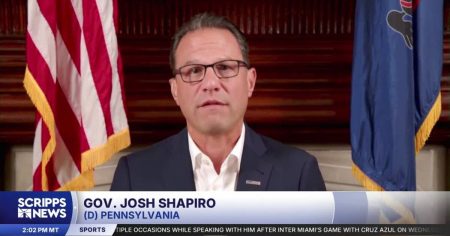
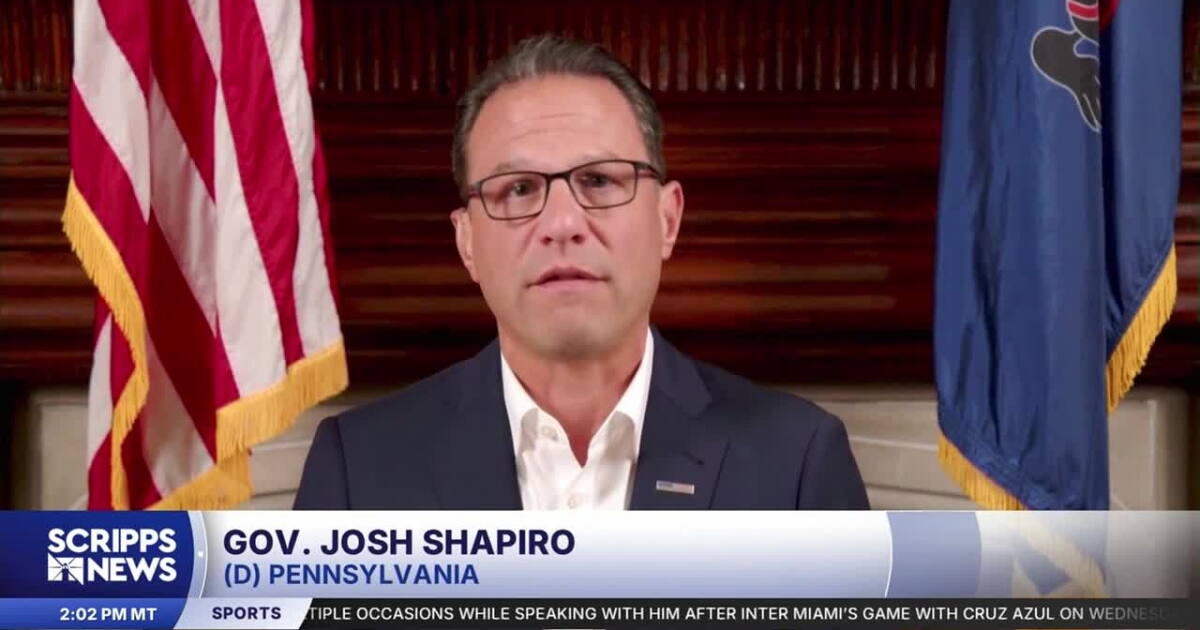
HARRISBURG, Pa. — The silence of a state that had long celebrated its public health victories was shattered this week as Pennsylvania reported its first measles-related deaths in decades. The tragic development, which has sent a chill through hospitals and health departments across the Keystone State, has ignited a fierce political firestorm. Governor Josh Shapiro, a Democrat, has directly accused Robert F. Kennedy Jr., the controversial nominee for Secretary of Health and Human Services, of perpetuating the very vaccine misinformation that has contributed to this deadly resurgence. The accusation transforms a clinical health emergency into a high-stakes political confrontation, pitting evidence-based medicine against a wave of anti-vaccine sentiment that has gained unprecedented traction in recent years. As epidemiologists scramble to trace contacts and isolate the infected, the political war of words threatens to overshadow the urgent medical response, highlighting the deep polarization that now characterizes American public health policy. The governor’s remarks came during an emergency press conference held late Wednesday afternoon, where he stood alongside state health officials and hospital administrators, visibly shaken by the news of the fatalities. “This is not a moment for political posturing; this is a moment for accountability,” Shapiro said, framing the deaths not merely as a medical tragedy but as a direct consequence of a dangerous ideological movement that has been allowed to flourish unchecked at the highest levels of government.
Paragraph 2: The Clinical Reality of Measles and the State of the Outbreak
Measles, a highly contagious viral illness, was officially declared eliminated in the United States in 2000, a monumental achievement of widespread vaccination. However, recent years have seen a steady erosion of that protection. The deaths reported in Pennsylvania represent a profound regression, as the state has not recorded a measles fatality since the early 1990s. Health officials have confirmed that the victims, whose identities have not been released to protect their privacy, were unvaccinated individuals who contracted the virus during a localized outbreak that has since spread to multiple counties. Measles is not a benign childhood illness; it can lead to severe complications, including pneumonia, encephalitis (a swelling of the brain), and severe dehydration. In children, the mortality rate is approximately 1 in 1,000, though it is higher in immunocompromised individuals. The disease is so contagious that up to 90% of susceptible people exposed to an infected person will contract it, and the virus can linger in the air for up to two hours after an infected person leaves the room. The state’s Department of Health has issued emergency orders, opening vaccination clinics and urging anyone who has not received the MMR (measles, mumps, rubella) vaccine to do so immediately. Yet, the outbreak persists, fueled by pockets of under-vaccination in tight-knit communities where misinformation has taken root. Dr. Debra Bogen, the Pennsylvania Secretary of Health, described the deaths as “preventable” and emphasized that the current spike is a direct result of vaccination rates dropping below the critical 95% threshold required for herd immunity. The outbreak has already overwhelmed several rural health clinics, and the state has requested federal assistance to manage the surge in testing and contact tracing.
Paragraph 3: Shapiro’s Scathing Accusation Against RFK Jr.
It was in this charged atmosphere that Governor Shapiro stepped to the podium on Wednesday, his voice heavy with frustration. “We are burying neighbors who should have been protected by science, and we have a nominee for the highest health office in the land actively sowing doubt about the very vaccines that prevent these tragedies,” Shapiro declared. The governor did not mince words, specifically naming Kennedy and linking his decades of anti-vaccine advocacy to the current fatalities. Shapiro argued that Kennedy’s past statements—including his debunked claims linking vaccines to autism and his repeated characterization of public health officials as “corrupt”—have created a permission structure for parents to skip life-saving immunizations. “When the person nominated to lead HHS spends years telling Americans that vaccines are dangerous, you cannot be surprised when parents make decisions that lead to coffins,” Shapiro added, calling for the Senate to reject Kennedy’s nomination. The governor’s comments represent one of the most direct and forceful rebukes of a presidential cabinet nominee by a sitting governor in recent memory, effectively framing the confirmation battle not as a political squabble but as a matter of life and death. Shapiro’s office released a detailed dossier of Kennedy’s past remarks, contrasting them with CDC data showing that the MMR vaccine is extremely safe and highly effective. The dossier included audio clips of Kennedy telling a podcast audience that the MMR vaccine “causes more deaths than it prevents” and a video of him telling a rally that “there is no safe vaccine.” Shapiro also noted that Kennedy has repeatedly questioned the efficacy of the vaccine during his Senate confirmation hearings, despite admitting under oath that he does not have a medical degree. The governor’s office has formally requested that the Senate Judiciary Committee consider these statements as evidence of unfitness for the role, arguing that Kennedy’s confirmation would effectively endorse a public health policy that has already resulted in multiple American deaths.
Paragraph 4: RFK Jr.’s Controversial Record and Defense
Robert F. Kennedy Jr., the scion of the storied political dynasty, has long been a polarizing figure. Once celebrated as a leading environmental advocate for his work with the Waterkeeper Alliance, Kennedy pivoted his public persona in the mid-2000s to become the nation’s most prominent anti-vaccine activist. Through his organization, Children’s Health Defense, he has published numerous articles, documentaries, and podcasts promoting the disproven link between childhood vaccines and autism, a theory that originated from a fraudulent 1998 study by Andrew Wakefield. Kennedy has also faced widespread criticism for comparing public health mandates to the Holocaust and for spreading conspiracy theories about the CDC and FDA. Despite his history, President Trump nominated him for the HHS secretary role, citing his desire to “shake up” the healthcare establishment. During his recent confirmation hearings, Kennedy attempted to moderate his stance, claiming he was “not anti-vaccine” but “pro-safety,” and asserting that he would not take away anyone’s vaccines. However, his testimony was contradicted by his own legal briefs and public speeches, where he has repeatedly demanded the immediate withdrawal of the MMR vaccine and called for “safety studies” that scientists have already conducted extensively. Public health experts view his nomination as an existential threat to the nation’s vaccination infrastructure, and the Pennsylvania deaths have provided stark, tragic evidence to support their fears. In response to Shapiro’s accusations, a spokesperson for Kennedy released a brief statement dismissing the governor’s remarks as “politically motivated fearmongering” and reiterating that Kennedy supports “informed consent” in medicine. However, the spokesperson did not directly address the Pennsylvania fatalities or Kennedy’s specific historical claims about the MMR vaccine. Political analysts note that Kennedy’s nomination is currently hanging by a thread in the Senate, with several moderate Republicans expressing unease about his past statements, particularly now that a state is actively dying due to a disease that was once eradicated.
Paragraph 5: The Broader National Crisis of Vaccine Hesitancy
The clash in Pennsylvania is emblematic of a broader national crisis. Vaccination rates among kindergarteners have dropped below the 95% threshold necessary for herd immunity in many states, including Pennsylvania, where rates hover around 93%. This decline is directly correlated with the rise of social media misinformation and the politicization of public health following the COVID-19 pandemic. During the pandemic, vaccine mandates and mask mandates became partisan flashpoints, and figures like Kennedy capitalized on the resulting distrust. The result is a landscape where measles—a disease that was effectively erased from American memory—is making a lethal comeback. Epidemiologists point out that it only takes a single traveler returning from an endemic region to ignite an outbreak in an under-vaccinated community. The CDC has reported a dramatic increase in measles cases nationally this year, and Pennsylvania’s fatalities are a grim warning for other states. Shapiro’s accusation against Kennedy is not merely a political jab; it is a legal and ethical argument that government officials have a duty to protect citizens from known harms, including disinformation. By holding a cabinet nominee accountable for the consequences of his public advocacy, Shapiro is testing a new frontier of accountability for misinformation, potentially setting a precedent for how states can challenge federal public health leadership. Health economists also point to the immense financial strain of treating measles outbreaks, with a single case costing the healthcare system tens of thousands of dollars in isolation units, ICU stays, and contact tracing. The emotional toll is immeasurable, as parents who chose not to vaccinate their children now face the unimaginable grief of a preventable loss. Community leaders in the affected Pennsylvania counties have begun organizing outreach programs, pleading with residents to trust their pediatricians rather than internet influencers, but the damage has already been done, and the trust deficit remains a formidable obstacle.
Paragraph 6: Mourning, Confirmation Battles, and the Uncertain Future
As the sun sets on a state in mourning, the immediate priority remains containing the virus and providing care to those affected. Hospitals in the affected regions are on high alert, and vaccination drives are reporting a significant surge in demand as fear of the disease finally outweighs fear of the vaccine. Yet, the deeper conflict remains unresolved. The Senate is set to vote on Kennedy’s confirmation next week, and the Pennsylvania deaths have become the central point of contention. Moderate Republicans, who might have been inclined to support the nominee, now face intense pressure from constituents who are watching children die in their own state. Governor Shapiro has vowed to continue his vocal opposition, stating that “we will not let politics rewrite the laws of virology.” The tragedy in Pennsylvania serves as a sobering reminder that public health is not a partisan issue—it is a collective survival mechanism. The debate over Kennedy’s nomination and the spread of vaccine misinformation will likely define the next decade of American health policy. For now, the families of the deceased are left with grief, and the nation is left with a question: at what point does the freedom to spread misinformation become an act of violence? As Pennsylvania mourns, the answer remains painfully uncertain, but the stakes have never been clearer. The fight for the nation’s health is no longer a theoretical debate; it is happening in the emergency rooms and funeral homes of the Keystone State. In the coming days, the state will hold public memorials for the victims, and Governor Shapiro has declared a state of emergency in the affected counties, mobilizing the National Guard to assist with logistics. Meanwhile, legal scholars are beginning to explore whether Kennedy can be held civilly liable for the deaths, given his historical amplification of false claims. The outcome of the Senate vote will not only decide the fate of one nominee but will also send a definitive message about whether the United States government still believes in the science that once conquered a devastating plague. For the families who have lost loved ones, that message cannot come soon enough.