



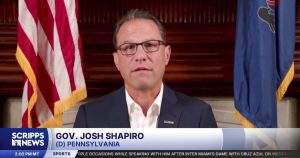



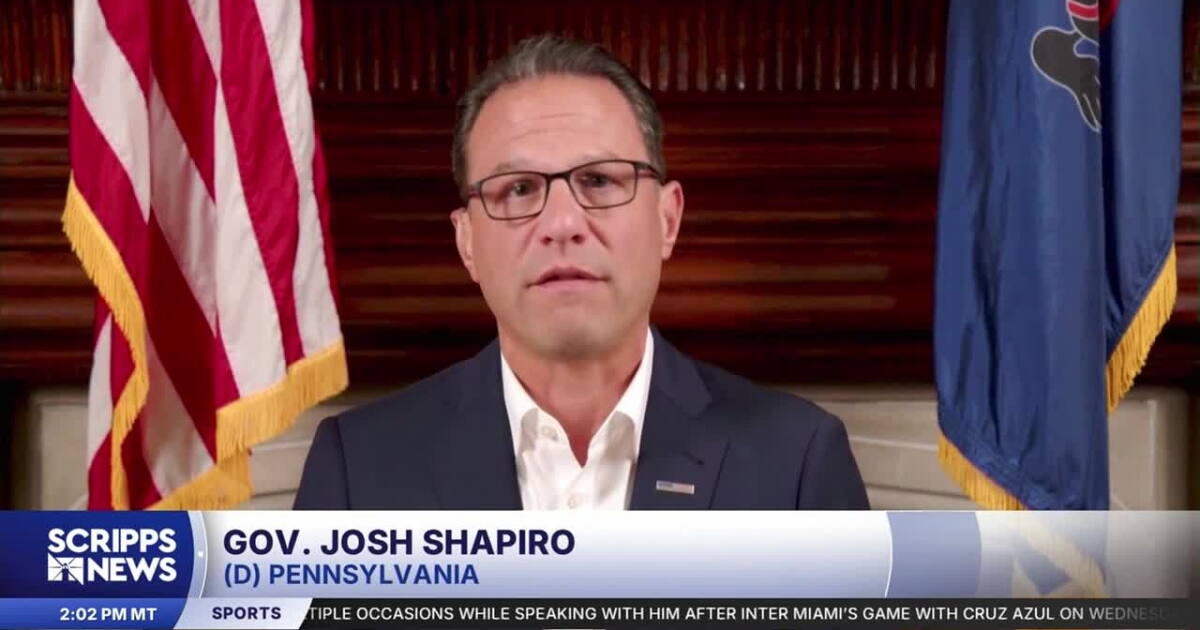
HARRISBURG, Pa. — Gov. Josh Shapiro on Friday accused U.S. Secretary of Health and Human Services Robert F. Kennedy Jr. of spreading vaccine misinformation that has helped fuel a deadly measles outbreak in Pennsylvania, as state officials confirmed the commonwealth’s first measles deaths in decades. The governor’s remarks came during an emergency news conference where he disclosed that the Pennsylvania Department of Health had recorded two fatalities linked to the highly contagious viral disease, both occurring in the southeastern region of the state. The victims’ names and ages were not immediately released, and officials said contact tracing was underway to identify everyone who may have been exposed. “This is a tragedy that should not have happened,” Shapiro said, his voice strained with emotion. “Measles is a vaccine-preventable disease. We have had a safe and effective vaccine for decades. The only reason we are standing here talking about measles deaths is because dangerous misinformation has convinced parents to leave their children unprotected.” The announcement marks a devastating milestone for Pennsylvania, which had not recorded a measles death in more than 30 years. The last confirmed measles fatalities in the United States occurred during an outbreak in 2015, when an immunocompromised woman in Washington state died from complications of the virus. Before that, measles deaths were largely considered a relic of the pre-vaccine era. Health officials said the current outbreak has sickened at least 87 people since late winter, with the majority of cases involving unvaccinated children in rural and suburban communities where vaccination exemptions have risen sharply in recent years.
Shapiro stopped short of declaring a statewide public health emergency, but he used the briefing to deliver a blistering rebuke of Kennedy, who has been a prominent skeptic of childhood vaccines for more than two decades. “The Secretary of Health and Human Services is using his office to sow doubt about vaccines that have saved hundreds of millions of lives,” Shapiro said. “He is not acting as a doctor. He is not acting as a scientist. He is acting as a purveyor of fear, and children are dying because of it.” The governor pointed to Kennedy’s past statements linking vaccines to autism, his 2019 visit to Samoa during a measles outbreak that killed 83 people, and his recent efforts to overhaul the federal vaccine advisory process. “When RFK Jr. travels to a country and discourages vaccination, people get sick and die. That is not an opinion. That is documented fact,” Shapiro said. “Now he is bringing the same playbook into the United States, and Pennsylvania is paying the price.” A spokesperson for HHS did not immediately respond to a request for comment, but Kennedy has repeatedly defended his record, saying he supports “informed consent” and that he is not anti-vaccine. He has argued that federal agencies need to examine vaccine safety more rigorously and has promised to investigate the Centers for Disease Control and Prevention’s childhood immunization schedule. Last month, Kennedy convened a panel of outside experts to review vaccine recommendations, a move that alarmed public health leaders who said the review was stacked with vaccine critics and could undermine confidence in routine immunizations.
Measles is one of the most contagious infectious diseases known to medical science. The virus can remain airborne for up to two hours after an infected person leaves a room, and up to 90 percent of unvaccinated people who are exposed to it will become infected. Symptoms typically begin with fever, cough, runny nose, and red, watery eyes, followed by the characteristic red rash that spreads over the body. The disease can lead to severe complications, including pneumonia, encephalitis, and deafness. Before the introduction of the measles vaccine in 1963, an estimated 3 million to 4 million Americans were infected every year, resulting in roughly 48,000 hospitalizations and 400 to 500 deaths annually. Widespread vaccination reduced measles incidence by more than 99 percent, and in 2000 the disease was declared eliminated in the United States. That elimination status has been threatened repeatedly in recent years, as vaccination rates have slipped below the threshold needed for herd immunity in many communities. The measles, mumps, and rubella vaccine, given in two doses, is about 97 percent effective at preventing infection. The CDC recommends that children receive their first dose at 12 to 15 months and their second dose between ages 4 and 6. Serious side effects are extremely rare. Yet the vaccine has become a flashpoint in American politics, amplified by social media misinformation and celebrity skeptics. Academic research has repeatedly debunked any link between the MMR vaccine and autism, but false claims continue to circulate online, often targeting anxious parents. Experts say Pennsylvania’s outbreak is the direct result of falling immunization rates, which have declined in nearly every county over the past decade.
Pennsylvania health officials said the first measles death occurred in early April, with the second confirmed just days ago. Both patients were admitted to hospitals with severe pneumonia and respiratory failure, complications commonly seen in fatal measles cases. The outbreak has been concentrated among school-age children, and officials said several schools in affected counties have excluded unvaccinated students from attending classes. The Pennsylvania Department of Health has issued a statewide health alert, advising clinicians to be on the lookout for measles symptoms and to isolate any suspected cases immediately. Emergency vaccination clinics have been established in two counties, and officials said more than 4,000 doses of MMR vaccine had been administered in the past week. Shapiro said his administration is working with local school districts to ensure that families understand the importance of vaccination. “We are not going to lecture parents. We are going to educate them,” he said. “But we are also going to enforce the law. Our schools exist to educate children, not to incubate a virus.” State law permits medical and religious exemptions from school vaccine requirements, and Pennsylvania has seen a steady increase in nonmedical exemptions in recent years. In some districts, more than 20 percent of kindergarten students are exempt from one or more vaccines, according to state data. Health officials said the current outbreak includes several clusters where vaccination rates are among the lowest in the commonwealth. “This is a disease that thrives on undervaccination,” said Dr. Cynthia Whitfield, acting physician general of Pennsylvania. “If we want to stop this outbreak, we need to increase vaccination coverage quickly. The math is straightforward. The science is settled. The only obstacles are misinformation and hesitancy.” Whitfield emphasized that measles can be especially dangerous for infants who are too young to be vaccinated, as well as for pregnant women and immunocompromised people who cannot safely receive the vaccine. When vaccination rates fall, those vulnerable individuals are placed at increased risk, even if they have done everything right to protect themselves.
The Pennsylvania outbreak is part of a broader national resurgence of measles in the United States. The CDC has reported more than 1,200 confirmed cases across at least 20 states so far this year, the highest annual total since 1992. Outbreaks have been reported in Texas, Ohio, Florida, New York, and now Pennsylvania. Public health officials blame a combination of pandemic-era disruptions to routine pediatric care, growing vaccine hesitancy, and a proliferation of anti-vaccine content on social media platforms. The political landscape has shifted dramatically in recent months, with Kennedy’s confirmation as HHS secretary giving vaccine critics an unprecedented foothold in the federal government. Kennedy has promised to launch a “gold-standard study” on vaccine safety, though he has not provided details. He has also called for the removal of certain staff members from federal health agencies and has proposed restructuring the CDC’s Advisory Committee on Immunization Practices. Public health experts have warned that these moves are creating confusion and eroding trust among parents who already are uncertain about whether to vaccinate their children. “When the Secretary of Health and Human Services says vaccines are dangerous, parents listen,” said Dr. Angela Ramirez, an epidemiologist at Penn State’s College of Medicine. “They may not read the scientific literature. They may not understand how vaccine safety monitoring works. But they see the headline, and they decide to delay or skip the shot. That delay is all the virus needs.” Ramirez noted that measles has a reproductive number of 12 to 18, meaning each infected person can spread the virus to a dozen or more susceptible individuals. That makes it one of the most difficult diseases to control once it gains a foothold. In communities where vaccination rates have fallen below 80 percent, outbreaks can burn for months, as seen in large measles outbreaks in New York, Washington, and New Jersey in recent years.
Shapiro’s direct attack on Kennedy reflects a growing frustration among Democratic governors who say the federal government is failing to lead on vaccine policy. The governor called on Kennedy to resign or be removed, saying he had “abandoned his duty to protect the public’s health.” “It is one thing to raise questions. It is another thing to suppress science and promote quackery while children are dying,” Shapiro said. “If he cannot separate his personal beliefs from his professional obligations, he should step aside.” The political fallout is likely to intensify as the outbreak grows. Pennsylvania’s legislative races are already being shaped by debates over vaccine mandates and parental rights, and Republicans have largely avoided criticizing Kennedy, who remains popular with many conservative voters. Some Republican lawmakers in Harrisburg have proposed legislation that would expand religious exemptions and prohibit schools from requiring vaccines for students whose parents object. Shapiro said he would veto any such measure. “I will not sign a bill that makes it easier for children to die,” he said. The governor also announced the state is launching a public information campaign featuring doctors and nurses who will speak directly to parents about the benefits of vaccination. The campaign will include digital ads, town halls, and partnerships with faith leaders in affected communities. “We need to meet people where they are, with compassion and with facts,” Shapiro said. “But we also need to be honest: the measles vaccine is one of the safest and most effective medical interventions ever created. The disease it prevents is deadly.” As the news conference ended, Shapiro paused and looked directly into the cameras. “Every family in Pennsylvania should know that this tragedy was avoidable,” he said. “We have the tools to stop measles. We have the knowledge. We have the vaccines. What we need is for people to trust them, not fear them. The lesson is not that vaccines are risky. The lesson is that measles is unforgiving.”


