







Paragraph 1: The Unusual Alliance and The Keynote Address
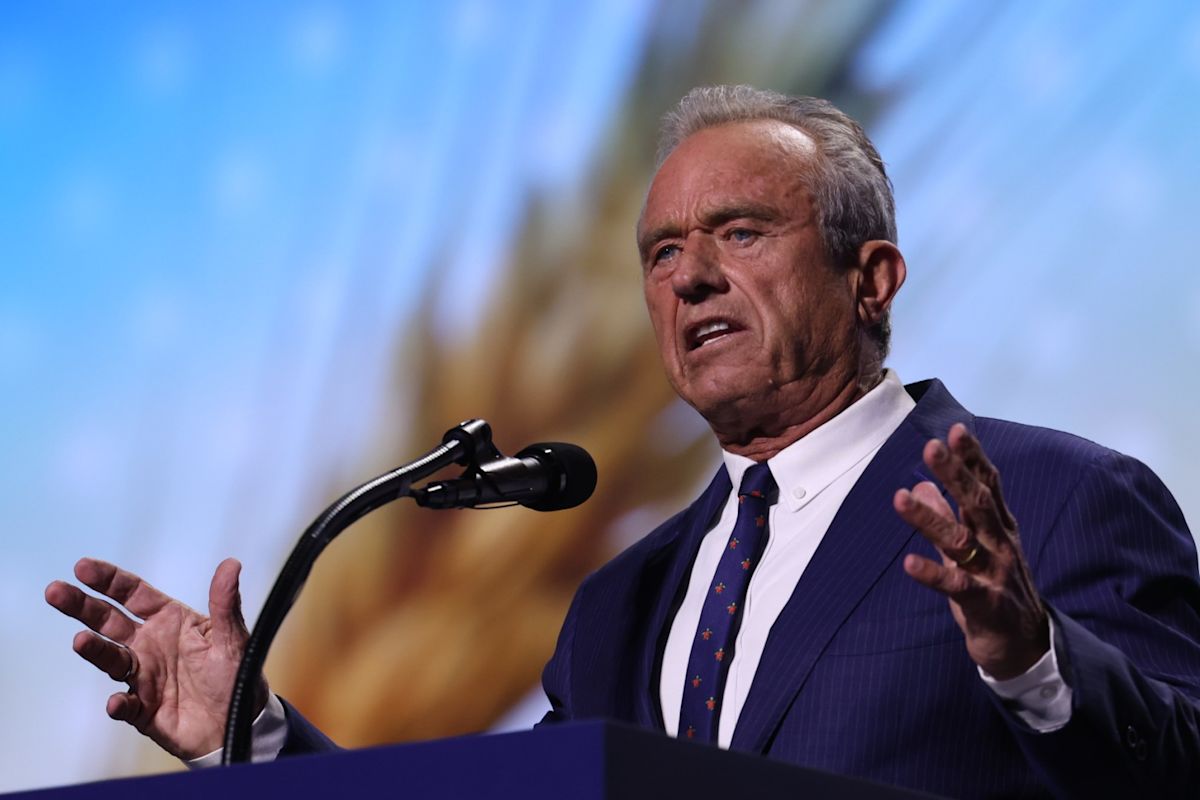
US Health and Human Services (HHS) Secretary Robert F. Kennedy Jr. delivered a highly controversial keynote address at the Washington conference hosted by Children’s Health Defense, the anti-vaccine group he founded, where he repeated misleading claims about immunization while assuring the audience that they have a “strong and steadfast friend at the White House.” The speech, delivered on September 17, 2026, came at a critical juncture for US public health, as the nation faces one of its worst measles outbreaks in recent years, with four confirmed deaths in the state of Pennsylvania. In an unprecedented and highly symbolic move for a sitting health secretary, Kennedy appeared on the same program immediately before Andrew Wakefield, the infamous British physician whose medical license was revoked after it was revealed that he included falsified data in a now-retracted study falsely linking the measles, mumps, and rubella (MMR) shot to autism. This proximity of the two figures underscores a dramatic shift in federal policy approach, moving from a stance of confident public health advocacy to one of explicit questioning of established medical consensus. While Kennedy’s address focused largely on his tenure at HHS, he placed considerable emphasis on vaccines, telling the audience that the administration had “started asking the questions that you and millions of American parents have been asking for years.” This rhetorical framing sharply contrasts with the stark public health realities facing the nation, as childhood vaccination rates continue to fall across the United States and the number of parents seeking exemptions from state mandates in place to attend public school is on the rise—a trend that epidemiologists warn is creating fertile ground for vaccine-preventable diseases to resurge.
Paragraph 2: The Policy Battleground and the ACIP Overhaul
Central to Kennedy’s public policy ambitions within the administration has been a controversial overhaul of the childhood vaccination schedule, a goal that directly contradicts his promises during the Senate confirmation process when he assured lawmakers he would neither discourage vaccines nor make them harder to access. That explicit campaign against the established immunization framework has faced significant legal and institutional hurdles, but the administration has persisted with renewed vigor. In March of 2026, a federal judge struck down a key attempt by Kennedy to dismantle the Advisory Committee on Immunization Practices (ACIP), the independent body of medical and scientific experts charged with reviewing vaccine safety and effectiveness data to make recommendations to the CDC. Kennedy had controversially replaced existing members of this advisory body with known vaccine critics, a move that prompted immediate legal challenges and public outcry from medical organizations. However, the effort was renewed in a different form in August when President Donald Trump signed an executive order recommending that children be vaccinated against a significantly reduced list of diseases compared to the comprehensive schedule advised by the American Academy of Pediatrics (AAP). This executive order essentially codifies the administration’s skepticism of combination vaccines and the multi-dose schedule, aligning with Kennedy’s long-held belief that the current schedule exposes children to an unnecessary number of antigens. Critics argue that this policy, driven by ideology rather than science, endangers children by leaving them vulnerable to serious infections like measles, mumps, and whooping cough, while also creating confusion among parents and pediatricians regarding the standard of care. Within this heated atmosphere, Kennedy took to the stage at the Children’s Health Defense conference to reinforce his core arguments, dismissing the robust body of safety data generated over decades and instead suggesting that chronic disease burdens in children are rising as a direct result of vaccination.
Paragraph 3: The Chronic Disease Link and the Rarity of Vaccine Injuries
The health secretary’s most prominent claim centered on a purported link between vaccination and chronic disease, alongside a narrative that children suffering from vaccine injuries do not receive adequate study or compensation. To bolster this point, he used broad, unsupported generalizations about the increasing incidence of chronic illnesses, suggesting a causal link to immunization. However, the established scientific consensus, echoed by Mark Slifka, a professor of microbiology and immunology at Oregon Health & Science University (OHSU), firmly contradicts this assertion. Slifka, speaking to AFP on September 17, emphasized that if there were a statistically significant association between a vaccine and a chronic condition, the robust post-marketing surveillance systems currently in place in the United States would have identified it. The safety of routine vaccines has been extensively reviewed by independent medical bodies, and while all medical interventions carry some risk, serious adverse events have been documented as “rare.” These rare events—such as anaphylaxis or thrombocytopenia—are typically acute and occur shortly after administration, rather than manifesting as long-term chronic conditions years later. Slifka’s point underscores the reality that the CDC and FDA employ a multi-layered approach to safety monitoring, which is designed precisely to catch unknown or rare side effects that might not appear in pre-licensure clinical trials. The primary tool cited by Kennedy during his speech is the Vaccine Adverse Event Reporting System (VAERS), a passive surveillance program co-managed by the CDC and FDA, and he specifically cited a CDC study he claimed found that “vaccine injuries” are significantly underreported.
Paragraph 4: The VAERS Underreporting Controversy and Surveillance Networks
Kennedy’s citation of the VAERS underreporting statistic is technically correct but lacks critical context. The study he referenced examined the period from December 1, 2007, to September 30, 2010, and called for improvements after finding that “fewer than one percent of vaccine adverse events are reported.” However, when AFP asked the US government about those findings in 2020, the Immunization Safety Office provided a clarifying explanation, noting that one potential reason for the low reporting of mild events is that they are expected, and therefore people don’t feel the need to report them. For example, a sore arm or mild fatigue is a known and anticipated reaction to certain vaccines, so individuals might simply ignore it. However, the office emphasized that when a serious event that should be further investigated occurs, more recent research has found significantly much higher rates of reporting. Specifically, studies indicate that reporting rates for anaphylaxis range from 13 to 76 percent, while reporting for Guillain-Barré syndrome—a rare neurological disorder—ranges from 12 to 64 percent. These numbers demonstrate that the surveillance system is highly effective at capturing the rare, serious events that policy-makers and clinicians are most concerned about. Beyond VAERS, the US government operates a robust safety monitoring network that includes the Vaccine Safety Datalink, which uses electronic health records from several large health maintenance organizations to conduct active surveillance and epidemiological studies, and the Clinical Immunization Safety Assessment (CISA) project, which provides expert clinical consultations for complex cases. Additionally, there are specialized reporting programs for military personnel and populations served by Indian Health Services, ensuring broad demographic coverage. During the Covid-19 pandemic, this system was further enhanced with the CDC’s V-safe, a smartphone-based tool that uses text messaging and web surveys to check in with vaccine recipients post-injection, allowing for unprecedented real-time data collection.
Paragraph 5: The Placebo-Controlled Trial Fallacy and Ethical Medical Research
Kennedy also rehashed a long-standing misleading assertion that vaccines must be subject to placebo-controlled clinical trials in order to demonstrate their safety. He argued that without such testing, his agency struggles to make accurate “risk-benefit analysis,” implying that the entire regulatory framework for vaccine approval is fundamentally flawed. This claim, while superficially appealing to a lay audience, fundamentally misunderstands the ethical principles governing modern medical research, as well as the actual rigorous process of vaccine development. Slifka pushed back on the assertion, pointing to the three distinct phases of clinical trials that all thoroughly check for safety and efficacy before licensure, and are followed by lifelong post-marketing surveillance. He noted that “no one wants to put a child at risk unnecessarily,” countering the implication that regulators and scientists are cutting corners. The American Academy of Pediatrics (AAP) confirms that many childhood vaccines currently in use were originally tested in randomized clinical trials that included placebo or comparison groups when it was ethically permissible to do so. However, the World Health Organization (WHO) explicitly states that while it may be ethical to use placebos when there is no known safe and effective vaccine available, it is “clearly unacceptable” to subject trial participants to the risks of delaying or foregoing a shot that could prevent a harmful disease. Kelly Moore, president and CEO of the nonprofit organization Immunize.org, previously elaborated on this point to AFP, explaining that clinical trial participants must always be offered the existing standard of care. Moore specifically addressed the development of combination vaccines, stating that it would be “entirely unethical” to withhold existing immunizations from a placebo group while testing a product that contains components already routinely given in those separate shots, as doing so would intentionally leave children vulnerable to life-threatening, easily preventable conditions.
Paragraph 6: The Stark Contrast with Public Health Realities
The convergence of Kennedy’s keynote appearance with Andrew Wakefield at the Children’s Health Defense conference serves as a stark reminder of the ideological battle currently raging over public health policy in the United States. Kennedy’s assurance that anti-vaccine advocates have a “strong and steadfast friend at the White House” leverages significant political power, yet it directly conflicts with the overwhelming evidence from medical science. While he made only a single passing mention of measles in his speech, the shadow of the current outbreak in Pennsylvania—which has tragically killed four people—looms large over his claims. The falling childhood vaccination rates and the rising number of exemptions are not theoretical statistics; they represent real children who are now unprotected against diseases that were nearly eradicated in the US. The federal judge striking down his earlier ACIP overhaul, followed by the executive order recommending fewer vaccines, highlights the volatile and legally contested nature of this policy shift. During his conference address, Kennedy’s pointed claims—that chronic diseases are linked to vaccines without sufficient study, and that placebos are mandatory for safety—were both systematically dismantled by the experts quoted by AFP. Slifka’s insistence on the efficacy of post-marketing surveillance, the government’s clarification of VAERS reporting nuances, and Moore’s ethical clarifications regarding placebo use all demonstrate that the scientific basis for the current vaccine schedule is robust and well-protected. The fact that a health secretary would champion such misinformation, presented alongside a discredited fraudster like Wakefield, could have tangible consequences for vaccine uptake and public trust. As the administration continues to push for a reduced schedule and faces ongoing legal battles about its authority, the medical community remains unified in its recommendation: the current vaccine schedule is the safest and most effective way to protect children. Kennedy’s rhetoric may resonate with a skeptical audience, but the reality of vaccine science, as detailed by the fact-checkers, remains firmly on the side of providers who seek to prevent disease, not doubt the cure. The challenge ahead lies in reconciling this political rhetoric with the imminent public health needs of a nation.


