







Ceuta Disinformation Fight: Sánchez Accuses Morocco and Israel of Spreading Lies as Migrant Crisis Strains Spain’s Relations
Spanish Prime Minister Pedro Sánchez has ignited a bitter diplomatic confrontation by accusing Morocco and Israel of running a coordinated disinformation campaign during the migrant crisis that overwhelmed the Spanish enclave of Ceuta, a claim that Israeli officials have dismissed as a “brazen lie” and a “shameless” attempt to deflect attention from Spain’s own failures. In a nationally broadcast interview with Cadena SER, Sánchez tied the allegations to research by the European Union’s European External Action Service, insisting that it was “evident” that both countries had sought to exploit the migrant influx to attack his government’s foreign policy positions, particularly regarding “the genocide in Gaza or [Russian President Vladimir] Putin’s invasion of Ukraine.” The prime minister’s remarks marked an extraordinary escalation in a crisis that has not only tested Spain’s relations with its North African neighbor but also exposed deep fissures within Europe over how to respond to migration, disinformation, and foreign interference. By directly naming Morocco and Israel, Sánchez has effectively accused two of Spain’s most consequential international partners of using human suffering as a political weapon, a charge that has reverberated across European capitals and threatened to overshadow the urgent humanitarian challenges unfolding on Spain’s southern frontier. The controversy has also placed the Spanish leader in an awkward position, caught between his government’s progressive foreign policy instincts and the pragmatic need to maintain working relations with Morocco, which has long served as a key partner in managing migration flows into Europe. Sánchez’s allegations, drawn from sensitive EU intelligence assessments, suggest that the migration surge was not merely a spontaneous movement of desperate people but part of a broader geopolitical battle in which migrants themselves become pawns in larger diplomatic disputes. His comments have nonetheless been met with fierce skepticism from domestic opponents, who argue that the prime minister is seeking to shift blame for a border security failure that left thousands of migrants in limbo and created a humanitarian emergency on European soil.
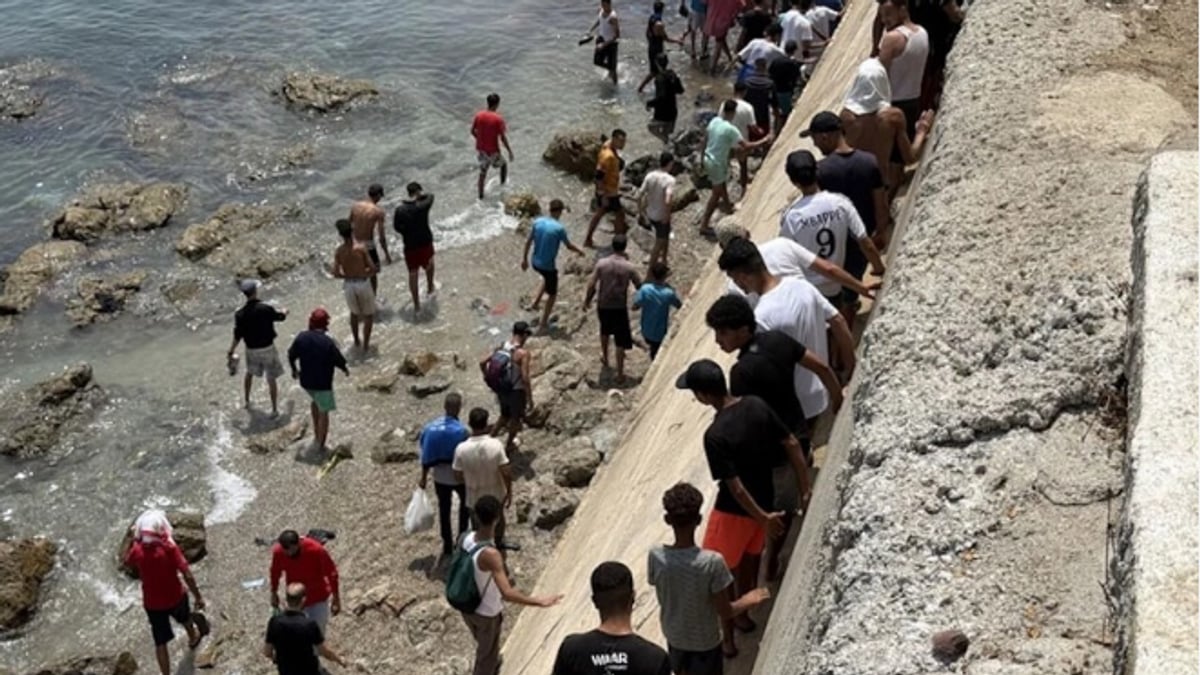
The crisis centered on Ceuta, a Spanish autonomous city that sits on the North African coast and forms one of the few land borders shared between the European Union and Africa. More than 72,000 migrants entered the territory in a single late-month surge, according to Reuters, in scenes that recalled earlier mass crossings in which hundreds of people swam or climbed over border fences in a desperate bid to reach European soil. Local authorities said that at least 100 people died in the aftermath of the influx, a grim figure that underscored the human cost of a crisis that quickly overwhelmed Ceuta’s infrastructure and capacity to respond. The arrival of such a large number of migrants in such a short period transformed the enclave into a flashpoint for Europe’s broader migration challenges, with residents reporting security concerns, overcrowded facilities, and a growing sense of abandonment by the central government in Madrid. Sánchez, in response, pledged a major financial package for Ceuta worth 168 million euros, or approximately $195 million, in aid, while insisting that the crisis “can only be resolved through cooperation and not through distrust towards Morocco.” That pledge, however, did little to calm the political storm, as questions mounted over how so many migrants were able to enter a fortified European border so easily and whether intelligence failures had left Spain blindsided. The scale of the influx, combined with the high death toll, raised urgent questions about the effectiveness of European border security and the extent to which external actors might have deliberately engineered the crisis to pressure Madrid. For many observers, the events in Ceuta were a stark reminder that Europe’s southern borders remain acutely vulnerable to sudden mass movements, and that migration policy cannot be separated from the wider diplomatic and security dynamics that shape the region. Sánchez’s insistence that Morocco bore no direct responsibility for the surge, despite the kingdom’s historic role as a gatekeeper for African migration, struck many as a carefully calibrated attempt to preserve a relationship that Madrid cannot afford to lose, even as he pointed the finger at other foreign actors.
Israel’s response to Sánchez’s accusations was swift and unsparing, with Foreign Minister Gideon Sa’ar rejecting the prime minister’s claims as an outright fabrication designed to distract from his own political failures. In a series of statements on social media, Sa’ar accused Sánchez of “lying shamelessly” and described the allegation as a “brazen lie,” adding that “continuing to spread defamatory lies will not distract from Sánchez’s disgraceful failure to manage his country’s affairs.” The Israeli minister’s words reflected a broader sense of outrage in Jerusalem at being dragged into a domestic Spanish controversy, particularly at a time when Israel’s own diplomatic standing has been strained by its military operations in Gaza and international criticism of its conduct. For Sánchez, the Israeli denunciation was an unwelcome complication, as he had sought to frame his criticism of Israel’s actions in Gaza as a moral stand rooted in human rights principles rather than as part of a cynical political calculation. The prime minister’s suggestion that Israel had used the Ceuta crisis to punish Spain for its positions on Gaza and Ukraine effectively accused Jerusalem of engaging in state-sponsored retaliation, a charge that Israeli officials have categorically denied. The diplomatic clash between Madrid and Tel Aviv threatened to spill over into other areas of cooperation, including defense, trade, and intelligence-sharing, with both sides digging in as the war of words escalated. Sa’ar’s blunt language, coupled with Sánchez’s refusal to back down, suggested that the dispute would not be resolved quickly, and that the Ceuta crisis had become a proxy for deeper disagreements over the conflict in the Middle East and the proper role of foreign policy in migration management. The exchange also gave ammunition to critics of Sánchez within Spain, who argued that his government’s outspoken positions on international issues had unnecessarily antagonized key allies and left the country more isolated in its moment of need.
Despite his accusations against Israel, Sánchez was careful to rule out any responsibility on the part of Moroccan authorities, insisting that no evidence had emerged to implicate the kingdom in the migrant surge. In his interview, he said that “no intelligence service with which the Spanish government normally cooperates” had suggested “any involvement in one way or another of the Moroccan authorities,” a statement that appeared designed to shield Rabat from blame while simultaneously undermining the case against Morocco. Instead, Sánchez blamed disinformation circulating online, including claims that migrants reaching Ceuta by sea would be allowed to remain in Spain, for encouraging thousands of people to attempt the perilous crossing. He specifically highlighted a false narrative that if a person entered Ceuta by swimming, it was impossible for them to be deported back to Morocco, a rumor that likely inspired many to take to the water despite the dangers. The prime minister also pointed to networks linked to human trafficking groups, which he said were spreading such claims in order to profit from the chaos and lure more migrants toward the border. By emphasizing the role of disinformation, Sánchez sought to reframe the crisis as a battle against malicious actors rather than a simple migration emergency, but his explanation raised as many questions as it answered. If foreign intelligence services had detected such an elaborate disinformation campaign, why had Spain not acted sooner to counter it? And if the Moroccan authorities were not involved, how had such a large and coordinated influx been possible without their knowledge or consent? These questions, left unresolved by Sánchez’s remarks, fueled ongoing political debate in Spain and across Europe, with many observers suspecting that the truth was more complex than the prime minister was willing to admit. The New Arab, reporting on the controversy, noted that Sánchez’s focus on online disinformation represented a deliberate strategy to shift attention away from the immediate failures of border management and toward a murkier battlefield of information warfare, but the approach carried considerable political risk.
The fallout from the crisis has been felt across Spanish politics, with Ceuta’s residents holding regular demonstrations over security and hygiene problems linked to the migrant influx. The enclave, already under pressure from previous migration waves, found itself completely overwhelmed by the sheer scale of the latest surge, with migrants sleeping in the streets, public buildings, and makeshift shelters while local authorities struggled to provide basic services. Spain’s left-wing government has said that between 3,500 and 7,000 migrants remain in Ceuta, but right-wing politicians in the city have alleged that the true number is at least 10,000, reflecting the deep distrust between Madrid and the conservative opposition that governs many of Spain’s regions and municipalities. The political divide over the crisis has sharpened significantly, with the right accusing Sánchez of abandoning Ceuta and of pursuing a dangerously permissive migration policy that encourages further arrivals. The prime minister, for his part, has sought to cast the crisis as a test of European solidarity, calling on other EU member states to share responsibility for the migrants and to support Spain in confronting the external forces that he claims are manipulating migration flows for political ends. The 168 million euros in aid promised to Ceuta was intended to demonstrate his government’s commitment to the enclave, but local leaders have dismissed it as insufficient and have demanded a more comprehensive strategy to address the underlying causes of mass migration. The dispute over migration policy has become entangled with broader questions about Spain’s place in Europe, its relationship with Morocco, and the credibility of its intelligence services, making the Ceuta crisis a defining issue for Sánchez’s premiership. With municipal elections looming and the political temperature rising, the prime minister faces mounting pressure to show that his government can both protect Spain’s borders and uphold its humanitarian obligations, a balancing act that has proven impossible for many of his predecessors.
Sánchez’s response to the Ceuta crisis, and the diplomatic storm it has unleashed, has also highlighted the extent to which migration policy has become a battlefield for foreign influence narratives that extend far beyond Spain’s borders. By invoking European Union research and accusing Morocco and Israel of wielding disinformation, Sánchez has effectively transformed a local border emergency into a wider geopolitical confrontation with implications for the entire continent. His call for European solidarity was a direct appeal to other EU leaders to recognize that migration crises are no longer purely national problems, but are increasingly shaped by external actors seeking to destabilize European governments and undermine their foreign policies. The dispute has complicated efforts to forge a common European response to migration, with some member states sympathetic to Spain’s plight and others wary of following Madrid down a path that could lead to further confrontations with key partners such as Morocco and Israel. The reference to the war in Gaza and Putin’s invasion of Ukraine was particularly significant, as it suggested that Sánchez believes the Ceuta crisis was partly a punishment for Spain’s refusal to align its foreign policy with the interests of other powers. Whether or not those claims are true, they have injected a new level of tension into European debates about how to deal with disinformation, foreign interference, and the weaponization of migration. For Sánchez, the gamble is that by speaking out loudly against perceived foreign manipulation, he can rally public support at home and abroad and cast himself as a defender of democratic sovereignty against shadowy external forces. The risk, however, is that his accusations will be seen as a pretext for his own failures, and that the Ceuta crisis will come to be remembered not as an example of foreign machinations, but as a moment when Spain’s government lost control of its own border and then sought to blame everyone except itself. As the humanitarian situation in Ceuta slowly stabilizes, the political battle over who is responsible for the crisis shows no signs of abating, ensuring that the disinformation fight will continue to shape European migration policy and diplomatic relations for months to come.


