


Pakistan Criminalizes Online Disinformation, Sparking Protests and Censorship Concerns
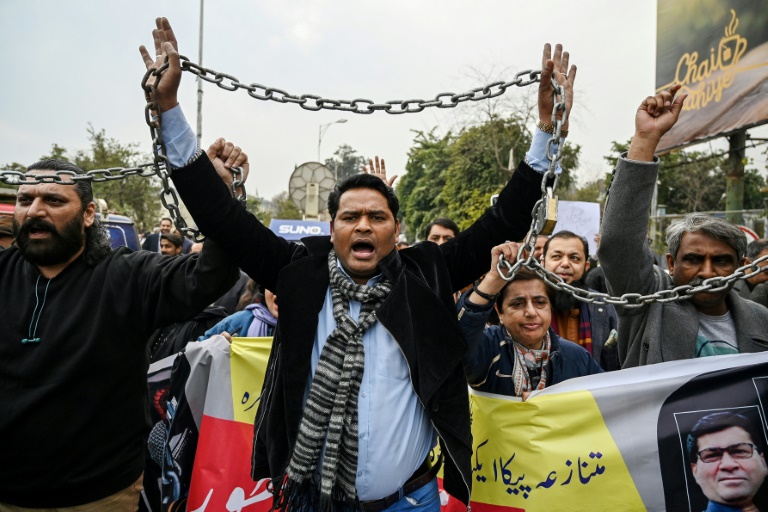
Pakistan’s parliament has passed a controversial law criminalizing online disinformation, raising concerns about freedom of speech and government censorship. The legislation, swiftly approved by both the National Assembly and Senate, imposes penalties of up to three years in jail for anyone who intentionally spreads false information online that could incite fear, panic, or unrest. The move has sparked widespread protests from journalists who accuse the government of using the law to stifle dissent and control the narrative, particularly in the face of growing criticism and political instability.
The new law comes amid increasing anxieties surrounding the spread of misinformation and disinformation, particularly through social media platforms. While the government argues the legislation is essential to maintain public order and counter the harmful effects of false information, critics contend it grants excessive powers to authorities and lacks sufficient safeguards against abuse. They fear the vague and broadly defined language of the law could be easily weaponized to target critical voices and suppress legitimate dissent. Journalists, already facing increasing pressure and censorship in recent years, are especially vulnerable under the new legislation.
The swift passage of the bill, with minimal consultation with stakeholders, has further fueled suspicions. Journalists rallied in Islamabad and Karachi, decrying the law as an assault on freedom of the press and an attempt to control the flow of information. They argue that existing laws already address issues of defamation and incitement, and this new legislation serves primarily to stifle critical reporting and independent journalism, especially online. The increasing reliance on social media for news consumption in Pakistan, due to perceived biases and limitations in mainstream media, has made this new law even more consequential.
Adding to the controversy is the political backdrop against which the legislation was enacted. Following a contentious election marred by allegations of rigging, the government has faced increasing scrutiny and criticism, particularly from supporters of jailed former prime minister Imran Khan. Khan and his party, the Pakistan Tehreek-e-Insaf (PTI), have faced a significant crackdown, with thousands arrested and Khan’s name censored from television broadcasts. With much of the PTI’s campaigning now occurring online, critics believe this law is specifically designed to curtail their activities and suppress dissent. They see it as part of a broader pattern of silencing opposition voices and consolidating power.
The new law mandates that social media platforms register with a newly established regulatory body, granting intelligence agencies broad powers to investigate disinformation cases and empowering citizens to file complaints. This has raised additional concerns about increased surveillance and the potential misuse of these powers for political purposes. Critics point to past instances of internet shutdowns and platform bans, including X (formerly Twitter) following the February elections, as evidence of the government’s willingness to control online spaces. They fear this new law will further exacerbate these restrictions and create a chilling effect on free speech.
International press freedom organizations have also expressed alarm at the new legislation, ranking Pakistan low in global press freedom indices. They highlight the rising number of cases against journalists accused of spreading "fake news" in the region and warn that this law will likely worsen the situation. Civil rights activists emphasize the need for transparency and clear definitions within the law, as well as safeguards against its misuse. They argue that the current vague language allows for broad interpretation and creates an environment of fear and self-censorship, undermining the fundamental right to freedom of expression. The lack of consultation with journalists and civil society groups during the drafting process has further compounded these concerns.