


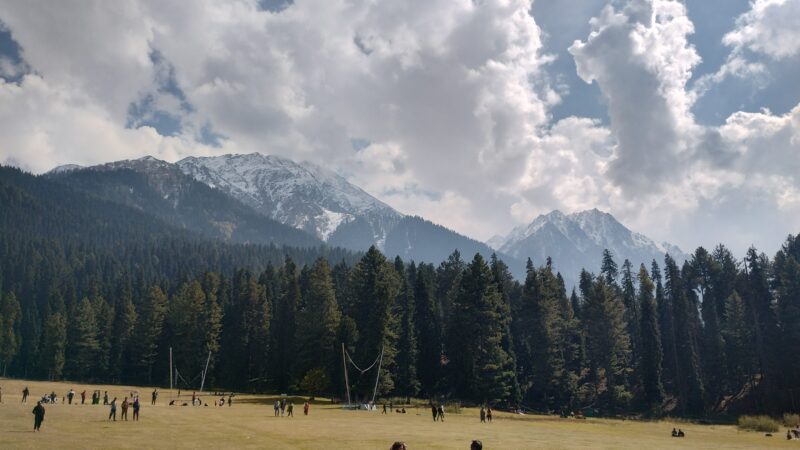
Kashmir’s Pahalgam Valley Erupts in Violence, Tourists Targeted in Deadly Attack
The idyllic Pahalgam Valley in Indian-administered Kashmir, known as the "Switzerland of Kashmir," was shattered by a devastating militant attack on April 23, 2025. Twenty-six tourists, including a navy officer, a foreign national, and an Intelligence Bureau officer, lost their lives in the unprecedented assault. While the valley has a history of militant activity, this attack marks the first time tourists have been directly targeted on such a scale, raising alarming questions about security vulnerabilities despite a significant military presence in the region.
Conflicting Claims and a Disinformation Deluge
In the immediate aftermath of the attack, The Resistance Front (TRF), a Kashmir-based group, claimed responsibility via social media, citing demographic shifts following the 2019 revocation of Article 370, which stripped the region of its special semi-autonomous status. Indian authorities often link TRF to the Pakistani terrorist organization Lashkar-e-Tayyiba, a group with a history of violence in India and a stated goal of annexing Kashmir to Pakistan. However, TRF quickly retracted its claim, accusing the Indian government of orchestrating a "state-backed digital assault" to manipulate the narrative and advance political agendas.
The attack sparked a torrent of disinformation across social media, with unverified videos and posts, many blaming Pakistan, rapidly disseminating, fueling nationalist sentiments and hindering efforts to ascertain the facts on the ground. Conflicting narratives further muddied the waters, exacerbating tensions between India and Pakistan. Security analysts point to a pattern of proxy warfare and information manipulation, with claims and counterclaims obscuring the truth and hindering any meaningful investigation. There’s also the emerging phenomenon of locally radicalized groups, inspired by global jihadist ideologies, which could be responsible but is often overlooked in official narratives.
Escalating Tensions and Diplomatic Fallout
The attack ignited a dramatic escalation of tensions between India and Pakistan, two nuclear-armed rivals locked in a decades-long conflict over Kashmir. Indian Prime Minister Narendra Modi vowed to relentlessly pursue the "terrorists and their sponsors," directly implicating Pakistan. India subsequently expelled Pakistani diplomats, closed key border crossings (except the Kartarpur corridor for Sikh pilgrims), and suspended the Indus Waters Treaty, a vital water-sharing agreement, potentially jeopardizing water resources in the region.
Pakistan responded by convening a high-level National Security Committee meeting, announcing the suspension of trade with India and closing its airspace to Indian airlines, a move reciprocated by India. Pakistani Prime Minister Shehbaz Sharif condemned India’s "baseless allegations," calling for an end to the blame game and offering to cooperate with a neutral investigation. While analysts believe a full-scale military confrontation is unlikely due to the nuclear deterrent, the risk of limited skirmishes, particularly aerial engagements, remains a serious concern. Pakistan has reportedly elevated its alert status and restricted movement in the capital, anticipating potential Indian military action.
Pahalgam’s Vulnerability Laid Bare
The Pahalgam attack is not an isolated incident. The valley has a history of militant activity, including the 1995 kidnapping of foreign tourists and attacks on Amarnath pilgrims in 2000, 2001, and 2017. However, the scale and the direct targeting of tourists in this latest incident represent a dangerous escalation, exposing significant flaws in security measures and prompting serious concerns about the region’s stability.
Disinformation and the Erosion of Trust
The deluge of disinformation, amplified by social media, further complicates an already precarious situation. Unverified information, emotionally charged rhetoric, and the spread of false or misleading content erode trust, inflame nationalist passions, and obstruct efforts to establish accountability. The prevalence of amateur "open-source intelligence" and viral misinformation increasingly shapes public opinion and influences diplomatic postures, exacerbating tensions and hindering constructive dialogue.
Diplomatic Stalemate and the Shadow of Conflict
The Pahalgam attack has effectively frozen any remaining diplomatic engagement between India and Pakistan. With pre-existing tensions already high, the incident has deepened the divide. Experts point to the imbalance in international perception, where India’s narratives often find greater traction than Pakistan’s, partly due to India’s more extensive information networks. This disparity adds another layer of complexity to an already volatile situation, underscoring the urgent need for de-escalation and a return to dialogue to avert further conflict. The alarming warning from Pakistan’s Information Minister regarding potential Indian military action within hours further highlights the precarious nature of the situation and the potential for rapid escalation.