


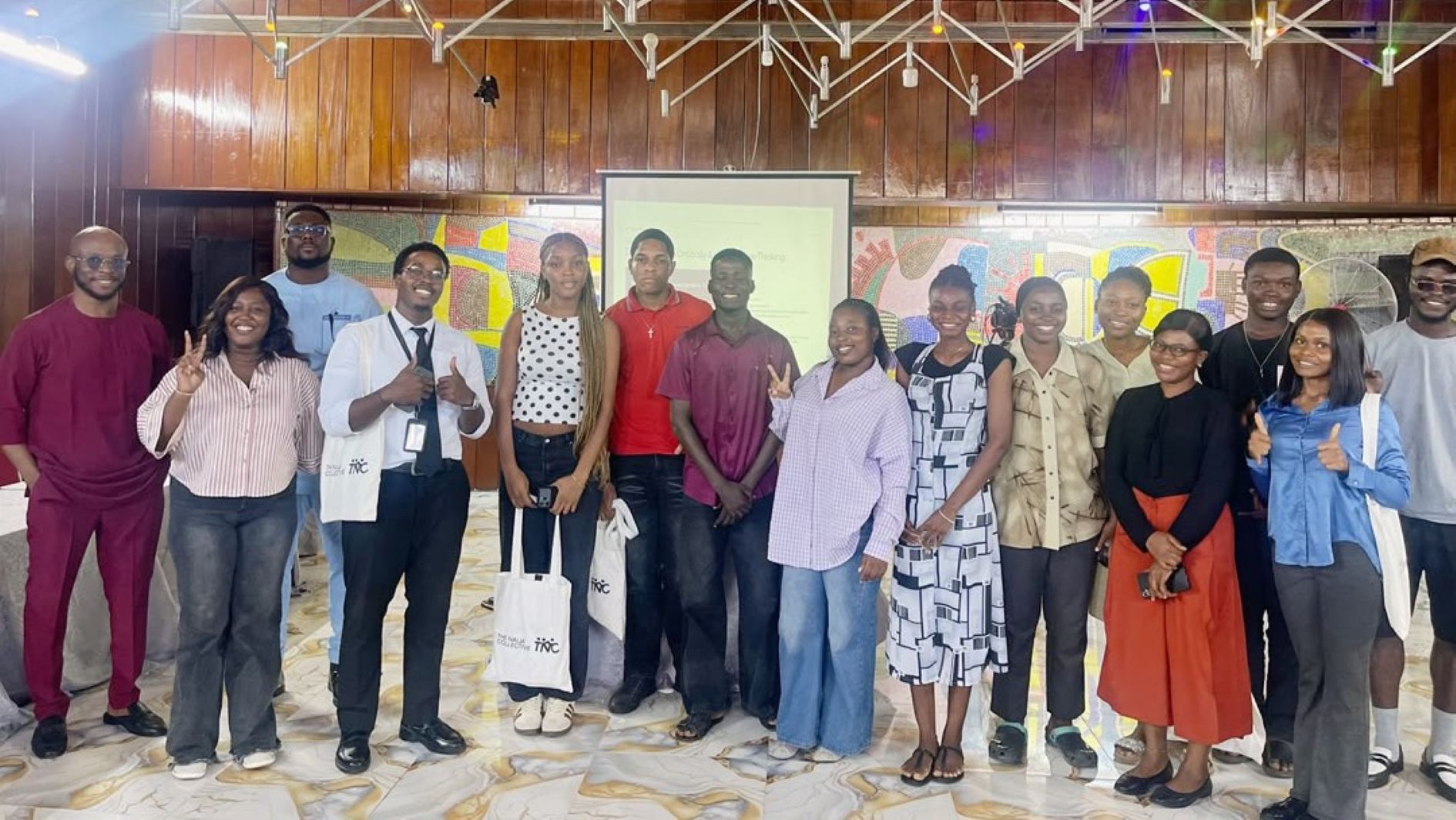
Naija Collective Urges Youth to Reject Misinformation, Disinformation at UNILAG Media Literacy Training
Naija Collective, a civic and media advocacy group, has called on Nigerian youths to deliberately disassociate themselves from the spread of misinformation and disinformation, warning that unverified content poses a serious threat to public discourse, democratic stability and social cohesion. The call came during a media literacy training organised by the group at the University of Lagos (UNILAG), where young people, including students from various disciplines, media enthusiasts and practising journalists, gathered to sharpen their understanding of Digital, Media and Information Literacy. The workshop was designed to equip participants with practical skills to identify, counter and resist fake news, propaganda and deliberately manipulated information that increasingly dominates Nigeria’s digital communication environment. With the country steadily moving toward another election cycle, the organisers stressed that the ability of young people to navigate a polluted information landscape is no longer optional but essential. They argued that young Nigerians, who constitute a significant portion of the population and the most active users of social media platforms, must become the first line of defence against the weaponisation of information.
At the heart of the training was an acknowledgement that the modern media environment has transformed the way information is produced, consumed and shared. Facilitators noted that the speed at which content travels through WhatsApp, Twitter, Instagram, TikTok and other platforms means false or misleading narratives can reach millions of people within minutes, often before fact-checkers or authorities can respond. This reality, they said, makes media literacy a survival skill for democracy and civic participation. The workshop exposed participants to the subtle ways in which unverified information spreads, including through emotionally charged headlines, manipulated images, deepfakes, fake quotations and coordinated online campaigns. Participants were taken through case studies and practical examples that illustrated how misinformation can be deployed to distort public perception, inflame tensions and manipulate electoral outcomes. The training also emphasised the difference between misinformation, which is false but not necessarily intended to harm, and disinformation, which is deliberately created and spread to deceive. By drawing this distinction, the facilitators hoped to give young people a clearer framework for understanding the motives behind the content they encounter daily.
The lead facilitator and media communications trainer, Abdulkerimu Oare, explained that the programme was particularly important because young people are the most active participants in the digital media space and therefore the most exposed to harmful information. Oare noted that the world has never seen such a rapid flow of information, and that people consume enormous quantities of content every day without pausing to examine its origin, purpose or veracity. He warned that information shared by anyone could come with different motives, and that young people must learn to decode the intentions behind the messages they receive. “We now live in a world where information moves faster than it ever moved and we continue to consume so much information and content on a daily basis. The problem, however, is that information shared by anyone could come with different motives or intentions,” Oare said. He added: “So the whole of this training is to help young people best recognise that not all information that is being shared is clear or plain and to also identify what role some of this information or content being consumed is for.” Oare described the session as productive, noting that the response from participants was encouraging and that their active engagement showed a genuine appetite for knowledge. He promised that the group would continue to develop other frameworks for expanding the reach of media literacy education.
One of the coordinators of the training, strategic communications expert Nosike Nwigene, stressed that equipping young people with knowledge of how the media works is especially critical as Nigeria approaches a pre-election period. Nwigene explained that elections are particularly vulnerable to information manipulation, and that young people need to understand how misinformation and disinformation can be deployed online to shape public discourse, influence voters and undermine trust in democratic institutions. He said many young people do not know how to respond to online manipulations that are used to heat up the polity during election seasons, and that building resilience against such tactics must become a civic priority. “Young people are very energetic and enthusiastic. I love the audience and it shows they are really learning,” Nwigene said. He continued: “It’s about what they should look out for during elections. Issues of misinformation, and disinformation. A lot of people don’t know to respond to issues of online manipulations that are used to heat up the polity during elections. So it’s all about building resilience towards those things as one of the things we need to do.”
Nwigene further urged participants to adopt a habit of critical thinking before believing or sharing any piece of information. He encouraged young people to ask simple but powerful questions whenever they encounter content online: “Why don’t I see a source? Why does this affect me?” He also advised them to take a step back, listen carefully, double-check details and engage in independent fact-checking before amplifying any claim. These habits, he argued, would help reduce the spread of false narratives and protect the integrity of public debate. The coordinator emphasised that young people are not just victims of disinformation but also its most powerful amplifiers, and that if they consciously change their behaviour, they can significantly reduce the reach and impact of malicious content. He expressed confidence that the workshop participants would become ambassadors of responsible information-sharing within their own networks, thereby extending the impact of the training beyond the lecture hall. Nwigene also hinted at the possibility of more collaborative efforts and future training sessions, suggesting that media literacy should be integrated into broader civic education programmes for young Nigerians.
The training at the University of Lagos represents an important step in the growing movement to mainstream media and information literacy as a tool for safeguarding democracy in Nigeria. By targeting university students and young media consumers, Naija Collective is deliberately investing in a demographic that has the potential to shape the country’s political and social future. As digital platforms continue to evolve and new technologies make it easier to create convincing fake content, the need for sustained public education has never been greater. The organisers have made clear that this session is not a one-off event but part of a broader strategy to build a generation of discerning information consumers who are capable of seeing through manipulation and holding purveyors of falsehood accountable. In a society where rumour and half-truths can easily be weaponised along ethnic, religious and political lines, the work of groups like Naija Collective is essential to ensuring that facts remain the foundation of public conversation. The enthusiasm and energy displayed by participants at the UNILAG training offer a glimmer of hope that young Nigerians are ready to take on this responsibility, not only for themselves but for the future of the country.