








Paragraph 1: The Unveiling of a Sophisticated AI-Enabled Influence Operation
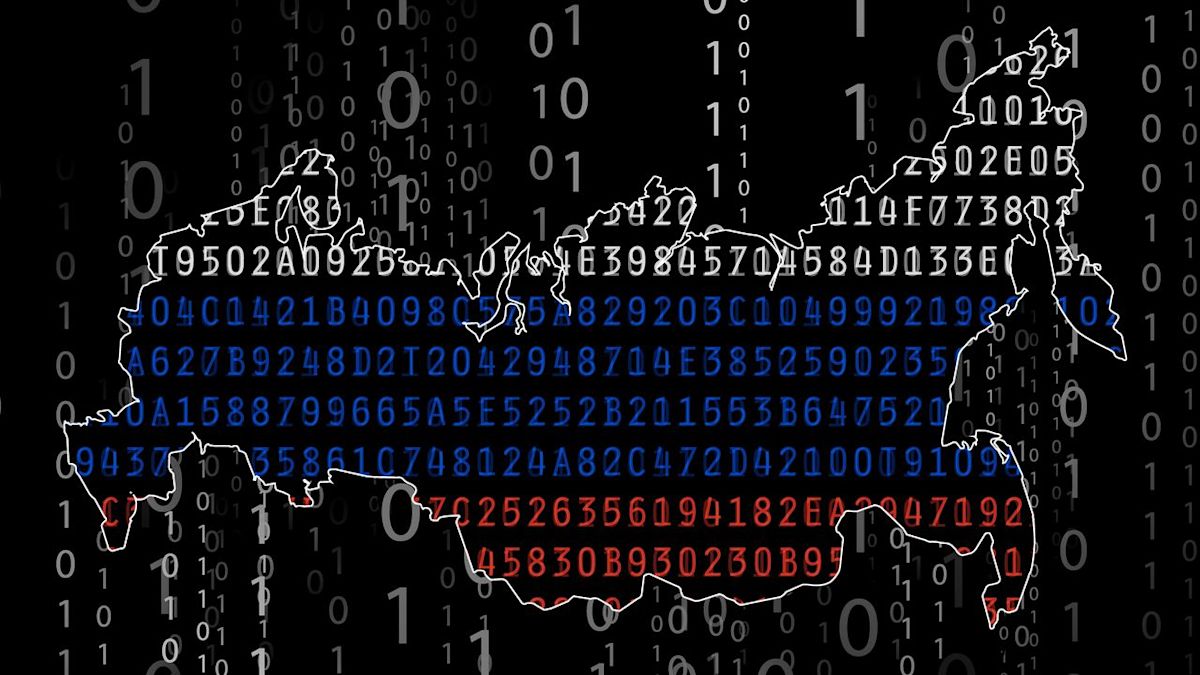
OpenAI, the artificial intelligence research organization behind the ChatGPT conversational model, has announced the disruption of a covert social media influence campaign that it attributes to Russia—a network that leveraged its own AI tools to manufacture a fraudulent “expert community” designed to erode Western support for Ukraine and elevate the Kremlin’s geopolitical standing. According to the company’s threat intelligence report, the operation, which centered around a fabricated think tank known as the International Burke Institute (IBI), represents a significant escalation in the intersection of state-sponsored disinformation and generative AI, highlighting how adversaries are moving beyond simple bot farms to create deeply layered, pseudo-intellectual front organizations. The campaign’s primary objective was to systematically discredit the Western alliance, particularly nations backing Ukraine, while simultaneously painting Russia as a bastion of military strength and social stability. By using ChatGPT to draft content, generate images, and even craft convincing researcher profiles, the operatives attempted to inject a veneer of academic legitimacy into their propaganda. However, as OpenAI’s analysis revealed, the entire edifice was built upon stolen intellectual property, fabricated personas, and a deeply flawed methodology, ultimately leading to a campaign that invested heavily in sophistication but achieved only marginal reach. The takedown underscores a growing cat-and-mouse game in which AI capabilities are being repurposed not just for scale, but for the deliberate construction of false credibility, presenting a formidable challenge to social media platforms, policymakers, and the public’s ability to discern authentic discourse from engineered narratives.
Paragraph 2: The International Burke Institute – A Facade of Stolen Knowledge and Phantom Scholars
At the heart of the operation lay the International Burke Institute, a website presented as a premiere hub for conservative geopolitical analysis, named presumably to evoke the philosophy of famed Anglo-Irish statesman Edmund Burke. To make this fictional entity appear credible, the operators engaged in a systematic campaign of intellectual theft, scraping legitimate academic papers, essays, and research from the internet and then misattributing them to a roster of fabricated or compromised authors. The report details how the site presented a list of “experts” that included prominent real-world intellectuals and political figures—names such as Francis Fukuyama, the renowned political scientist; Noam Chomsky, the famed linguist and social critic; former U.S. State Department official Joseph Nye; and even former Secretary of State Mike Pompeo. These individuals were listed as contributors or staff members, lending their professional gravitas to the site’s output without their knowledge or consent. More egregiously, the IBI took this fabrication a step further by including deceased scholars in its ranks—listing Shlomo Avineri, an Israeli political scientist who passed away in 2023, and Jiang Ping, a prominent Chinese legal scholar, as current voices of the institute. This curation of authentic, yet stolen, intellectual works was specifically designed to pass the scrutiny of casual readers and even seasoned researchers, who might be fooled into thinking the IBI was engaged in genuine scholarly discourse. OpenAI’s investigators noted that the sheer volume of real academic output misappropriated for this front was staggering, indicating a dedicated effort to build an archive of “legitimate” content that could be used to mask the underlying propaganda thrust against the West and its support for Ukraine.
Paragraph 3: The Propaganda Weapon – The Flawed and Skewed “Burke Sovereignty Index”
The centerpiece of the International Burke Institute’s purported research was the “Burke Sovereignty Index,” a ranking system allegedly designed to measure how effectively nations maintain their sovereignty across a spectrum of political, economic, technological, informational, cultural, cognitive, and military factors. On its surface, the index appeared to be a sophisticated global comparative study. However, a closer examination conducted by both OpenAI researchers and independent analysts revealed a methodology rife with absurdities, intentional biases, and contradictions that laid bare its propagandistic intent. The index’s rankings were deliberately skewed to villainize Western democracies and lionize authoritarian states, particularly Russia. For instance, the report noted the glaring inclusion of The Vatican City—a micro-state with a population of just over 800 residents and no standing military—being ranked above Spain, a major European democracy with a significant economy and military. This inexplicable leap defies any logical statistical framework. Furthermore, the index gave Russia the highest military score among all nations, a bizarre assertion given the ongoing attritional war in Ukraine and the documented struggles of the Russian armed forces. The index was not a genuine academic tool but a carefully constructed narrative device; its primary goal was to provide a pseudo-empirical basis for claims that Western nations are decadent, weak, and losing their sovereignty to supranational entities like the European Union, while Russia remains a strong, independent, and militarily superior power. By packaging these absurd conclusions in charts, graphs, and academic-sounding prose, the IBI sought to weaponize quantitative analysis to persuade audiences that Russia’s invasion of Ukraine was a justifiable defense against Western encroachment, using fabricated data as a cloak of objectivity for pure Kremlin talking points.
Paragraph 4: Multi-Platform Infiltration – Amplifying the Lie Across X, LinkedIn, and Telegram
To disseminate its propaganda, the IBI campaign employed a comprehensive, multi-platform digital strategy designed to create an ecosystem of interconnected influence. The operators created and managed a network of accounts across X (formerly Twitter), LinkedIn, Facebook, Substack, and the encrypted messaging app Telegram. On professional networking sites like LinkedIn, they posted polished articles and updates attributed to the IBI’s fake experts, attempting to infiltrate the feeds of policy professionals, journalists, and academics. On X, they used a combination of AI-generated imagery—smaller captions and infographics highlighting the skewed Sovereignty Index—to generate engagement. The campaign made heavy use of generative AI tools, including ChatGPT, to produce written commentary, reply to critics, and even generate matching profile pictures for the fabricated researchers, ensuring a consistent and visually credible digital front. Perhaps most tellingly, the report detailed an automated engagement component on Substack: the operators used other AI-enabled accounts to automatically interact with and like comments left on IBI’s own Substack publications, artificially inflating the appearance of interest and validation. This automated “astroturfing” was designed to create a feedback loop where genuine readers might be persuaded that the IBI was a popular and influential think tank. On Telegram, the operators established channels to distribute their content directly to audiences less likely to be subjected to algorithmic removals, while simultaneously monitoring the Russian language-centric media landscape for mentions to amplify. The coordination across these diverse platforms was sophisticated, yet it retained a distinct flaw: the underlying prompts and requests made to ChatGPT were written in Russian, providing a critical linguistic fingerprint that would ultimately expose the operation’s true creators.
Paragraph 5: OPSEC Failures and the Linguistic Fingerprint – The “Svetofor” Slip
Despite the elaborate lengths taken to obscure their origins—including registering the IBI website’s domain to an address in Israel and enlisting individuals identified as operating from that region to act as public-facing representatives—the campaign’s operational security was fundamentally compromised by its reliance on the same AI tools it sought to misuse. OpenAI’s threat intelligence report highlights a series of critical missteps that directly exposed the Russian hand behind the operation. The most glaring evidence came from the linguistic patterns captured in the backend prompts used to generate content. While the IBI published in perfect English, the operators frequently executed queries in Russian, and they routinely requested performance summaries in Russian, indicating a native-level familiarity with the language and a reliance on Kremlin-aligned methodologies. The report also pointed to a specific, damning example of lingual leakage: on a page discussing German politics, the IBI content referenced Germany’s ruling coalition as the “Svetofor coalition.” “Svetofor” is the Russian word for “traffic light,” and while the German coalition is commonly referred to as the “traffic light coalition” (Ampelkoalition), the use of the specific Slavic-derived term “Svetofor” rather than the standard German or English translation was a dead giveaway. This small lexical slip—likely the result of a translator or AI prompt using Russian as the intermediary language—provided incontrovertible evidence of the operators’ geographic and linguistic origins. Furthermore, the use of Israel as a proxy location and the employment of certain individuals as fronts failed to hold up under scrutiny, as the coordination patterns and content creation schedules aligned almost perfectly with the Moscow working day, solidifying the attribution of the campaign to a Russian state-aligned influence network.
Paragraph 6: Limited Impact, High Effort – The Futile Paradox of AI Propaganda
Despite the immense resources dedicated to constructing the IBI’s elaborate facade—the stolen research, the fabricated expert profiles, the multi-platform presence, and the custom-built sovereignty index—the actual impact of the campaign appears to have been remarkably limited. OpenAI’s analysts concluded that the network failed to achieve viral penetration, with the IBI’s Telegram channels only managing to accrue a modest following of between ten and twenty thousand subscribers. This reach, while not negligible, remains a drop in the ocean compared to the audiences of major legitimate political influencers and news organizations. The report suggests that the campaign struggled to break out of an echo chamber, failing to gain meaningful traction among mainstream audiences or sway policymakers. The inherent contradiction of the operation lay in its dedication to crafting deep authenticity—precise academic citations, realistic analysis, and professional design—which ultimately produced content so sterile and overtly biased that it lacked the organic virality needed to spread beyond a narrow, pre-programmed audience. The lesson for the future, however, is stark. While this particular campaign may have failed, it demonstrates the rapid democratization and sophistication of state-sponsored disinformation tools. The effort to combine stolen intellectual property with advanced AI shows that the barrier to creating convincing fake think tanks is falling. As OpenAI and other tech companies race to develop better detection and provenance systems—such as watermarking AI-generated text or digital credentials—the incident at the IBI serves as a both a warning and a case study in the evolving cat-and-mouse dynamics. The true significance lies not in the failure of this specific propaganda stunt, but in the proof that AI has handed malicious actors a powerful toolkit to empower the creation of dangerously credible lies, requiring a global, collaborative response from tech platforms, media outlets, and democratic governments to safeguard public discourse from such synthetic infiltration.


