









The Psychology of Misinformation: How Emotion Can Override Evidence in the Digital Age
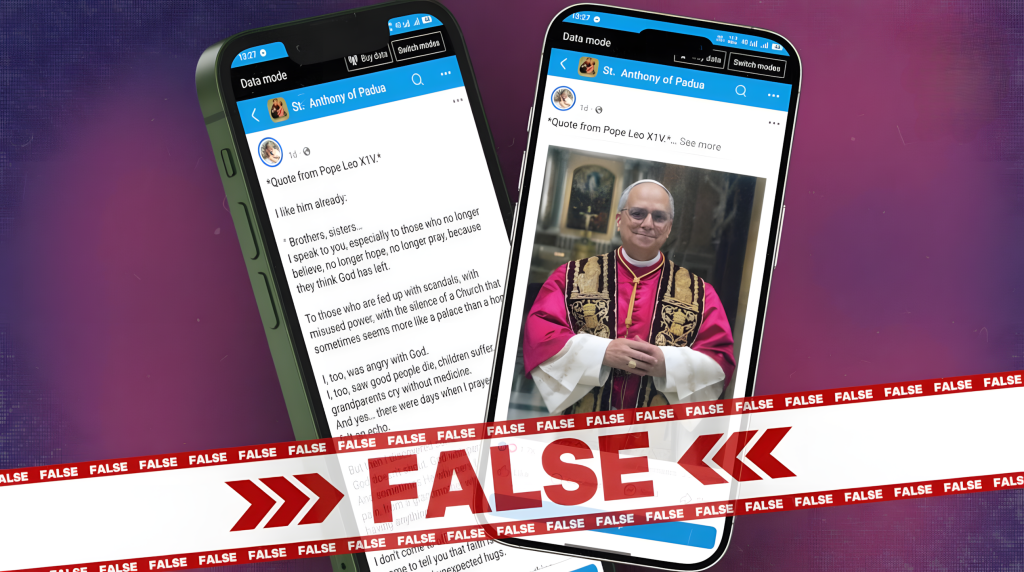
In an era where information travels at unprecedented speed, a recent incident involving a fabricated quotation attributed to Pope Leo XIV has sparked important conversations about how we process and evaluate the content we encounter daily. The story, which appeared on social media and quickly gained attention for its dramatic and emotionally charged nature, serves as a powerful reminder of the vulnerabilities inherent in human information processing. While the quotation was eventually determined to be almost certainly fabricated, the incident reveals something far more profound about human nature than the mere existence of misinformation. The real lesson lies not in the falsehood itself, but in how easily intelligent, thoughtful individuals can be moved to emotional response before taking the crucial step of verifying the information they encounter.
The phenomenon of believing before verifying is deeply rooted in human psychology and affects people across all levels of education and intelligence. Rarely do we evaluate information under ideal circumstances; instead, we encounter it amid the chaos of daily life—after difficult days at work, during moments of anger about current events, while grieving personal losses, or when rushing between responsibilities. When we read something that confirms what we already believe or fear might be true, our first instinct is often to nod in agreement rather than pause to question the source. This tendency is not a sign of foolishness but rather a fundamental aspect of human nature. Persuasive messages appeal to us as human beings before we have time to evaluate them carefully, and we naturally find ideas more appealing when they align with our existing beliefs or confirm our suspicions. The question of whether evidence actually supports a claim sounds simple, but stopping to ask it before reacting can be surprisingly difficult in practice.
Emotion consistently moves faster than evidence in human decision-making processes, and this dynamic has been understood by effective communicators throughout history. Teachers, clergy, military leaders, advertisers, politicians, journalists, and storytellers have all recognized that facts alone rarely move people to action or belief. What has changed in the modern era is not human nature but the speed and reach of communication technology. A story that once might have taken weeks or months to spread can now reach millions within minutes, often before anyone has verified its accuracy. This does not mean that emotional messaging is inherently misleading or that persuasive communication is always harmful; emotion has always been an essential component of human communication, capable of inspiring, comforting, and motivating us. The problem emerges when emotion begins replacing careful evaluation rather than complementing it. The distinction lies not in whether emotion is used but in how it is used—ethical communicators employ emotion to reinforce understanding, while those seeking to mislead often use it to discourage thoughtful consideration.
The solution to this pervasive problem lies not in becoming cynical or suspicious of everything we read but in developing disciplined habits of thought that help us slow down and evaluate information more carefully. Through years of experience, I have found that returning to a handful of fundamental questions whenever encountering emotional or remarkable claims has proven invaluable in separating initial reactions from actual evidence. These questions, while simple, serve the crucial function of creating a brief pause between stimulus and response, allowing us to distinguish between strong emotional reactions and strong evidence. They are not intended to make us distrust everything but rather to approach information with greater curiosity, patience, and intellectual honesty. The goal is not perfection—we are all capable of mistakes—but rather becoming a little more thoughtful today than we were yesterday.
The first and most basic question involves identifying the source of information: Are we looking at the original source or relying on someone else’s description, summary, or interpretation? Every time information passes from one person to another, there exists an opportunity for misunderstanding, omission, or deliberate alteration. Following this, we must ask what evidence actually supports the claim, recognizing that confident statements are not the same as convincing evidence. A claim, no matter how passionately presented or frequently repeated, remains merely a claim until supported by reliable evidence. Additionally, we must consider what information might be missing—sometimes stories mislead not because they are false but because important facts, context, or alternative explanations have been omitted. A statement can be technically accurate while still leaving us with an incomplete or mistaken understanding of the issue at hand.
Other essential questions include whether another reasonable explanation exists for the information presented, and whether we are reacting to evidence or to the manner of presentation. Dramatic language, emotional stories, striking images, urgent warnings, and confident assertions can all capture our attention, sometimes distracting us from the crucial question of whether evidence actually supports the conclusion. Perhaps most challenging is asking whether we apply the same standard to information we agree with as to information we disagree with—when stories support our existing beliefs, we are naturally less inclined to examine them closely. Finally, we must consider why information was presented in a particular way and what conclusion the evidence actually supports, acknowledging that sometimes the most honest answer is that we simply don’t know yet. These questions have become increasingly vital as technology has transformed our lives and the pace of information consumption continues to accelerate, making disciplined thinking more important than ever in distinguishing between reacting to a story and genuinely understanding it.


