


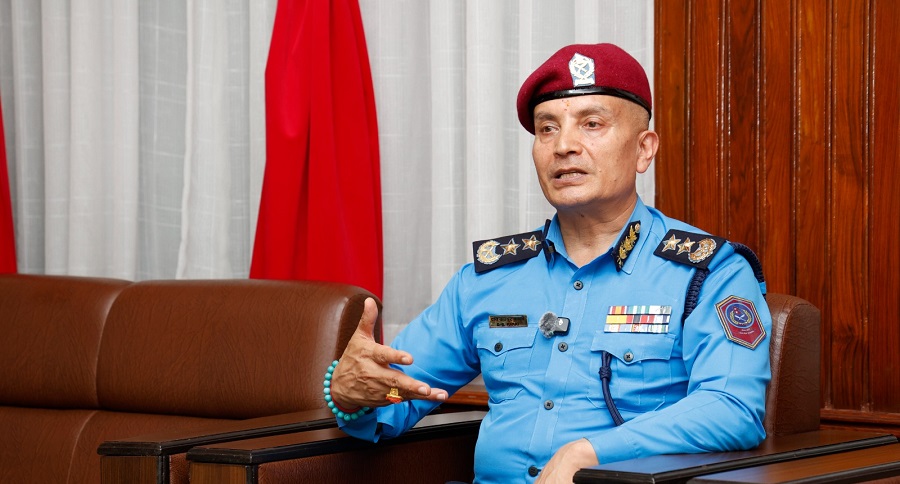
Nepal Police Chief Vows Strategic Focus on Peace, Order, and Countering Digital Disinformation Amid Evolving Security Landscape
KATHMANDU — Inspector General of Nepal Police, Dan Bahadur Karki, has affirmed that the organization is strategically focused on maintaining peace and order throughout the country while proactively addressing criminal activity, even as he acknowledged that disruptive elements are threatening societal harmony through the spread of misinformation and disinformation online. In a comprehensive statement to RSS, the national news agency, IGP Karki provided a detailed assessment of Nepal’s current security situation, noting that while overall security remains normal, the police force must remain vigilant against new and emerging threats that do not fit traditional law enforcement paradigms. He emphasized that the police are deploying personnel mindfully to counter these threats while simultaneously striving to maintain positive relations among citizens from all walks of life. This dual approach — firm action against crime and disorder, coupled with community-centered policing — reflects a broader strategy that prioritizes collaboration with other security forces and all tiers of government. Karki’s remarks come at a time when Nepal is navigating the complex intersection of traditional law and order challenges, technological advancement, and social change, requiring a police force that is both responsive and forward-looking in its methods and mindset.
Maintaining Peace and Order Through Unified Coordination
IGP Karki stated that Nepal Police is strategically mobilized to control criminal activities while prioritizing good relations and harmony amongst citizens, highlighting that sustainable peace cannot be achieved through enforcement alone. He emphasized that regular contact and coordination between the Nepali Army, Armed Police Force, National Investigation Department, and relevant ministries, including the Home Ministry, are fundamental to the effective maintenance of law and order across the country. According to Karki, Nepal’s security architecture is built on a foundation of inter-agency cooperation, where the sharing of intelligence, resources, and operational planning ensures that all security bodies work in tandem rather than in isolation. In special situations, all agencies discuss security strategies together, with coordinated deployment proving to be the key to normalizing arrangements in sensitive areas. This layered approach ensures that responses to unrest, natural disasters, or major public events are swift, organized, and effective. Karki underscored that the police cannot function as an island; rather, it must operate within a broader ecosystem of state institutions and community stakeholders. He acknowledged that challenges remain, particularly in urban centers where population density and anonymity can facilitate criminal activity, but expressed confidence that the current framework of constant communication and joint planning has already yielded positive results. The IGP’s emphasis on coordination reflects a recognition that modern security threats are increasingly complex, often crossing jurisdictional boundaries and requiring a whole-of-government response. By aligning the efforts of the military, armed police, intelligence services, and civilian authorities, Nepal Police aims to build a resilient security network capable of adapting to evolving circumstances while preserving the fundamental rights of citizens.
Social Media’s Growing Impact on Social Harmony
Addressing one of the most pressing contemporary concerns, Karki tackled the issue of irresponsible social media usage and its detrimental effects on Nepal’s social fabric. He noted that over the past decade, Nepali society has undergone a significant shift toward materialism, with widespread access to technology often being exercised without a corresponding sense of responsibility. “From using such technologies in an irresponsible manner, misleading and false information spreading through social media has made people feel that a certain kind of social harmony has been disturbed,” he said. The IGP warned that the rapid proliferation of smartphones and internet connectivity has outpaced the development of digital literacy, leaving citizens vulnerable to manipulation, rumor, and hate speech. Social media platforms, while offering unprecedented opportunities for communication and expression, have also become breeding grounds for disinformation campaigns that can incite panic, communal tension, and even violence. Karki stressed the importance of educating citizens about responsible social media use beginning at the school level, arguing that digital citizenship must be treated as a core civic competency. He called on parents, teachers, and community leaders to model healthy online behavior and to engage young people in critical thinking about the content they consume and share. The IGP also signaled that law enforcement would continue to monitor cyberspace for malicious activities, but emphasized that legal measures alone are insufficient; a cultural shift is needed to foster an environment where truth and responsibility prevail. By integrating digital literacy into educational curricula and public awareness campaigns, Nepal can reduce the harmful impact of misinformation and build a more informed, cohesive society. Karki’s comments reflect a broader global concern about the role of social media in undermining democratic discourse and social trust, and his proposed solutions align with international best practices that emphasize education, transparency, and multi-stakeholder collaboration.
Preventing Social Unrest and Strengthening Community Bonds
IGP Karki highlighted how Nepal’s strong community bonds helped prevent an escalation of unrest that originated in Sunsari from spreading to western districts, attributing this success to a collective desire for peace and harmony among the general public. He explained that local leaders, religious figures, and ordinary citizens played a crucial role in calming tensions and isolating those who sought to exploit communal differences for political or personal gain. The IGP’s remarks suggest that Nepal’s social capital — the networks of relationships and shared values that bind communities together — remains a powerful bulwark against destabilization, even when provocative incidents occur. However, he also expressed concern about a perceived drift away from traditional religious and cultural values, warning that weakening moral anchors could make society more susceptible to division and extremism. In his view, strengthening societal character, cultural tolerance, and citizen relations requires the active involvement of political, intellectual, and spiritual leaders, who must work collectively to reinforce the principles of mutual respect and coexistence. Karki called for a renewed emphasis on civic education, interfaith dialogue, and community engagement programs that bring diverse groups together to address common challenges. He noted that while police can maintain order and investigate crimes, they cannot manufacture harmony; that task belongs to society as a whole. The Sunsari incident, he argued, serves as a lesson in the importance of early intervention and communication, as well as a testament to the resilience of Nepali communities when they are united in their commitment to peace. By fostering an environment in which differences are resolved through dialogue rather than confrontation, Nepal can reduce the risk of social unrest and ensure that isolated incidents do not spiral into larger conflicts. The IGP’s emphasis on preventive measures and community resilience reflects a broader philosophy of policing that prioritizes long-term stability over short-term enforcement.
Modernizing Policing Strategies for a New Era
In a significant departure from traditional methods, the Nepal Police is currently undergoing comprehensive reforms designed to modernize its approach and enhance its effectiveness in addressing contemporary challenges. IGP Karki explained that new performance indicators have been implemented for police personnel, with daily evaluations and monthly reports being used to motivate and assess their work. This shift toward data-driven management aims to increase accountability, improve service delivery, and ensure that officers are focused on outcomes that matter to the public. The IGP also noted the development of specialized software and the introduction of the ‘Nepal Police App,’ which allows citizens to submit applications and requests from the comfort of their homes, thereby increasing accessibility and reducing bureaucratic hurdles. This digital transformation is intended to make policing more transparent and user-friendly, while also freeing up officers to concentrate on more complex enforcement and investigative tasks. Recognizing the alarming rise in cybercrime and financial crime rates, the force is actively recruiting technical staff with expertise in digital forensics, cybersecurity, and financial investigation. These new specialists will enhance the police’s capacity to tackle crimes that operate across borders and involve sophisticated technologies, from online fraud and identity theft to ransomware attacks and cryptocurrency scams. The modernization drive also extends to training and equipment, with officers being exposed to international best practices and new tools designed to improve their response capabilities. Karki emphasized that reform is an ongoing process, not a one-time event, and that Nepal Police must continually adapt to remain effective in a rapidly changing world. By embracing innovation while remaining grounded in the core values of integrity, service, and professionalism, the force aims to build public trust and meet the expanding expectations of Nepali citizens. The combination of technological upgrades, personnel development, and institutional reform signals a clear commitment to transforming Nepal Police into a 21st-century law enforcement agency ready to safeguard the nation’s security and well-being.
A Renewed Commitment to Peace, Security, and Citizen Welfare
Looking ahead, IGP Karki affirmed Nepal Police’s unwavering commitment to working with security agencies and stakeholders to strengthen peace, security, and citizen welfare in the coming days, guided by the Prime Minister’s vision for a stable and prosperous Nepal. He acknowledged that the path forward will not be without challenges, including the persistent threat of disinformation, the pressures of modernization, and the need to maintain public confidence in law enforcement institutions. However, he expressed optimism that by building on the foundation of inter-agency coordination, community engagement, and continuous reform, Nepal Police is well-positioned to navigate these complexities. The IGP reiterated that the ultimate goal of all policing efforts is not merely the absence of crime, but the presence of justice, safety, and social harmony. He called on all citizens to become partners in this endeavor, urging them to report suspicious activities, use social media responsibly, and participate in community initiatives that promote peace. Karki also extended a message of appreciation to the officers and personnel of Nepal Police for their dedication and sacrifice, particularly in remote and challenging areas where their presence often represents the first line of defense against instability. He pledged to continue improving their working conditions, training, and welfare, recognizing that a motivated and well-supported police force is essential to national security. As Nepal continues its journey of development and democratic consolidation, the role of the police will remain central to ensuring that progress is accompanied by order and that freedom is exercised with responsibility. The IGP’s comprehensive statement serves as both a status report and a strategic roadmap, signaling that Nepal Police is ready to meet the demands of a new era with professionalism, integrity, and a steadfast commitment to the people it serves. With continued collaboration among all branches of government, the private sector, and civil society, Nepal can look forward to a future where peace is not only maintained but also deeply rooted in the values of its diverse communities.