


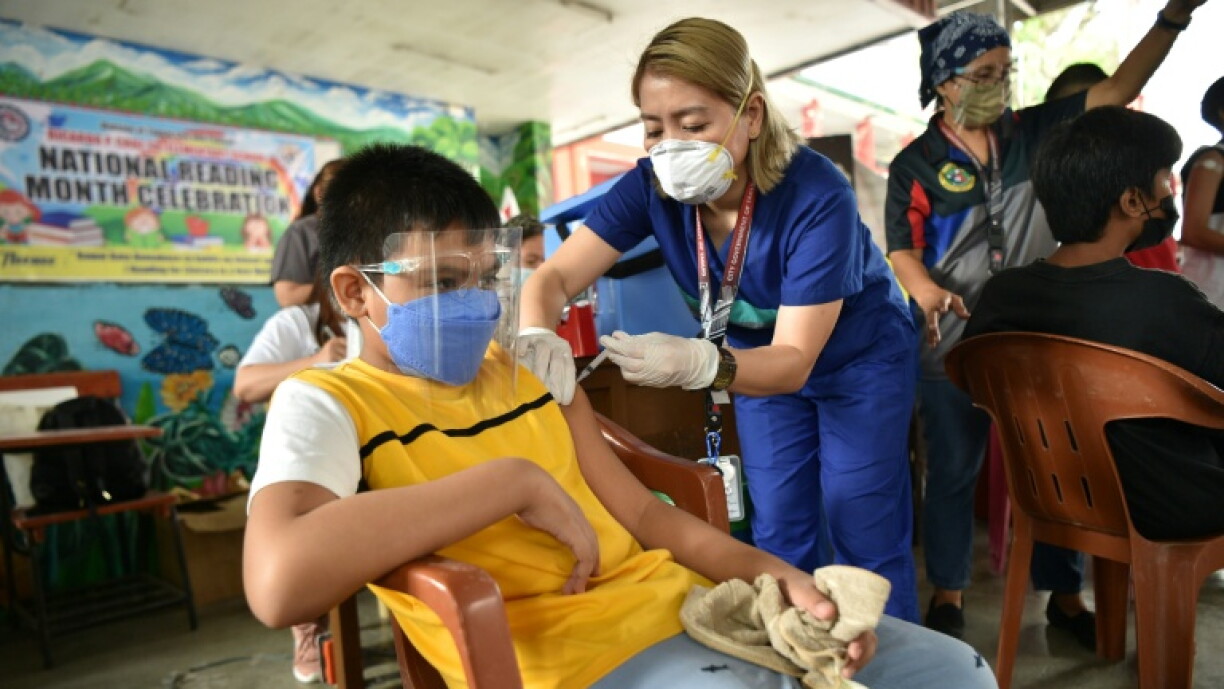
MANILA, Philippines — When Jenette Torres Odena’s three-year-old son fell ill just days after receiving a shot during a Philippine government vaccination drive, she rushed him to a local health center, hoping it was nothing serious. The boy had a fever, vomiting, and other symptoms that any parent would find alarming. Doctors examined him carefully, ran tests, and eventually concluded that there was no link between his illness and the measles-rubella vaccine. He recovered fully, and Odena was overwhelmed with relief. But her ordeal was far from over. A photograph of her sick child, which she had shared with family and friends, had been copied from social media and repurposed by anti-vaccine propagandists. Within days, it was circulating on Facebook alongside false claims that the vaccine had killed her son. “I felt like crying,” Odena told AFP. “I kept praying for my son to recover and suddenly they were killing him on Facebook.” The image was embedded in videos viewed hundreds of thousands of times, transforming one mother’s private nightmare into a weapon in a larger information war. Her story has become a powerful example of the human cost of vaccine misinformation in the Philippines, where a national childhood immunization campaign this year succeeded in vaccinating more than seven million children but also encountered fierce resistance. The Department of Health reported that roughly 230,000 people declined the vaccine, and that concerns about side effects accounted for 66 percent of refusals. The agency explicitly blamed misinformation spread by social media influencers as a “major driver” of vaccine fear. For a country that was once a regional model for child vaccination, and which has since suffered recurring measles outbreaks and a polio resurgence, the stakes could hardly be higher.
The roots of the current crisis run deep. The Philippines has struggled for years to restore routine childhood immunization rates after a prolonged period of decline, a trend that has left large numbers of children vulnerable to preventable diseases. In 2019, the country experienced a major outbreak of polio, a disease that had been all but eradicated in many parts of the world, and measles outbreaks have continued to recur with alarming frequency. Health officials say the situation is not primarily about access to vaccines; it is about trust. The most damaging blow to public confidence was the Dengvaxia controversy, which unfolded more than a decade ago. The dengue vaccine was given to hundreds of thousands of Filipino children before the manufacturer acknowledged that, for individuals who had never been infected with dengue, the vaccine could potentially lead to more severe illness in some cases. The botched rollout created a lasting atmosphere of suspicion around government vaccination programs and pharmaceutical companies. That suspicion has been compounded by the global wave of misinformation surrounding the Covid-19 pandemic, which spread conspiracy theories about vaccines, government control, and hidden agendas. Daniel Fritz Silvallana, a health communication researcher at Deakin University in Australia, said vaccine hesitancy in the country cannot simply be dismissed as a lack of scientific knowledge. “Vaccine hesitancy should not simply be understood as a lack of scientific knowledge among the public,” he told AFP. “In the Philippine context, it is also connected to questions of trust, politics, and people’s previous experiences with vaccination and public health institutions.” His analysis explains why a single photograph of a sick child can do so much damage: it fits into a pre-existing narrative in which vaccines are dangerous, health officials are untrustworthy, and the public must defend itself against hidden harms.
At the center of the misinformation storm is Maharani Sona Shiloh, a 44-year-old Facebook content creator whose videos have accumulated millions of views. Within days of the photo of Odena’s son being shared online, Shiloh had incorporated it into a video that framed the child’s illness as evidence that the vaccination campaign was deliberately harming children. To give her claims an air of political relevance, she cited President Donald Trump’s recent and controversial decision to reduce the number of vaccine doses administered to American children. The video, which was watched hundreds of thousands of times, paired the child’s image with a photograph of the US president and the words “Everyday slaughter.” Eventually, Facebook took down the page where the video had been posted, but according to AFP, three affiliated pages remained active. Shiloh rejected the suggestion that she was spreading harmful misinformation, describing herself instead as a human rights advocate. “People call us crazy,” she said. “Why is it that human beings don’t have the right to challenge these things?” She said she had become involved in anti-vaccine advocacy years before the pandemic, and had later connected with church groups and other “advocacy circles” that also campaign against SIM card registration and other policies they associate with a treacherous “New World Order.” Her videos have claimed that vaccines contain dangerous substances, including “human placenta” and “formalin,” and have warned that the World Health Organization is trying to depopulate the planet. These claims have no basis in science, but they are carefully packaged in the language of suspicion and resistance. The result is a form of content that can be shared rapidly across private messaging networks and public pages, reaching people who have already been primed to distrust official information.
The consequences of this online disinformation are tangible and increasingly visible in clinics, health centers, and homes across the Philippines. One mother, who asked to speak anonymously to protect her children, told AFP that she decided to hold off vaccinating them after watching Shiloh’s videos. “I watched Ms Maharani’s videos because I was looking for more information. They gave additional knowledge… so it helped me to think more carefully,” she said. A week after the Facebook page was shuttered, she said she remained undecided about whether to vaccinate her children, explaining that she and her husband were worried about possible side effects. For health workers like Wenna Mae Belen, a rural health worker in Sorsogon province, the impact has been immediate. “They get scared because the vlog said vaccines are fatal,” Belen said. Some conversations with parents have become openly hostile. “They tell me if something bad happens, they’ll make me suck the vaccines out of their kids’ bodies,” she said. The 25-year-old health worker said Facebook bore “major responsibility” for the spread of vaccine misinformation, but she cautioned that directly picking fights with content creators and their followers would be a losing battle. Instead, she argued, rebuilding trust will take time and patience and will require open, non-judgmental conversations with parents. “It isn’t enough for us to just say: ‘We’re the experts, so trust us’,” she said. This is the hard reality of modern public health: a single well-produced video can undo years of medical progress in a matter of days, and health workers are forced to spend much of their time trying to repair damage they did not cause.
Medical experts say the non-scientific nature of the misinformation should not lead anyone to underestimate its power. Helen Petousis-Harris, a vaccinologist at the University of Auckland, said anti-vaccine videos operate through fear, not evidence. “Recognised vaccine ingredients become mysterious contaminants. Rare adverse events become brain damage, epilepsy, organ failure and death,” she told AFP. In fact, vaccines are among the most rigorously tested medical products in existence. The measles-rubella vaccine has a long history of safe and effective use, and serious adverse reactions are extremely rare. The benefits of preventing measles, which can cause severe complications such as pneumonia, encephalitis, and death, far outweigh the tiny risks associated with immunization. But scientific facts are difficult to communicate when people have been conditioned to distrust the institutions providing them. Silvallana’s research suggests that the most effective responses are not necessarily more data, but trusted community voices: religious leaders, local health workers, and family members who can engage in dialogue rather than confrontation. The misinformation landscape is also highly adaptive. When one false claim is debunked, another takes its place, often borrowing the visual grammar of news reporting or scientific research to appear credible. The Philippine government has attempted to push back by issuing statements and coordinating with social media platforms, but takedowns often occur only after videos have already reached vast audiences. Moreover, the offline drivers of hesitancy—poverty, lack of access to healthcare, memories of the Dengvaxia scandal, and a general suspicion of government institutions—cannot be resolved by fact-checking alone. The challenge is not simply to correct falsehoods, but to restore a relationship between communities and the public health system.
The path forward is neither quick nor easy. For Odena, the ordeal of seeing her son’s image twisted into a propaganda weapon has been deeply traumatic, yet she and her son have survived, and her story is a cautionary tale about the human cost of disinformation. For health workers, the immediate priority is to keep showing up, keep talking to families, and keep vaccinating children one at a time. Belen said she continues to do home visits and community outreach, trying to build the kind of patient, trusting relationships that can withstand the next round of online scare tactics. The government must also confront the structural problems that allowed vaccine confidence to falter: historical neglect of rural health services, the unresolved legacy of the dengue vaccine controversy, and the failure of social media companies to police dangerous content in local languages and contexts. Facebook’s lack of response to requests for comment is itself an indication of a platform struggling to balance free expression with public safety. What is clear is that the battle for vaccine confidence in the Philippines will be won or lost in millions of small interactions—between a nurse and a mother, a priest and a congregation, a vlogger and an audience. As Odena fought to heal her child, she was also forced to fight for his reputation, praying for his recovery while strangers on the internet declared him dead. Her story is a powerful reminder that behind every statistic about vaccine refusal is a real person, and that misinformation is not an abstract phenomenon but a force with the power to harm, frighten, and divide. Rebuilding trust will require time, patience, and a willingness to listen—values that cannot be measured in clicks but remain essential to protecting the health of the next generation.