


Close Menu
DISADISA
  • Home
  • News
  • Social Media
  • Disinformation
  • Fake Information
  • Social Media Impact
Trending Now

German Embassy Issues Formal Warning to Nigerian Nationals Regarding Unauthorized Visa Agents and Misinformation.

August 26, 2026

Social Media Addiction: Consequences, Risks, and Legal Remedies

August 26, 2026

ActionSA Lodges Formal Disinformation Complaint with IEC Against ANC’s Kgoši Maepa.

August 26, 2026
Facebook X (Twitter) Instagram
Facebook X (Twitter) Instagram YouTube
DISADISA
Newsletter
  • Home
  • News
  • Social Media
  • Disinformation
  • Fake Information
  • Social Media Impact
DISADISA
Home»Fake Information»Minister Vaishnaw Addresses Ethical AI Challenges and Social Media Accountability for Fake News
Fake Information

Minister Vaishnaw Addresses Ethical AI Challenges and Social Media Accountability for Fake News

Press RoomBy Press RoomDecember 17, 2024No Comments
Facebook Twitter Pinterest LinkedIn Tumblr Email

India Takes Center Stage in Global Dialogue on AI Ethics and Combating Fake News

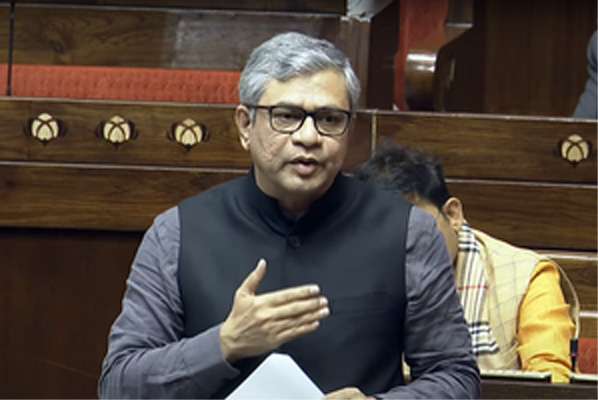
New Delhi – India is actively engaging in the global discourse surrounding the ethical implications of artificial intelligence (AI) and the proliferation of fake news, emphasizing responsible innovation, robust debate, and the accountability of social media platforms. Union Minister of Electronics and Information Technology, Ashwini Vaishnaw, addressed Parliament on Wednesday, outlining the government’s commitment to navigating these complex challenges. He underscored the importance of striking a balance between freedom of speech and the imperative to curb the spread of misinformation in the digital age.

Vaishnaw acknowledged the global nature of these concerns, stating, "It is a major challenge that societies across the world are facing — the accountability of social media, particularly in the context of fake news and the creation of fake narratives." He stressed the necessity of a thorough societal debate to address the tension between free speech and the need for accurate information dissemination. The Minister indicated a willingness to explore new legislation if a societal consensus emerges, suggesting potential legal frameworks to regulate online content and hold social media companies accountable.

The Minister’s address also highlighted the government’s proactive stance on AI governance and privacy protection. He detailed ongoing efforts to develop indigenous AI tools and technologies under the ‘India AI Mission’, emphasizing applications tailored to India’s specific requirements. Eight projects are currently underway, focusing on creating domestic capabilities in AI development, reflecting a commitment to self-reliance in this critical technology.

India’s role in shaping global AI governance was also underscored by Vaishnaw. He emphasized the country’s active participation in international forums like the Organisation for Economic Co-operation and Development (OECD) and the United Nations, highlighting the significance of India’s voice in shaping international AI policy and ethical guidelines. This proactive engagement underscores India’s ambition to be a leader in responsible AI development and deployment.

The Minister’s statements provide insight into India’s multifaceted approach to the evolving digital landscape. The government is pursuing a strategy that balances promoting technological innovation with addressing critical ethical concerns. By fostering domestic AI capabilities and actively participating in international discussions, India aims to shape a future where AI benefits society while mitigating potential risks. This approach reflects a growing awareness of the need for proactive governance in the face of rapid technological advancement.

The focus on accountability for social media platforms signals a potential shift in the regulatory landscape. While the exact form of future legislation remains undetermined, the Minister’s remarks suggest a growing recognition of the need to address the spread of misinformation and hold online platforms responsible for the content they host. The ongoing debate on balancing freedom of speech with the need to combat fake news is a crucial one, and India’s approach will likely influence similar discussions globally. The government’s emphasis on responsible innovation and robust public discourse underscores a commitment to navigating the complexities of the digital age with a balanced and forward-looking perspective.

Share. Facebook Twitter Pinterest LinkedIn WhatsApp Reddit Tumblr Email

Read More

Tate Brothers Acknowledge Their Ostentatious Displays of Wealth Are Fabricated

August 25, 2026

Formal Advisory Warns Social Media Users of Fraudulent Protection Services

August 25, 2026

Identifying the Most Common Scams Originating on Social Media

August 25, 2026
Add A Comment
Leave A Reply Cancel Reply

Our Picks

Social Media Addiction: Consequences, Risks, and Legal Remedies

August 26, 2026

ActionSA Lodges Formal Disinformation Complaint with IEC Against ANC’s Kgoši Maepa.

August 26, 2026

Health Experts Offer Evidence-Based Guidance for Navigating Online Nutrition Misinformation

August 26, 2026

The Threat of Anti-Disinformation Legislation to the Public Square

August 26, 2026
Stay In Touch
  • Facebook
  • Twitter
  • Pinterest
  • Instagram
  • YouTube
  • Vimeo

Don't Miss

News

NCIC and Faith Leaders Warn of Misinformation Threat Ahead of 2027 Elections

By Press RoomAugust 26, 20260

Kenya’s Peace Guardians Sound Alarm Over Hate Speech and Religious Weaponization Ahead of 2027 Election…

  1. Analyze the Request:

    • Original title: “How to spot ethnic disinformation on social media”
    • Task: Rewrite this to 1 title in English in a formal tone.
    • Constraints: Only 1 title, formal tone, must retain the core meaning (identifying/detecting ethnicity-based disinformation/falsehoods on social platforms).
  2. Evaluate the Original: The original is clear but uses “spot” (informal/colloquial for this context) and “ethnic” (slightly broad). “Disinformation” is a good formal term.

  3. Brainstorm Formal Alternatives:

    • “Identifying Ethnic Disinformation on Social Media Platforms” (good, formal, direct).
    • “Detecting Disinformation Targeting Ethnic Groups on Social Networks” (more specific, emphasizes targeting).
    • “A Guide to Identifying Ethnically-Focused Misinformation and Disinformation on Social Media” (too long).
    • “Recognizing Ethnic Disinformation in Social Media Environments” (wordy).
    • “Techniques for Uncovering Ethnic Disinformation on Digital Platforms” (practical).
    • Let’s synthesize. Formal titles usually prefer nouns like “Identifying”, “Detecting”, “Assessing”. The subject is specifically disinformation that is ethnic (based on ethnicity/race).
    • Option A: “Identifying Ethnic Disinformation on Social Media” (Best balance of formality, conciseness, and accuracy).
    • Option B: “Detecting Ethnic Misinformation and Disinformation on Digital Networks” (a bit longer).
    • Option C: “Strategies for Identifying Ethnic Disinformation in Social Media”.
  4. Select the Best Title: Option A is the most natural and formal direct translation. Let’s ensure it doesn’t sound like a casual tutorial. “Identifying” is academic/formal. “Ethnic disinformation” is precise. “Social Media” is standard.

    Let’s refine it slightly to be more impactful: “Detecting Ethnic Disinformation within Social Media Platforms” – a bit wordy. “Identifying Ethnic Disinformation on Social Media” – perfect.

  5. Final Check: Does it meet the criteria? 1 title (yes). English (yes). Formal tone (yes – “Identifying” is formal). Same meaning (yes). Let’s goIdentifying Ethnic Disinformation on Social Media

August 26, 2026

Identifying Ethnically Targeted Disinformation on Social Media Platforms

August 26, 2026

Identifying Health Misinformation

August 26, 2026
DISA
Facebook X (Twitter) Instagram Pinterest
  • Home
  • Privacy Policy
  • Terms of use
  • Contact
© 2026 DISA. All Rights Reserved.

Type above and press Enter to search. Press Esc to cancel.