


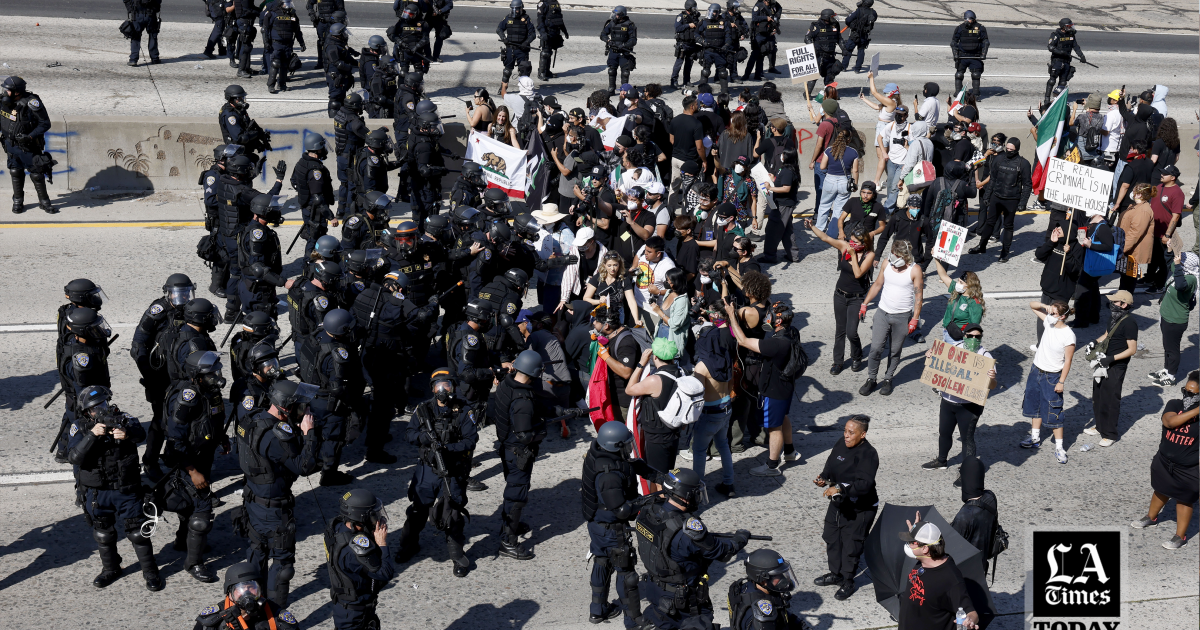
Immigration Sweeps Spark Fear and Misinformation in Los Angeles
Los Angeles, CA – A series of immigration sweeps conducted by Immigration and Customs Enforcement (ICE) agents in Los Angeles County over the weekend has ignited a firestorm of fear and misinformation within the immigrant community and beyond. While the sweeps themselves have generated genuine concern, the proliferation of inaccurate and exaggerated reports on social media and in public discourse has amplified anxieties and potentially put vulnerable individuals at risk. This wave of disinformation, often spread through social media platforms and word-of-mouth, paints a grim picture of widespread and indiscriminate raids, fostering fear and mistrust among immigrant communities.
The reality on the ground, however, is more nuanced and less dramatic than some of the circulating narratives suggest. While ICE operations are indeed underway, they appear to be targeted, focusing on individuals with criminal convictions or outstanding deportation orders. Reports of random checkpoints and indiscriminate arrests, while widely shared, lack verifiable evidence and have been debunked by local authorities and immigration advocates. The danger of such false information is that it can create unnecessary panic, prompting individuals to take drastic and potentially harmful actions, such as avoiding necessary public services, like hospitals or schools, out of fear of encountering ICE agents.
The spread of misinformation also undermines public trust in both law enforcement and media outlets. When individuals encounter a barrage of alarming but unverified reports, it becomes difficult to distinguish fact from fiction, leading to a general erosion of confidence in official sources of information. This makes it harder for accurate information about ICE activities to reach the communities most affected, hindering their ability to make informed decisions and access available legal resources.
Karen Garcia, a reporter for the Los Angeles Times, has been diligently working to separate fact from fiction amidst this swirling vortex of information. Garcia emphasizes the importance of critical thinking and verifying information before sharing it on social media or with others. She points out that many of the most viral and alarming posts lack credible sources and often contain exaggerated or fabricated details. Garcia’s reporting underscores the need for responsible information sharing and the crucial role of accurate journalism in times of heightened anxiety and uncertainty.
The situation is further complicated by the pre-existing climate of fear within immigrant communities, fueled by years of increasingly restrictive immigration policies and rhetoric. This underlying anxiety creates fertile ground for the rapid spread of misinformation, as individuals are more likely to believe and share reports that align with their pre-existing fears. The challenge for journalists and community leaders is to provide accurate and accessible information that addresses these concerns without inadvertently amplifying unsubstantiated rumors.
The ongoing immigration sweeps and the accompanying wave of disinformation highlight the critical need for reliable information sources and responsible information sharing practices. Verifying information before disseminating it can prevent unnecessary panic and ensure that vulnerable individuals are not put at risk. As the situation unfolds, it is imperative that journalists, community leaders, and individuals alike work together to promote accurate information and combat the spread of misinformation that can sow fear and confusion. The well-being and safety of the community depend on a commitment to factual accuracy and responsible communication. It is crucial for individuals to rely on trusted news organizations and official government sources for information, rather than unverified social media posts. Staying informed through credible channels can empower individuals to make informed decisions and avoid falling prey to harmful rumors. Furthermore, reporting suspected misinformation to social media platforms can help prevent its further spread and protect vulnerable communities.