


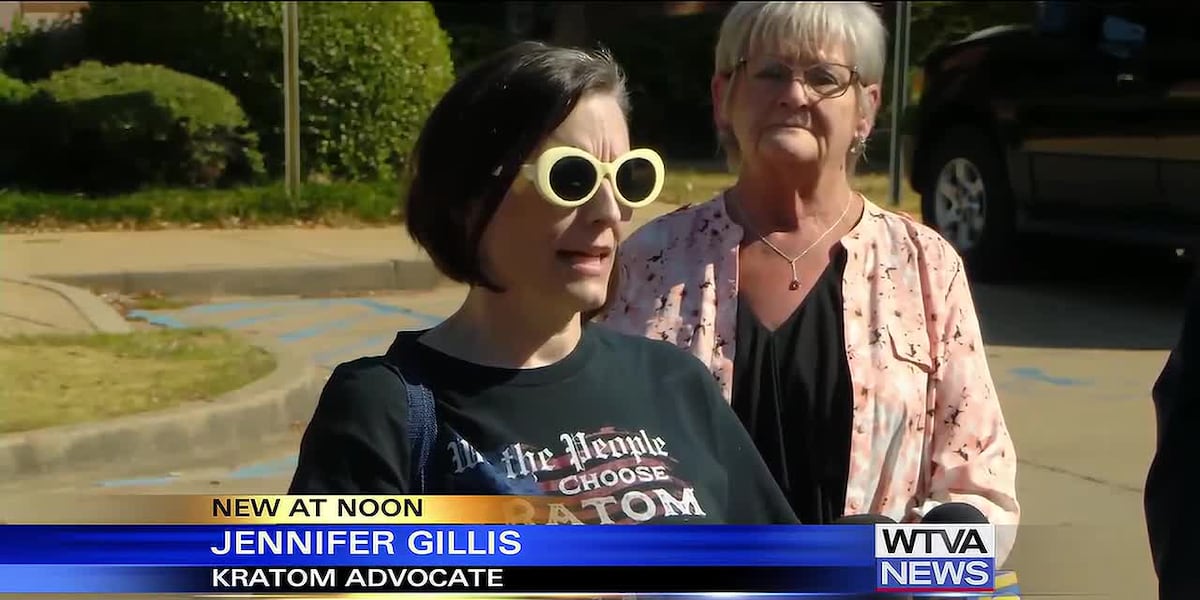
OXFORD, Miss. — Kratom advocates are speaking out after the deaths of two University of Mississippi students, urging the public not to jump to conclusions and condemning what they call a dangerous wave of misinformation surrounding the herbal supplement. At a press conference held near campus, representatives from kratom advocacy groups, along with families who use the botanical product for pain management and addiction recovery, addressed reporters directly. They expressed deep sympathy for the students’s families and friends, but insisted that early media coverage and social media speculation have unfairly scapegoated kratom before toxicology reports and autopsies have been completed. “Our hearts break for the families who lost loved ones, and we would never minimize the tragedy of a young life cut short,” said one advocate. “But spreading unverified information about kratom being the sole cause of these deaths is reckless, unscientific, and does nothing to prevent future tragedies.”
The two Ole Miss students were found dead in an off-campus apartment last week, prompting a multi-agency investigation. While law enforcement officials have remained tight-lipped about the cause of death, several unconfirmed online posts and news outlets quickly linked the incident to kratom, a tropical tree leaf native to Southeast Asia that is commonly used in capsules, powders, and teas. Kratom contains mitragynine, a compound that interacts with opioid receptors in the brain, and it has been the subject of intense federal and state debate. However, advocates say that correlation is not causation, and they are calling on the media to stop treating kratom as a straightforward poison. “We have seen this pattern before — whenever something happens, kratom gets blamed, and the real story, which often involves contaminated products or mixing substances, gets lost,” said another spokesperson.
At the heart of the advocates’ message is a demand for regulated, tested, and clearly labeled kratom products. They argue that the real problem is not kratom itself, but the unregulated marketplace in which consumers can easily purchase products of unknown purity. Without federal oversight, they say, dangerous fillers, heavy metals, and synthetic additives can end up in what is marketed as pure kratom. Several advocates pointed to recent recalls of kratom supplements contaminated with salmonella and heavy metals, as well as cases in which street drugs were disguised as kratom. “If these students took something sold to them as kratom, we need to know exactly what was in that product,” one former kratom user said. “Was it actually kratom? Was it a concentrated extract? Was it mixed with an opioid or benzodiazepine? These are the questions that need answering.”
Advocates also condemned what they described as “misinformation” being spread by anti-kratom politicians, law enforcement officials, and some national media outlets. They specifically criticized the phrase “the same as an opioid” and the classification of kratom as a “street drug,” pointing out that kratom has been used for centuries in traditional medicine in countries like Thailand and Indonesia. They noted that the U.S. Food and Drug Administration has not approved kratom for medical use, but they argued that millions of Americans use it legally to treat chronic pain, anxiety, and opioid withdrawal. “People are not dying because they took a modest dose of kratom leaf. People are dying because they took an unregulated, untested substance that may or may not contain kratom at all,” said a policy director for a national advocacy organization. “The answer is not a blanket ban. The answer is sensible regulation that ensures what people buy is actually what they think they are buying.”
The issue has taken on particular urgency in Mississippi, where lawmakers have considered legislation that would ban kratom outright. Proponents of a ban point to the Ole Miss student deaths as evidence that kratom is dangerous. But advocates say such a ban would be a devastating blow to people who rely on kratom to manage their health, and would push the product into the shadows, making it even more dangerous. They are urging lawmakers to wait for the full autopsy and toxicology reports before voting on any bill. “We cannot legislate based on a headline,” said one advocate, who held a sign reading “Kratom Saves Lives.” “If the state of Mississippi really wants to protect its citizens, it will support good manufacturing practices, third-party testing, and age restrictions, rather than treating a whole botanical product like a weapon of mass destruction.”
In the end, the advocates said, their goal is not to overshadow the grief of the victims’ families, but to ensure that their deaths lead to truth rather than fear. They called on journalists to verify facts before publishing, and on families and students to be mindful of what they consume, especially from unregulated sources. They also urged anyone using kratom to do so responsibly, to buy from reputable vendors, and to be aware of potential interactions with other substances. As the investigation into the Ole Miss student deaths continues, the advocates said they will be watching closely and will hold the media, law enforcement, and lawmakers accountable. “We owe it to these two young people to get this right,” one speaker concluded. “Not just for their memories, but for the countless other families who could be affected by bad information and bad policy.”