







A Quarter-Century of Consequences: How 9/11 Reshaped America, Its Power, and Its Politics
Twenty-five years have passed since the morning of September 11, 2001, when terrorists hijacked four American airliners and killed nearly 3,000 people in New York, Washington, and rural Pennsylvania. It is a cliché to say that a single day changed America, but it is also an understatement. A quarter of a century later, the United States still spends more money, attacks more countries, and surveils more people than it would have had 9/11 never happened. The attacks did not only destroy buildings and lives; they helped breed America’s modern culture of distrust and disinformation, handed presidents powers that Donald Trump seems determined to exploit, and made citizens realize, if they had not already, that war is not always the answer. The anniversary is not simply a moment of mourning, but an opportunity to trace the long, often hidden arc from the smoking towers to today’s fractured politics, runaway defense budgets, and perpetual global military footprint. What follows is an accounting of how those 102 minutes of terror cascaded into decades of intervention, surveillance, debt, and fantasy, and why the world that emerged from the rubble is still being shaped by the choices made in fear and rage.
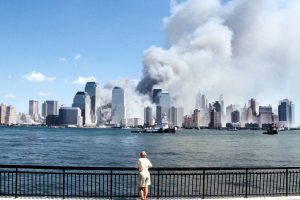
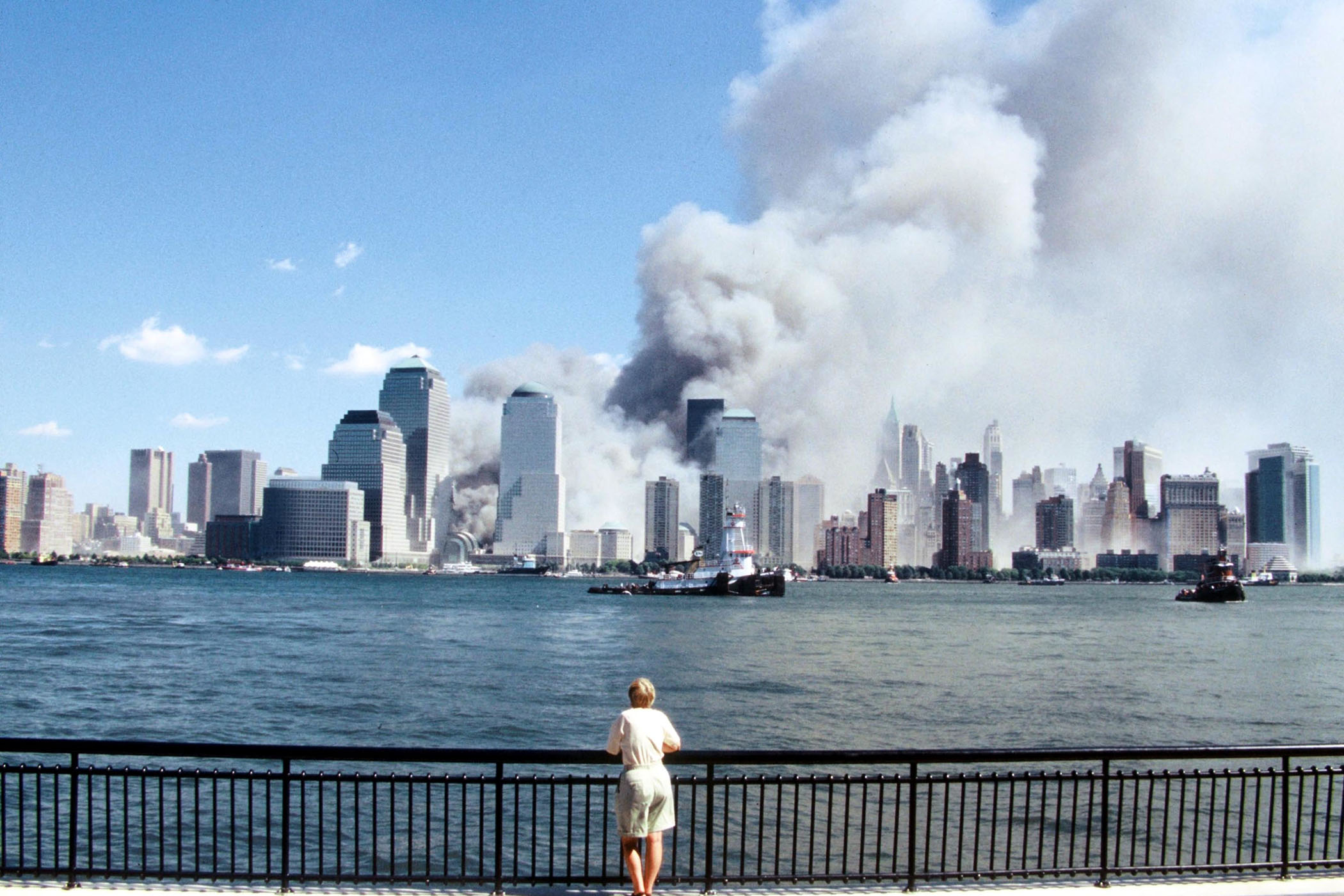
The warnings were there, and they were ignored. In the months before the attacks, the National Security Agency intercepted dozens of communications between May and July 2001 suggesting that a large-scale terror attack was imminent. The day before 9/11, the agency intercepted a chilling message from Afghanistan containing the phrase: “Tomorrow is zero hour.” Yet the United States was still helpless when two planes, hijacked by Islamic jihadists, flew into the World Trade Center, toppling the Twin Towers in front of a live television audience. A third plane struck the Pentagon, while a fourth, United Airlines Flight 93, was wrestled by brave passengers from its intended target and crashed into a field in Shanksville, Pennsylvania. These were the deadliest foreign attacks on American soil since Pearl Harbor, and they unfolded in real time, watched by millions in shock. That evening, President George W. Bush stood on the South Lawn of the White House and delivered a promise that would justify two decades of war: “We will make no distinction between the terrorists who committed these acts and those who harbor them.” It was a simple sentence, but it opened a door to something far larger than the pursuit of al-Qaeda. Within days, the idea of a finite, accountable response gave way to an open-ended, global struggle that would be invoked by presidents of both parties for generations.
The immediate aftermath was swift and fateful. Three days after the attacks, Congress passed the Authorization for Use of Military Force, a one-page resolution that remains in force to this day and has become one of the most expansive grants of war power in American history. The invasion of Afghanistan followed in October 2001, targeting the Taliban for harboring Osama bin Laden. That war, the longest in U.S. history, was soon overshadowed by a second, unrelated invasion of Iraq in 2003, justified by false claims that Saddam Hussein possessed weapons of mass destruction. The United States has not suffered another 9/11 on the scale of the original attacks, but its response has taken millions of lives, directly and indirectly, cost trillions of dollars, and sent the military-industrial complex into overdrive. Because the AUMF was never rescinded, it has been used by every president since 9/11 to justify military operations, air strikes, drone strikes, and troop deployments in more than 20 countries, from the Philippines to Yemen, and from Somalia to Niger. Researchers have counted post-9/11 counterterrorism operations in at least 78 countries, a global campaign that has often produced more instability rather than less. Studies of American operations in Somalia and Burkina Faso, for example, have found that U.S. military activity has correlated with increased violence and deeper political chaos, undermining the very stability the missions promised to defendees.
The financial toll has been staggering and irresponsibly managed. Brown University’s Costs of War project estimated $8 trillion in post-9/11 spending between 2001 and 2022, a figure so astronomically high that scholars note it was only possible because most of the spending was funded through borrowing. The fiscal consequences have been profound. Before the attacks, the United States had run four consecutive budget surpluses between 1998 and 2001. Since 9/11, it has run a large budget deficit every single year, with the national debt climbing to $40 trillion by August 2024, equivalent to 123 percent of gross domestic product, a higher proportion than the debt that financed World War II. Meanwhile, the machinery of American power became increasingly skewed toward the military and away from diplomacy. In 2001, the ratio between what the United States spent on defense and what it spent on the State Department and foreign aid was roughly 13 to 1. If Donald Trump had fully gotten his way with his most recent defense budget request and his proposed cuts to aid and diplomacy, that ratio would have neared 100 to 1. The Pentagon became a sprawling empire of bases, contractors, and intelligence agencies, while soft power atrophied. The United States tried to solve global problems with drones and special forces, abandoning the patient work of negotiation, development, and cultural influence that had once been a cornerstone of its global leadership.
The domestic transformation was equally profound. A few weeks after 9/11, Congress passed the Patriot Act, a sweeping surveillance law that dramatically expanded the power of the state to eavesdrop on Americans, collect digital information without warrants, and detain some foreigners indefinitely without trial. Its provisions hollowed out long-standing privacy protections and created permanent legal structures that outlived the immediate emergency. There is a clear throughline between the Patriot Act and Trump’s ability to declare unfounded national emergencies, target marginalized groups, and carry out deadly interventions in other countries. The legal scaffolding built after 9/11 gives the executive branch enormous latitude to act unilaterally, and Trump has shown eagerness to exploit that latitude. At the same time, the attacks and the official response to them spawned a new age of conspiracy theories. Baseless rumors about controlled demolitions and unanswered questions about the Bush administration’s claims of Iraqi weapons of mass destruction, which were never found, launched a culture of paranoia that has only deepened. Trump himself continues to propagate falsehoods about the 9/11 attacks, and the distrust those falsehoods engender speaks to a deeper pathology in American public life. The attacks paved the way for a politics stained by misinformation, where facts are fungible and state institutions are viewed as untrustworthy by millions of citizens.
It is impossible to imagine the political landscape of the past decade without 9/11. There may well have been no President Trump without the attacks and their aftermath. It was the post-9/11 treatment of immigration as a national security issue that fueled the populist backlash Trump exploited in 2016. It was the forever wars that followed the attacks that gave him a winning campaign promise to end the endless conflicts. Yet it is Trump’s inability to stick to that promise, and his apparent willingness to invade Iran in the name of national security, that is likely to define his second term. The same dynamics that produced the Iraq War are still at work: dehumanization of enemies, reliance on intelligence that fits the desired narrative, and an expansive reading of executive power. Americans today fear domestic terrorists more than they fear foreign groups, a remarkable inversion from the weeks after the 9/11 attacks. The power that flows from that original trauma is still being used, not to confront a clearly defined enemy, but to enforce a vision of American dominance that has never actually kept the nation safer. A quarter of a century on, the lesson of 9/11 should not be that the world is dangerous and therefore the United States must be a garrison state. The real lesson, buried under trillions of dollars and countless graves, is that fear is a poor guide to policy, that military force cannot solve political problems, and that the greatest threat to American security may no longer be the terrorists who flew the planes, but the leaders who learned to use that horror to justify almost anything.


