








INEC Raises Alarm Over AI Threat to Election Credibility, Commences Robust Capacity Building for Communication Chiefs Ahead of 2027
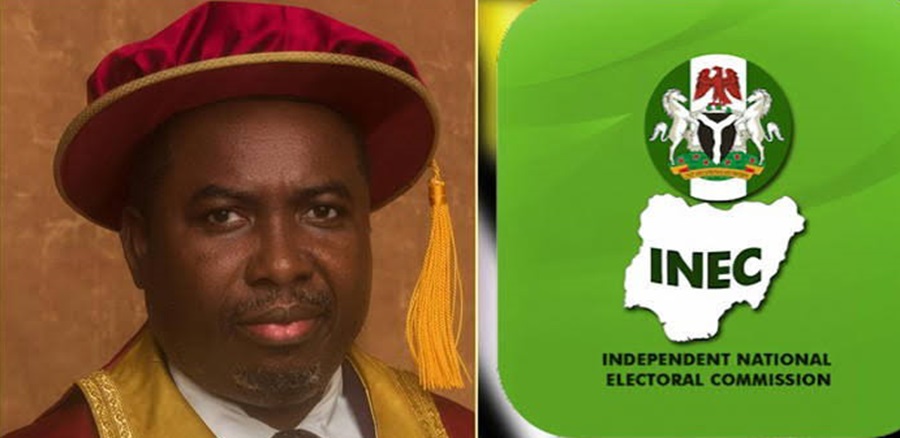
The Independent National Electoral Commission (INEC) has issued a resounding and urgent warning that the rising tide of generative Artificial Intelligence (AI) poses a fundamental threat to the credibility of elections in Nigeria, describing the misuse of the technology for the creation of manipulated audio, video, and highly targeted messaging as a clear and present danger that is “no longer a distant, theoretical risk.” This stark admonition was delivered by the National Commissioner and Chairman of the Information and Voter Education Committee, Mal. Mohammed Kudu Haruna, on Monday in Abuja, during his opening address at a two-day Capacity Building Workshop designed specifically for Public Affairs Officers (PAOs) drawn from INEC’s offices across the thirty-six states and the Federal Capital Territory. Haruna painted a sobering picture of an evolving digital battlefield, explaining that generative AI has radically lowered the barrier to entry for malicious actors who now possess the ability to fabricate compelling but entirely fraudulent content that can easily be weaponized to mislead voters, distort candidates’ public records, and incite violence or anxiety. He stressed that the technological advancement has made the identification of manipulated content “cheaper and considerably harder to detect,” thereby creating a grave risk that citizens will be unable to distinguish fact from fiction, which could irreparably harm the perception of the Commission’s impartiality, its officials, and the entire electoral process. The warning comes at a critical juncture in Nigeria’s democratic journey, signaling that the electoral body is gearing up to confront information warfare just as it has traditionally confronted ballot box malpractices.
Delving deeper into the nature of the threat, the Commissioner emphasized that the peril of generative AI extends well beyond the creation of standard fabricated content; its most insidious application lies in the deployment of “highly targeted messaging” designed to feed conflicting narratives to different groups of voters, a tactic that preys upon existing societal fissures and political polarization. This strategy, often termed micro-targeting, enables purveyors of disinformation to create bespoke falsehoods tailored to the fears and biases of specific demographic or ethnic groups, effectively orchestrating a fragmented information environment where a voter in Lagos receives a completely different, heavily manipulated message than a voter in Kaduna. He explained that this makes coherent public discourse virtually impossible, as each community operates on entirely divergent sets of “facts” generated by AI-driven manipulation. Furthermore, Haruna underscored a dangerous byproduct of AI misuse—the “liar’s dividend”—whereby malevolent political opponents can attribute legitimate criticism or genuine campaign gaffes to an AI manipulator, creating so much confusion that voters simply give up trying to discern the truth. This complex threat matrix, he argued, places the burden squarely on INEC’s communication wing to adapt and build robust verification frameworks. Consequently, the Commission recognized the urgent need to pivot its focus towards defensive digital literacy and institutional transparency, moving the conversation from merely vetting physical result sheets to scrutinizing the validity of every piece of viral audio, video, and text that circulates in the public domain during an election cycle. The threat is no longer about the theoretical capacities of advanced armies; it is about a local content creator with a top-tier AI tool and a will to manipulate the 2027 polls.
It is within this high-stakes ecosystem that the Commission convened the workshop, which is themed “Strengthening PAOs Capacity for Credible, Verified and Responsible Election Communication Towards 2027.” Mal. Haruna categorically identified the Public Affairs Officers as the “frontline communicators of INEC in the states,” the primary interfaces between the electoral administration and the Nigerian electorate. He impressed upon them that the essence of INEC’s credibility is, in many ways, inextricably tied to the daily execution of their duties. “The credibility of INEC’s communication, in many respects, begins with the work you do,” he said, providing a solemn endorsement of their role as gatekeepers of information. He noted that it is their voices that clarify or complicate the Commission’s directives, and their analytical skills that will be required to counter viral misinformation in real-time. In her welcome remarks, the Director of Voter Education and Publicity, Mrs. Victoria Eta-Messi, reinforced this viewpoint by reminding the participants that “it is through you that Nigerians form much of their impression of who we are, what we stand for, and how reliable our information is.” She acknowledged the unrelenting pressure INEC officials face, noting that the Commission “operates under constant public scrutiny and is regularly confronted with attempts to misrepresent its work and undermine public confidence in it.” Eta-Messi revealed that these logistical training sessions are not isolated, one-off affairs but represent the beginning of a “sustained engagement” with development partners, with further capacity-building interventions already at advanced stages of planning to equip the workforce against digital threats.
To provide the theoretical and philosophical foundation for the gathering, Haruna recalled the powerful stance taken by the INEC Chairman, Prof. Joash Amupitan, who earlier addressed the 13th Annual International Conference of the Association of Communication Scholars and Professionals of Nigeria. Prof. Amupitan had drawn a compelling parallel between the physical and the virtual realms, insisting that “election credibility today no longer depends only on ballot papers, BVAS machines and result sheets” but that it “depends equally on the information environment in which voters form their judgments.” In this era of deepfakes and algorithmic echo chambers, the sanctity of a paper ballot amounts to little if the collective public memory is submerged in falsified audio of a candidate calling for violence or fabricated video of electoral officials rigging a result. The environment forces a radical reconsideration of traditional electoral boundaries; it blurs the line between cyber security and public communications. Therefore, the INEC Chairman explicitly raised the clarion call for electoral technology and electoral communication to be treated as a single, integrated discipline, rather than separate silos. Haruna elaborated that this integration means INEC’s ICT department must work hand-in-glove with the Communication and Publicity departments, ensuring that the security of the data pipeline is complemented by the persuasive, accurate, and trusted messaging that protects the Commission’s public reputation—a two-pronged shield against manipulation where the technological safeguards secure the votes while the communication safeguards secure the minds of the voters.
Presenting the practical framework for the engagement, the Deputy Director, Information and Publicity, Mr. Wilfred Ifogah, outlined the specific, skills-based objectives that the participants are expected to master, which will serve as the bulwark against the incoming storm of AI-generated electoral interference ahead of the 2027 General Elections. He detailed a comprehensive curriculum designed to address the immediate needs of the officers on the ground. These objectives include: clarifying the escalation lines between the various strata of the Commission’s hierarchy—specifically between PAOs, Heads of Department, Voter Education and Publicity units, and the Resident Electoral Commissioners (RECs)—to ensure that when a deepfake goes viral at midnight, there is a rapid and clear chain of command to authorize a response. Furthermore, the training seeks to strengthen the consistency of messaging across all platforms by standardizing writing protocols for press statements, talking points, and social media posts. Mr. Ifogah also highlighted the critical task of building the PAOs’ capacity to actively monitor the information ecosystem—watching for emerging falsehoods and viral disinformation campaigns—and to respond with speed and accuracy. Finally, and perhaps most notably, the workshop introduced the responsible use of AI in their own communication practice, including practical applications, but crucially, it exposed the limitations of the tech, its inherent hallucinations, and, critically, the safeguards that must be maintained around issues of confidentiality and verification. This nuanced approach ensures that while INEC embraces technological advancement on its side, it retains an unyielding human oversight to guarantee accuracy.
Ultimately, the convergence of capacity-building, legal awareness, and proactive communication forms a multi-layered defense against the disruptive power of AI. The participants, as the ambassadors of the electoral body in every nook and cranny of the country, are expected to emerge from this rigorous training with “a shared appreciation of the standards of accuracy, consistency and professionalism required of every Public Affairs Officer.” This cultural shift in institutional communication is non-negotiable if INEC is to preserve the integrity it has fiercely fought to build since the restoration of civil rule. As the nation marches forward, the challenge of 2027 will not merely be about the absence of ballot box snatching or the smooth functioning of the Bimodal Voter Accreditation System (BVAS), but also about the ability to safeguard the eyes and ears of its citizens. The Commission is therefore not preparing simply to conduct an election; it is preparing to defend the very space in which democratic ideas are contested, while acknowledging that the ultimate bulwark against AI-driven falsehood is a state-society synergy where the citizenry itself is empowered to demand verification from the institution. With this decisive step in Abuja, INEC has moved from mere acknowledgment of the AI threat to building the human infrastructure required to confront it, signaling that as technology evolves to threaten the vote, so too will the guardians of the democracy evolve to defend it. The eyes of the nation now look to these 37-plus Public Affairs Officers and their allied planners, carrying the immense weight of this important mandate into an uncertain digital future where honesty and accuracy are the most powerful campaign tools remaining.


