








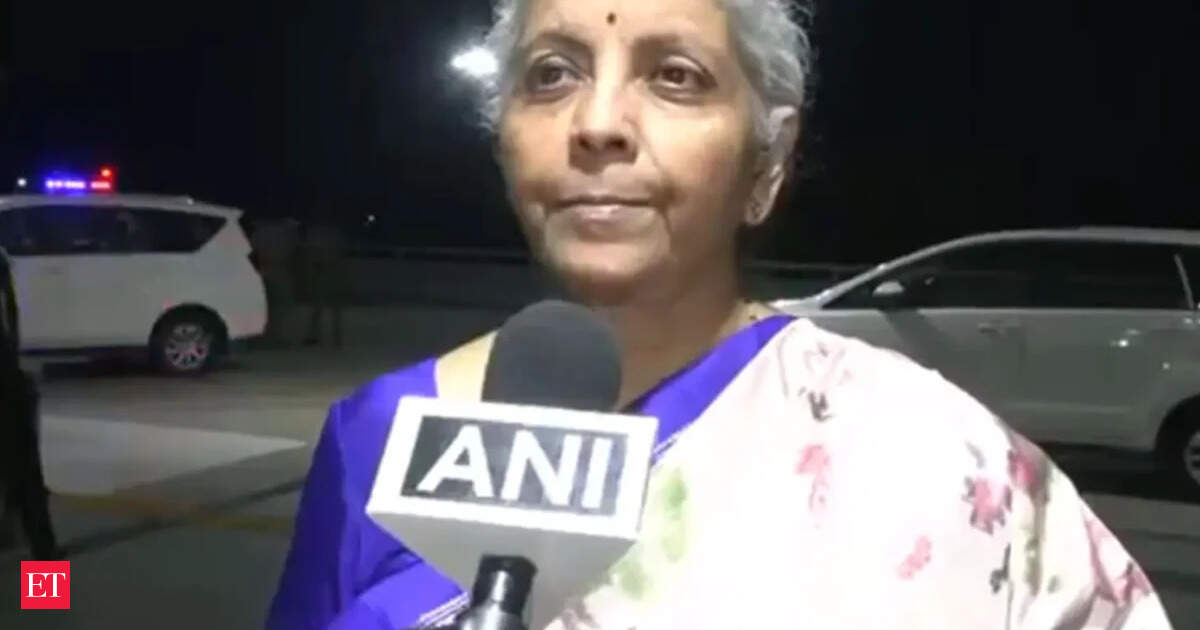
Union Finance Minister Nirmala Sitharaman has issued a firm clarification regarding the Merchant Discount Rate (MDR) applicable to Unified Payments Interface (UPI) transactions, emphatically stating that these charges will absolutely not be passed on to the end consumer. In a recent interview, Sitharaman addressed the growing public and political discourse surrounding the newly introduced MDR framework, asserting that the levy is fundamentally a business-to-business cost structure designed to enhance the digital payments ecosystem. She clarified that the charge exists solely between payment service providers, such as banks and payment application operators, to fortify the underlying infrastructure and ensure the delivery of superior, seamless services to users. The Finance Minister took a pointed swipe at opposition parties, accusing them of deliberately peddling false narratives and attempting to mislead the general public regarding the true nature and scope of these charges. Her remarks come in the wake of widespread speculation and political criticism that attempted to frame the MDR as a new tax burden on ordinary citizens using UPI for daily transactions.
Elaborating on the technical parameters of the MDR framework, Sitharaman provided a meticulous breakdown to dismantle the misinformation campaign. She underscored that the MDR is categorically not applicable to transactions below the threshold of Rs 2,000, thereby shielding the vast majority of small-value peer-to-merchant (P2M) transactions. Furthermore, she clarified that the charge is neither a tax nor a cess, and critically, the funds collected through this mechanism will not be routed into the Consolidated Fund of India, which is the government’s primary revenue account. Instead, it is a fee levied by the service providers themselves for their operational improvements and service enhancements. Emphasizing the protective nature of the regulation, she reiterated that the burden falls squarely on the operators and will not, under any circumstances, be transferred to the end-user or consumer. The Finance Minister’s detailed clarification aligns with the framework introduced by the National Payments Corporation of India (NPCI) on September 15, which stipulates a 0.4% MDR for P2M UPI transactions exceeding Rs 2,000, subject to a maximum cap of Rs 300 per transaction. This nuanced structure ensures that approximately 96% of all UPI P2M transactions remain entirely unaffected by the new charges.
The Finance Minister’s defense of the MDR framework was accompanied by a sharp rebuke of the opposition’s recurring strategy of leveraging half-truths to attack the government. Sitharaman expressed dismay that the opposition habitually engages in spreading misinformation, fueling debates based on fallacious premises, and using that contrived narrative to score political points. She specifically noted that she had already provided a comprehensive clarification on this exact issue during the parliamentary session, yet the opposition continues to ignore the facts and persist in their misleading campaign. Cautioning the public, she urged citizens to remain vigilant and discerning against such deliberate attempts to misconstrue government policies for political gain. By clarifying that the MDR is distributed among the participants in the payment ecosystem—including banks and fintech application providers—she reinforced the idea that this is a purely commercial arrangement aimed at making the UPI infrastructure more robust, self-sustainable, and better equipped to bring smaller merchants online, thereby expanding the digital financial inclusion frontier.
In a separate but equally contentious political development, Sitharaman leveled strong criticism against Congress leader Rahul Gandhi for his participation in a mimicry event held at the ‘Chhatron Ki Goonj’ gathering in Indore. She condemned the act of mimicry performed during the event, characterizing it as being in extremely poor taste and fundamentally disrespectful to the constitutional position held by the Leader of the Opposition. Sitharaman argued that while freedom of speech is an essential pillar of a democratic society, such mockery crosses the line of decorum and erodes the dignity expected of high constitutional offices. She questioned the judgment of Rahul Gandhi for standing alongside and actively encouraging such behavior, suggesting that the Leader of the Opposition should uphold the sanctity of democratic institutions rather than endorse actions that trivialize them. Her remarks highlight a growing friction regarding the conduct of political leaders and the boundaries of acceptable political satire in the national arena, emphasizing that the gravitas of constitutional roles demands a higher standard of public conduct.
Addressing yet another front of political criticism, Sitharaman firmly rebutted allegations made by the Aam Aadmi Party (AAP) government that the central government was systematically discriminating against the state of Punjab in the allocation and release of funds. Presenting a confident and unequivocal defense of the central government’s fiscal federalism, she asserted that no state has been treated in a manner that causes it financial loss or undue hardship. She stated, “I can stand anywhere and state this confidently, looking anyone straight in the eye,” emphasizing the transparency and timeliness of fund releases based on a state’s existing entitlements. The Finance Minister accused the AAP leadership of fabricating such baseless allegations merely to divert public attention from its own governance failures and administrative shortcomings. She contextualized these accusations within the political calendar, suggesting that with elections looming in Punjab, the AAP government is resorting to national-level blame games to gloss over its non-performance and inability to deliver on its election promises. This assertion was aimed at dispelling any notion of bias, reinforcing that the Union government adheres strictly to constitutional and financial norms.
In conclusion, Union Finance Minister Nirmala Sitharaman’s recent statements serve as a comprehensive defense of the government’s economic, political, and federal policies. Through her detailed clarification on the UPI MDR, she aimed to debunk the opposition’s narrative that dubbed it a hidden tax, emphasizing instead its role in fostering a sustainable digital payment ecosystem without any consumer cost. Her critical remarks against Rahul Gandhi’s mimicry underscore a broader concern regarding the erosion of political decorum and the respect afforded to constitutional offices. Simultaneously, her staunch denial of discriminatory fund allocation to Punjab reaffirms the Centre’s commitment to cooperative federalism, while sharply dismissing the allegations as pre-election diversions. Ultimately, Sitharaman’s multi-pronged response highlights a government actively countering opposition narratives with factual clarifications and strong rhetorical pushback, signaling a robust and unyielding stance as political battles intensify. These clarifications collectively aim to fortify public understanding of government initiatives, ensuring that policy decisions are evaluated based on their actual merit rather than distorted political interpretations.


