




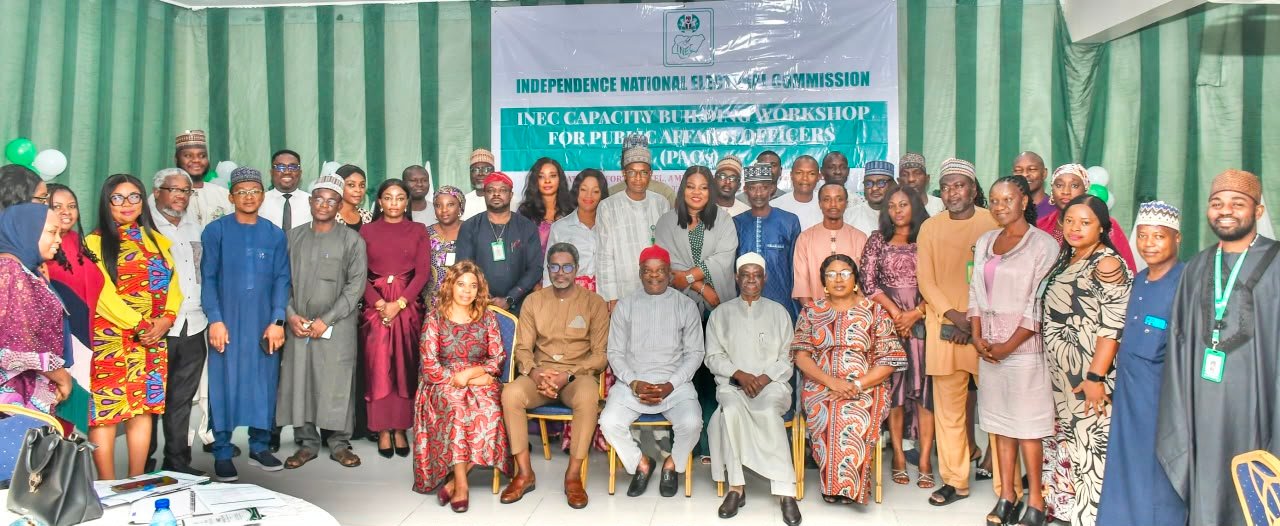
The Independent National Electoral Commission (INEC) has issued a stark and urgent warning regarding the escalating threat of Artificial Intelligence (AI)-generated misinformation, stressing that the integrity of the 2027 general elections will be predicated on the ability of its communication officers to master the digital information landscape. This call to action came during a critical capacity-building workshop organized for the commission’s Public Affairs Officers (PAOs) in Abuja, a testament to the electoral body’s proactive stance in confronting the sophisticated challenges posed by the rapid evolution of technology. The commission underscored that the very credibility of the electoral process, once solely dependent on the sanctity of ballot papers and the robust functioning of the Bimodal Voter Verification System (BVAS), has now expanded to encompass a far more complex and volatile dimension: the information environment in which voters form their judgments. This shift represents a fundamental change in the battle for electoral integrity, where the information ecosystem is no longer a peripheral concern but a central battlefield. The workshop, themed “Strengthening PAOs’ Capacity for Credible, Verified and Responsible Election Communication Towards 2027,” served as a strategic acknowledgment that while INEC has invested heavily in technological infrastructure to secure the physical voting process, the psychological and perceptual battleground requires equally stringent defenses. The commission’s concern is not abstract or distant; it is a direct acknowledgment that the tools responsible for spreading false information have become increasingly accessible, making them a potent weapon that could be deployed to undermine public trust and destabilize the electoral process. The emphasis on verifiable and responsible communication is a clear recognition that in the coming electoral cycle, the speed and accuracy of INEC’s responses to malicious narratives will be as crucial as the security of the vote itself.
Delving deeper into the substance of the workshop, Mohammed Haruna, the National Commissioner and Chairman of the Information and Voter Education Committee (IVEC), painted a vivid picture of the threats that lie ahead, articulating the gravity of the situation with remarkable clarity. In his opening remarks, Haruna reiterated the position of the INEC Chairman, Prof. Josh Amupitan, who has notably observed that the credibility of elections today no longer rests solely on the traditional apparatus of voting—the ballot papers, the BVAS machines, and the result sheets—but is increasingly contingent on the strength of the information environment. “As the chairman has noted,” Haruna stated, “generative AI has made it cheaper and considerably harder to detect manipulated audio, video and images.” This technological double-edged sword has empowered bad actors with the ability to manufacture hyper-realistic but entirely fabricated content, blurring the line between truth and falsehood in the minds of voters. The threat, as he elaborated, extends beyond merely creating fake content; it encompasses “highly targetted messaging that can feed conflicting narratives to different groups of voters,” thereby fracturing the electorate and creating a chaotic and polarized public sphere where objective truth becomes a casualty. Haruna was emphatic that this is “no longer a distant, theoretical risk to this commission,” but a present and accelerating danger that directly correlates with the upcoming 2027 elections, which he described as a period during which the volume, speed, and inaccuracy of information will increase exponentially. He warned the assembled PAOs that their skills in verification, escalation, and clear communication will be “tested in real time,” preparing them for the inevitability of coordinated disinformation campaigns designed to disrupt the electoral process and erode public confidence in INEC’s stewardship.
Focusing on the specific and demanding role of the Public Affairs Officers, Haruna provided a comprehensive definition of their mandate, describing them as the “frontline communicators” of the commission whose performance is critical to its overall credibility. He acknowledged that public affairs work within an electoral management body carries particular and exacting demands, which are unique compared to other government agencies due to the high stakes and the heightened level of scrutiny. The workshop was explicitly designed to build the capacity of these officers, sharpen their professional skills, and prepare them to meet the challenges ahead with confidence and competence. He enumerated the core competencies required: the need for accuracy, the absolute necessity for speed in disseminating correct information, and the ability to exercise sound judgment under immense pressure. This combination of skills must be executed within a communication ecosystem that is increasingly shaped by the reactive nature of social media and the disruptive capabilities of AI. The workshop curriculum, as Haruna outlined, was thorough and directly responsive to the demands of the modern information landscape, covering core areas of the officers’ responsibilities, including the strategic management of the information ecosystem. It delved into the practical techniques of identifying, verifying, and effectively responding to both misinformation—the inadvertent spread of false information—and disinformation—the deliberate creation and dissemination of false narratives intended to deceive. Furthermore, Haruna pointed to an integral and forward-looking component of the training: the introduction to the responsible use of artificial intelligence in their work, an area that “holds real promise for improving how we communicate, but one that must be approached with care, verification and appropriate safeguards.” This balanced perspective highlighted INEC’s progressive outlook, acknowledging the potential of AI to enhance efficiency while remaining vigilant about its inherent risks and the necessity for human oversight.
Adding a poignant and strategically vital perspective to the workshop’s proceedings, INEC’s Director of Voter Education and Publicity, Mrs. Victorial Eta-Messi, framed the gathering as occurring at a “defining moment” for the PAOs. She articulated the profound trust placed in them, positioning the officers as the primary bridge connecting INEC, the media, and the general public within their respective states. “It is through you,” Mrs. Eta-Messi told the audience, “that Nigerians form much of their impression of who we are, what we stand for and how reliable our information is.” This statement elegantly encapsulates the immense responsibility shouldered by PAOs, who are not merely messengers but the principal shapers of INEC’s public image and institutional reputation. Her remarks underscored a crucial vulnerability: that the integrity of the electoral commission is, in the public eye, profoundly tied to the credibility and clarity of the communication it projects. If misinformation is allowed to stand unchallenged, the public’s confidence in the democratic process is severely compromised. Eta-Messi impressed upon the participants that this responsibility “calls for skill, consistency and, above all, credibility,” qualities that cannot be assumed but must be continuously cultivated and refined. She reminded them that INEC operates “under constant public scrutiny and is regularly confronted with attempts to misrepresent its work and undermine public confidence in it.” This statement was a stark acknowledgement of the hostile information space INEC is forced to navigate, characterized by frequent attacks on its credibility from various malicious actors. Consequently, she emphasized that it is “essential that our communication personnel are continually equipped to meet that reality,” framing the workshop as not a one-off event but the beginning of a sustained engagement designed to develop a durable shield against these challenges. Her speech served as a powerful reminder that the fight for sustainable electoral integrity is waged not only at the polling units but in the relentless public and media discourse.
The technical and strategic depth of the workshop was meticulously presented by the commission’s Deputy Director for Information and Publicity, Mr. Wilfred Ifogah, who provided an insightful overview of the session’s core objectives and expected outcomes. Mr. Ifogah detailed the comprehensive design of the training, which was strategically developed to build the participants’ competence in several critical areas, ensuring they are not just reactive, but proactive in their communication roles. A primary goal was to enhance the officers’ ability to prepare for and support effective media and public engagements, ensuring that INEC’s message is delivered with precision and confidence regardless of the platform. This involved strengthening the participants’ ability to write clearly and consistently for a diverse array of audiences, recognizing that the language and tone used for a press release differs from that used for a social media post or a radio jingle. Beyond crafting messages, the workshop aimed to develop the participants’ capacity to actively manage the broader information ecosystem. This holistic approach includes continuous media and social media monitoring to gauge public sentiment and identify emerging issues before they escalate. Crucially, it entailed training on identifying misinformation and disinformation, a task that requires a discerning eye and a deep understanding of common propaganda techniques. Once identified, the officers were instructed on the established escalation and response procedures, learning how to route information internally and ensure a coordinated and timely response. Finally, and perhaps most importantly, Mr. Ifogah introduced the participants to the responsible use of artificial intelligence in communication work—a double-edged sword that requires careful handling. The training covered its practical applications, such as using AI tools for drafting reports or analyzing large data sets, while also candidly addressing its limitations and the necessary safeguards required, particularly regarding confidentiality of sensitive electoral information and the absolute need for human verification of all facts before dissemination. The explicit focus on these areas demonstrates a sophisticated understanding of the modern communication landscape and a commitment to leveraging technology as a force for good, while shielding the electoral process from its potential for harm.
In conclusion, this strategic gathering of INEC’s Public Affairs Officers represents a decisive step in the commission’s ongoing effort to fortify the integrity of Nigeria’s electoral future against the corrosive effects of digital age misinformation. The workshop was far more than a routine training exercise; it was a critical acknowledgment that the information environment has become a primary front in the defense of democratic elections. By equipping its communication officers with the advanced skills needed to identify, combat, and counter AI-generated falsehoods, INEC is signaling a definitive end to an era of reactive communication and the beginning of a more sophisticated, agile, and resilient approach. The initiative reflects a deep understanding that in a world of deepfakes and targeted propaganda, maintaining public trust is a complex, continuous, and critical battle that requires more than just technical infrastructure; it demands unwavering human expertise. While the challenges of the 2027 elections are immense, as clearly articulated by the commissioners and directors, the proactivity, diligence, and strategic foresight being demonstrated by INEC are promising indicators of the path ahead. The commission is not simply preparing to face the threats of a digitally armed opposition; it is building a robust foundation for electoral integrity in the information age. The investment in these PAOs is an investment in the very essence of Nigerian democracy, preparing a cadre of skilled professionals to safeguard the truth of the electoral mandate. The commission’s commitment to this cause, exemplified by this workshop, sends a clear and powerful signal to stakeholders and voters alike that INEC is prepared to fight for the credibility of the electoral process, both at the ballot box and in the realm of public opinion, ensuring that the sovereignty of the people’s will is not subverted by the manipulations of AI. This event will undoubtedly be remembered as a foundational step in confronting the “information threat” head-on, positioning INEC as a resilient institution ready to navigate the complex media environment leading up to and beyond the 2027 polls.