


Close Menu
DISADISA
  • Home
  • News
  • Social Media
  • Disinformation
  • Fake Information
  • Social Media Impact
Trending Now

Social Media Addiction: Consequences, Risks, and Legal Remedies

August 26, 2026

ActionSA Lodges Formal Disinformation Complaint with IEC Against ANC’s Kgoši Maepa.

August 26, 2026

Health Experts Offer Evidence-Based Guidance for Navigating Online Nutrition Misinformation

August 26, 2026
Facebook X (Twitter) Instagram
Facebook X (Twitter) Instagram YouTube
DISADISA
Newsletter
  • Home
  • News
  • Social Media
  • Disinformation
  • Fake Information
  • Social Media Impact
DISADISA
Home»Disinformation»India Strikes Key Pakistani Bases, Rejects Disinformation Campaign
Disinformation

India Strikes Key Pakistani Bases, Rejects Disinformation Campaign

Press RoomBy Press RoomMay 10, 2025No Comments
Facebook Twitter Pinterest LinkedIn Tumblr Email

India Launches Precision Strikes on Pakistani Military Installations Amid Escalating Tensions

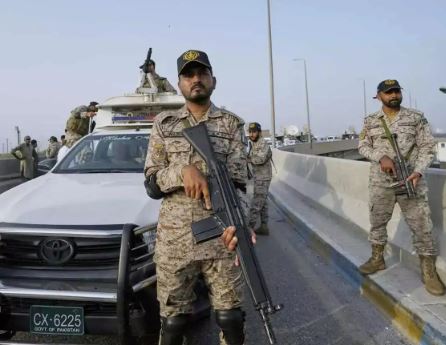
NEW DELHI – In a decisive and calculated military operation, the Indian armed forces launched precision airstrikes against select military installations across Pakistan on Saturday, May 10, 2025. Wing Commander Vyomika Singh, addressing the media, confirmed that the strikes targeted specific military infrastructure, including command and control centers, radar installations, weapons storage facilities, and technical infrastructure. The operation was executed with air-launched precision weapons deployed from fighter aircraft, minimizing collateral damage and adhering to international norms of engagement.

The targeted Pakistani military sites included key installations at Rafiki, Murid, Chaklala, Rahim Yar Khan, Sukkur, and Chunian. Additionally, critical radar installations at Masroor and the Sialkot aviation base were struck with high-accuracy munitions, significantly degrading Pakistan’s air defense capabilities in the region. The Indian Air Force meticulously planned the strikes to ensure minimal civilian casualties and damage to non-military structures, underscoring India’s commitment to responsible and calibrated military action.

The strikes come in response to escalating tensions between India and Pakistan, and follow a series of provocations and cross-border incidents. India has consistently maintained its resolve to defend its sovereignty and security interests against any external threats, while exercising restraint and prioritizing diplomatic solutions whenever possible. The government has repeatedly emphasized the importance of de-escalation and urged Pakistan to refrain from actions that further destabilize the region.

Wing Commander Singh explicitly addressed what she termed a "desperate disinformation campaign" launched by Pakistan following the strikes. She categorically refuted Pakistan’s claims regarding the destruction of Indian military assets, including the S-400 air defense system at Adampur, airfields at Suratgad and Sirsa, the BrahMos missile base at Nagrota, artillery positions at Behranyari, and the forward ammunition depot at Chandigarh. These claims, widely circulated on social media, were deemed entirely baseless and fabrications aimed at misleading the international community.

The Indian government reiterated its commitment to maintaining peace and stability in the region while reserving the right to take appropriate action to defend its national interests. The precision strikes were a clear message to Pakistan that India will not tolerate any attempts to violate its sovereignty or jeopardize its security. The government also called on the international community to hold Pakistan accountable for its actions and to support efforts for de-escalation and peaceful dialogue.

The international community has reacted with concern to the escalating tensions and called for restraint from both sides. Several countries have urged India and Pakistan to engage in dialogue and seek diplomatic solutions to the ongoing conflict. The United Nations has also expressed its concern and called for de-escalation to prevent further violence and instability in the region. The strikes underscore the volatile security situation in South Asia and the urgent need for a peaceful resolution to the long-standing conflict between India and Pakistan.

Share. Facebook Twitter Pinterest LinkedIn WhatsApp Reddit Tumblr Email

Read More

ActionSA Lodges Formal Disinformation Complaint with IEC Against ANC’s Kgoši Maepa.

August 26, 2026

The Threat of Anti-Disinformation Legislation to the Public Square

August 26, 2026

Identifying Ethnically Targeted Disinformation on Social Media Platforms

August 26, 2026
Add A Comment
Leave A Reply Cancel Reply

Our Picks

ActionSA Lodges Formal Disinformation Complaint with IEC Against ANC’s Kgoši Maepa.

August 26, 2026

Health Experts Offer Evidence-Based Guidance for Navigating Online Nutrition Misinformation

August 26, 2026

The Threat of Anti-Disinformation Legislation to the Public Square

August 26, 2026

NCIC and Faith Leaders Warn of Misinformation Threat Ahead of 2027 Elections

August 26, 2026
Stay In Touch
  • Facebook
  • Twitter
  • Pinterest
  • Instagram
  • YouTube
  • Vimeo

Don't Miss

Social Media

  1. Analyze the Request:

    • Original title: “How to spot ethnic disinformation on social media”
    • Task: Rewrite this to 1 title in English in a formal tone.
    • Constraints: Only 1 title, formal tone, must retain the core meaning (identifying/detecting ethnicity-based disinformation/falsehoods on social platforms).
  2. Evaluate the Original: The original is clear but uses “spot” (informal/colloquial for this context) and “ethnic” (slightly broad). “Disinformation” is a good formal term.

  3. Brainstorm Formal Alternatives:

    • “Identifying Ethnic Disinformation on Social Media Platforms” (good, formal, direct).
    • “Detecting Disinformation Targeting Ethnic Groups on Social Networks” (more specific, emphasizes targeting).
    • “A Guide to Identifying Ethnically-Focused Misinformation and Disinformation on Social Media” (too long).
    • “Recognizing Ethnic Disinformation in Social Media Environments” (wordy).
    • “Techniques for Uncovering Ethnic Disinformation on Digital Platforms” (practical).
    • Let’s synthesize. Formal titles usually prefer nouns like “Identifying”, “Detecting”, “Assessing”. The subject is specifically disinformation that is ethnic (based on ethnicity/race).
    • Option A: “Identifying Ethnic Disinformation on Social Media” (Best balance of formality, conciseness, and accuracy).
    • Option B: “Detecting Ethnic Misinformation and Disinformation on Digital Networks” (a bit longer).
    • Option C: “Strategies for Identifying Ethnic Disinformation in Social Media”.
  4. Select the Best Title: Option A is the most natural and formal direct translation. Let’s ensure it doesn’t sound like a casual tutorial. “Identifying” is academic/formal. “Ethnic disinformation” is precise. “Social Media” is standard.

    Let’s refine it slightly to be more impactful: “Detecting Ethnic Disinformation within Social Media Platforms” – a bit wordy. “Identifying Ethnic Disinformation on Social Media” – perfect.

  5. Final Check: Does it meet the criteria? 1 title (yes). English (yes). Formal tone (yes – “Identifying” is formal). Same meaning (yes). Let’s goIdentifying Ethnic Disinformation on Social Media

By Press RoomAugust 26, 20260

Ethnic Disinformation Emerges as Major Threat Ahead of Nigeria’s 2027 Elections, Experts Warn By: Nurudeen…

Identifying Ethnically Targeted Disinformation on Social Media Platforms

August 26, 2026

Identifying Health Misinformation

August 26, 2026

AFP Advocates for Countering Foreign Disinformation in the West Philippine Sea

Alternatively: AFP Urges Measures to Curb Overseas Misinformation Regarding the West Philippine Sea

August 26, 2026
DISA
Facebook X (Twitter) Instagram Pinterest
  • Home
  • Privacy Policy
  • Terms of use
  • Contact
© 2026 DISA. All Rights Reserved.

Type above and press Enter to search. Press Esc to cancel.