


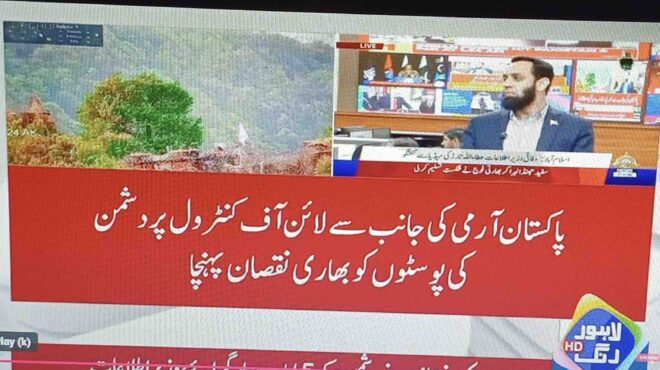
India Strikes Terror Camps, Pakistan Responds with Disinformation Blitz
New Delhi – In the aftermath of India’s "Operation Sindoor," a series of precision airstrikes targeting terrorist camps within Pakistan and Pakistan-occupied Kashmir, the Pakistani government and its supporters launched a massive disinformation campaign to control the narrative and project an image of strength. The operation, a retaliatory measure for the April 22nd Pahalgam attack that claimed the lives of 26 civilians, struck nine locations including the headquarters of Jaish-e-Mohammed and Lashkar-e-Taiba. While India maintained a controlled and factual approach to communicating about the operation, Pakistan responded with a deluge of false information, utilizing doctored images, outdated videos, and outright fabrications to paint a distorted picture of events.
The Indian Ministry of Information and Broadcasting (I&B) identified this as a coordinated attempt to manipulate public perception, both domestically and internationally. Pakistan’s objective, according to the Ministry, was to create a false impression of a robust counter-response, thereby minimizing the impact of India’s successful operation and deflecting attention from its effectiveness in targeting terrorist infrastructure. This carefully orchestrated campaign of misinformation involved a range of actors, from pro-Pakistan social media accounts to influential political figures, all contributing to a rapidly spreading wave of fake news.
One of the most egregious examples of this disinformation campaign was the circulation of an image purporting to show a downed Indian Rafale jet near Bahawalpur. This image, quickly debunked by PIB Fact Check, was actually from a 2021 MiG-21 crash in Moga, Punjab, having no connection whatsoever to the current operation. Similarly, a video falsely depicting Indian troops surrendering at Chora Post was amplified by Pakistan’s Minister Attaullah Tarar, lending official credibility to an entirely fabricated narrative. This incident highlights the deliberate nature of the disinformation campaign, with government officials actively participating in the spread of false information.
Further illustrating the breadth and depth of the disinformation effort, outdated footage of sectarian clashes in Khyber Pakhtunkhwa from 2024 was misrepresented as depicting the Pakistan Air Force striking the Srinagar airbase. Another instance involved the recirculation of an image from a 2024 MiG-29 crash in Rajasthan, falsely implying recent losses for the Indian Air Force. These repeated instances of using old and unrelated visuals demonstrate a calculated strategy to mislead the public and create a false narrative of Pakistani military success.
The disinformation campaign wasn’t limited to social media and government officials. Pakistan’s Director General of Public Relations (ISPR), Lt Gen Ahmed Sharif Chaudhry, initially claimed to CNN that two Indian aircraft had been shot down, a claim later echoed and amplified by state broadcaster PTV and Defence Minister Khawaja Muhammad Asif, who inflated the number to five and even falsely claimed the capture of Indian soldiers. While Asif later retracted his statement about captured soldiers, the initial dissemination of false information served its purpose in contributing to the overall disinformation landscape. Even international media outlets like China’s state-run CGTN were drawn into the propaganda effort, sharing weeks-old images of fireballs falsely attributed to downed Indian jets.
The coordinated nature of the disinformation campaign is evident in the consistent themes and narratives pushed across various platforms. The false claims of downed Indian jets, destroyed infrastructure, and captured soldiers all served to create an illusion of Pakistani military dominance and retaliatory power. This strategy aimed to both bolster domestic morale and project an image of strength on the international stage, thereby mitigating the negative publicity associated with India’s successful targeting of terrorist havens within Pakistani territory. The rapid and widespread dissemination of these falsehoods, often amplified by official sources, made it challenging to distinguish fact from fiction, particularly for those not closely following the situation.
The Pakistani disinformation campaign following Operation Sindoor represents a sophisticated and multi-pronged effort to control the narrative and manipulate public perception. By leveraging social media, engaging government officials, and exploiting existing media channels, Pakistan sought to deflect attention from India’s successful counter-terrorism operation and project a false image of military strength. This incident underscores the growing threat of disinformation in the modern information landscape and the importance of critical media literacy in navigating complex geopolitical events. The use of outdated images, unrelated videos, and fabricated claims highlights the need for rigorous fact-checking and verification, especially in situations where conflicting narratives are being actively promoted by state actors.