


Social Media’s Impact on Well-being During the COVID-19 Pandemic: A Longitudinal Study
The COVID-19 pandemic drastically altered the way people consumed information, with social media usage reaching unprecedented levels. This surge in online activity coincided with the rise of "doomscrolling," a phenomenon characterized by obsessive consumption of pandemic-related news, raising concerns about its impact on mental health. While preliminary studies hinted at potential consequences, a clear understanding of how different social media usage patterns affected individual well-being remained elusive. This comprehensive longitudinal study, spanning 34 waves of data collection, delves into the intricate relationship between social media use and subjective well-being during the pandemic, aiming to uncover within-person causal links.
The study examined three key facets of subjective well-being: life satisfaction, positive affect, and negative affect. Recognizing the multifaceted nature of social media, the research differentiated between various platforms (Facebook, Twitter, Instagram, WhatsApp, and YouTube) and types of engagement (posting, reading, liking/sharing) specifically related to COVID-19 content. This granular approach allowed for a more nuanced analysis than simply measuring overall time spent on social media. The objective was to determine whether specific types of engagement on particular platforms had distinct effects on well-being, rather than focusing on broad generalizations about social media use.
The existing literature on social media’s impact on well-being presents a mixed picture. While some studies suggest a correlation between active social media use and lower well-being, the effects are often small and based primarily on correlational research. Experimental studies, which offer stronger evidence for causal relationships, have found even weaker or non-existent effects. This discrepancy can be explained by the differential susceptibility to media effects model, which posits that the impact of media varies significantly across individuals. Some users may experience positive effects, others negative, while many remain unaffected.
Several prominent media effects theories further complicate the narrative. Mood management theory suggests that individuals learn to utilize media to regulate their moods, implying that frequently used platforms are likely beneficial for well-being. Uses and gratifications theory emphasizes the conscious choices individuals make in selecting media to fulfill specific needs, such as information seeking, social connection, or entertainment. These theories, along with the understanding that social media engagement involves both positive and negative mechanisms (social comparison, inspiration, information overload, etc.), suggest that average effects on well-being are likely to be moderate and nuanced.
The context of the COVID-19 pandemic introduced unique considerations. Social media provided a platform for information dissemination, connection with others facing similar challenges, and access to mental health resources. Conversely, the spread of misinformation, information overload, and negative social comparison could negatively impact well-being. Empirical studies reflect this complexity, with some reporting negative outcomes like increased stress and anxiety, while others highlight positive effects such as enhanced social connectedness and reduced loneliness. This mixed body of evidence, coupled with the generally small effects observed in broader social media research, led to the hypothesis that COVID-19 related social media use would not have a decidedly positive or negative impact on well-being.
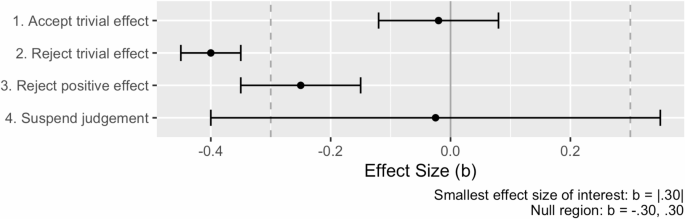
To test this hypothesis, the study defined a smallest effect size of interest (SESOI) to distinguish between trivial and non-trivial effects. The SESOI was based on the premise that a significant change in COVID-19 related social media use (e.g., complete cessation) should correspond to a noticeable change in well-being. Using established scales for measuring life satisfaction and affect, the SESOI was calculated to provide a benchmark for evaluating the observed effects. This rigorous approach allowed for a more precise determination of whether the impact of COVID-19 related social media usage was truly meaningful or negligible.