







The Academy of Medical Sciences has announced that increasing public trust in medical science is to be one of its central strategic priorities, in response to what it calls an era of global misinformation. In a statement setting out the new direction, Professor Sir Andrew Morris CBE FRSE PMedSci, President of the Academy of Medical Sciences, said: “Increasing public trust in medical science, particularly in an era of global misinformation, is a strategic priority for the Academy.” The announcement marks a significant development for an organisation that has long stood at the interface between scientific discovery and its application to human health. The Academy acts as a national body for medical science, representing some of the most distinguished researchers and clinical academics in the United Kingdom. It was established in 1998 and derives much of its authority from its Fellowship, an elected body of scientists and clinicians whose work spans everything from fundamental biology to patient care and public health. By elevating trust to the level of a strategic priority, the Academy is signalling that the credibility of science cannot be taken for granted and that the scientific community has an active responsibility to understand and repair the relationship between the public and the evidence base. The statement also made clear that the initiative will be practical in nature, beginning with polling and extending into a broader programme of collaboration involving scientists, clinicians, charities and members of the public. In doing so, the Academy is acknowledging a truth that has become impossible to ignore: medical research can only improve health if people are willing to believe it. The decision is all the more striking because it comes from a body not normally associated with persuasion or public engagement. The Academy’s traditional role is to support researchers, provide expert advice and promote excellent medical science. But it now argues that the scientific enterprise will fail unless public trust is actively maintained. The new programme is intended as a response to a specific problem, not a general appeal: the Academy wants to know exactly how misleading health information travels, who is harmed by it, and what can be done to ensure that people have access to advice they can trust. This is why the programme has been structured to produce evidence and action rather than declarations, and why the Academy’s leadership has chosen to put its authority behind a sustained effort to understand public confidence, not just celebrate it.
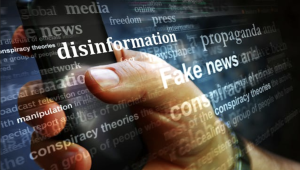
The context for this announcement is the sheer scale of medical misinformation. From the false claim that vaccines cause autism to the promotion of unlicensed supplements as cancer cures, false and misleading health content has become a familiar feature of the information landscape. The COVID-19 pandemic accelerated the trend. Scientific advice changed as evidence emerged, and that uncertainty was frequently portrayed by hostile online commentators as proof that nobody could be trusted. At the same time, social media platforms gave virality to fabricated stories, out-of-context clips and pseudo-expert opinions, often with far greater reach than official guidance. For many people, the distinction between evidence-based medicine and conjecture is now difficult to identify. This matters because health misinformation does not merely confuse; it causes harm. It can persuade parents not to vaccinate their children, discourage patients from taking prescribed medication, lead people to delay seeking care for serious symptoms, and direct them toward expensive or dangerous interventions that offer no benefit. The harm is not evenly distributed. People with poor digital literacy, limited access to healthcare, low incomes or chronic illnesses are often more reliant on online sources and may be more exposed to dubious accounts. A global information environment that allows one piece of misleading health advice to cross borders in seconds therefore creates a shared problem that no single country can solve on its own. The Academy’s use of the word “global” is deliberate. It signals that the programme will need to look beyond British borders, and that the solutions, too, may involve international partners and comparisons. It also reflects the fact that health advice itself is increasingly international: a trial conducted in one country is reported in another, a treatment approved in one jurisdiction is discussed everywhere, and a single influential social media post can have consequences on every continent. In this environment, trust is not simply about whether a particular fact is true. It is about whether institutions can be relied upon to tell the truth, acknowledge uncertainty and act in the public interest.
The Academy has chosen polling as the first step in this programme. According to the statement, the polling will be used to understand “how misleading health information spreads, who it affects and what helps people find reliable advice.” The wording of these three questions is important. The first treats misinformation as a process to be tracked, not simply as a set of false claims to be corrected. The second acknowledges that misinformation does not affect everyone in the same way and that policies must be informed by evidence about vulnerability and exposure. The third moves beyond diagnosis to remedy, asking what practical factors help people identify trustworthy sources. The results are expected to shape the Academy’s wider programme of work, which will bring together its Fellowship with charities, healthcare professionals, public contributors and wider sector partners. This is not a one-off public opinion poll. It is the beginning of a systematic effort to understand the information pathways that connect researchers, clinicians, journalists, patients and the public. The Academy’s Fellowship includes many of the people who have been at the starting point of medical discoveries; the healthcare professionals in the programme see the consequences of those discoveries at the bedside. Bringing these groups together around a common set of questions reflects a growing recognition that trust in science is formed continuously, through clinical encounters, school education, media coverage, online debate and personal experience. The polling will therefore need to be interpreted carefully, in tandem with the knowledge that clinicians and patients can provide. It is perhaps for this reason that the Academy has framed the polling as a first step rather than a definitive answer. There will almost certainly be further research, dialogue and consultation as the programme advances. The Academy has not yet said when the polling results will be published, but the expectation within the scientific community is that it will form the basis for a body of work that remains flexible and responsive to emerging findings.
The composition of the programme is one of its most striking features. Alongside the Academy’s Fellows and healthcare professionals, it includes charities and public contributors. These are not simply consulted at arm’s length; they are described as partners in a joint effort. Charities have spent years gaining the trust of patients and communities, and they are often among the first organisations to see how medical misinformation affects people’s decisions. Healthcare professionals experience the consequences during consultations, when they meet patients who have been frightened by a viral claim or have stopped taking medication because of a story they read online. Public contributors bring their own experiences of trying to navigate confusing, contradictory or intimidating health advice. The inclusion of public contributors suggests that the Academy wants to design solutions with the people who will use them, rather than for them. It also suggests that the long-standing model of one-way communication from scientists to a passive public is being replaced by a more conversational approach. The phrase “wider sector partners” opens the door to involvement for organisations beyond medicine, including educators, media organisations, charities and perhaps the digital platforms where health claims are shared. That is an important recognition that the flow of misinformation is not simply a problem for doctors to correct; it is a societal issue shaped by technology, culture and human behaviour. The Academy described the programme as a “wider” programme, suggesting that the initial list of partners is neither rigid nor exhaustive and that further collaboration will be needed as it develops. In that sense, the programme is an experiment in collective problem solving as much as a study of misinformation. It is a recognition that the challenge is too complex for any single professional group to own, and that the public must be seen not as passive receivers of information but as active participants in conversations about their own health. By involving such a range of voices from the outset, the Academy hopes to avoid the mistakes of past communication campaigns, which sometimes assumed that simply giving people more facts would be enough.
The new priority also features in the Academy’s annual assessment of UK medical science. That assessment, which reviews the state of medical research and the conditions needed for it to benefit society, has now been linked to the question of trust. The connection is logical: if people do not trust the processes and institutions of science, they are unlikely to act on its findings, however robust the evidence. This is particularly relevant as the pace of medical innovation quickens. Personalised genomic medicine, artificial intelligence-assisted diagnosis, new immunotherapies and advanced gene editing are just some of the areas that will require public confidence. These technologies are complex, and explaining them honestly is difficult. Yet misunderstanding can lead to fear and rejection. The Academy’s decision to place public trust at the centre of its strategic assessment is a way of saying that research and innovation are not enough by themselves. Society must also be given the opportunity to understand, discuss and question what science is doing, and to receive information in forms that are relevant and accessible. The annual assessment is likely to become an important reference point for policy makers, funders and researchers who want to know what the Academy sees as the biggest challenges and opportunities in UK medical science. By placing trust within that assessment, the Academy is making the case that public confidence is a necessary infrastructure for the future of medicine. Without it, even the most brilliant advances will struggle to be adopted, and the gap between what medicine can offer and what people actually receive will continue to widen. The assessment may also highlight some uncomfortable questions: whether the scientific community has always been open enough about uncertainty, whether conflicts of interest have been sufficiently managed, and whether researchers have done enough to explain their work in plain language. These are not accusations; they are questions that the Academy appears willing to ask aloud as part of a genuine effort to understand why some people have lost confidence and what might persuade them to take reliable advice.
Looking ahead, the Academy’s programme is expected to develop in stages. The initial polling will be followed by analysis, consultation and the construction of a practical evidence base. The aim is not simply to describe misinformation but to answer a specific question: what helps people find reliable advice? Once answers begin to emerge, they may have a wide range of applications. They could affect the way the Academy communicates about medical science, the way journals and press releases present findings, the way health professionals are trained, and the way public health messages are designed. The programme could also influence how the Academy responds when a new piece of misinformation appears, allowing a more rapid, coordinated and effective reaction instead of ad hoc corrections. More fundamentally, the initiative represents an admission that science’s authority is not automatic. It must be earned and maintained through transparency, engagement and respect for the people science is meant to serve. The Academy’s six-word ambition — a strategic priority for public trust — might seem modest next to the scale of global misinformation. But by treating trust as a serious, researchable and achievable goal, the Academy is taking a practical step toward ensuring that future medical advances are not left on the shelf but actually reach the people who need them. In an era defined by falsehood and suspicion, that may prove to be one of the most important contributions medical science can make. The Academy has not set a timetable, but the urgency is clear. As misinformation continues to evolve, so too must the methods for countering it. The decision to learn first, rather than simply lecture, is likely to define the success of this new strategic priority. It also sets an example for others: instead of responding to misinformation with outrage or dismissal, it may be more effective to study how it works, understand its appeal, and engage with the people who are exposed to it. That is the task the Academy has set itself.


