








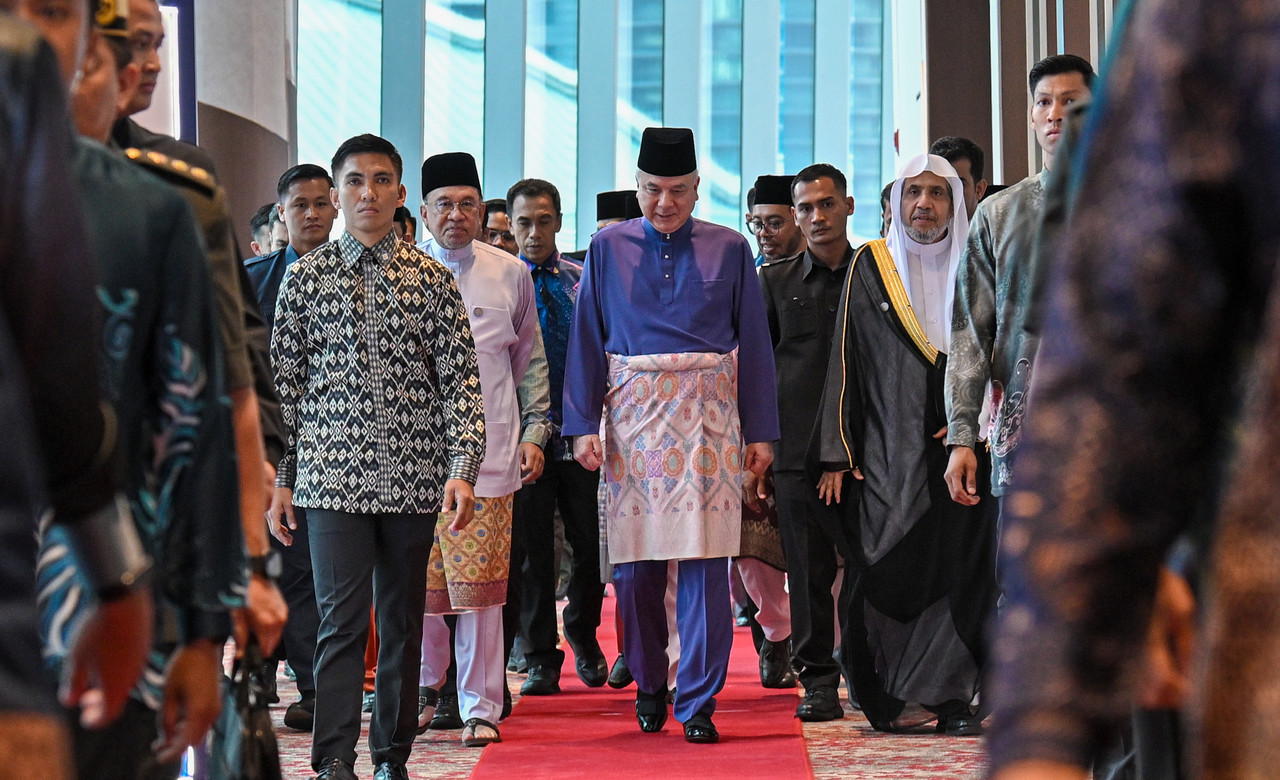
KUALA LUMPUR – In a powerful address at the 3rd International Summit of Religious Leaders, the Sultan of Perak, Sultan Nazrin Shah, issued a critical mandate for religious authorities worldwide: they must urgently confront the rise of AI-driven disinformation. The Sultan warned that the digital landscape has become a battleground where algorithms often “preach” with greater influence than traditional clerics. Acknowledging the shifting nature of influence, he noted that the struggle for the hearts and minds of the youth is currently taking place on platforms that religious institutions neither own nor fully understand, delivered in a language that established faith leaders have been dangerously slow to adopt.
The context of this urgency lies in the anxieties currently defining the world’s largest-ever generation. With nearly 1.8 billion youth—a demographic where Muslims represent the largest faith cohort—Sultan Nazrin highlighted that these young individuals are grappling with profound fears regarding climate change, global conflict, and economic volatility. He argued that the current approach by religious institutions is fundamentally flawed, as they continue to view youth as a distant “future” rather than recognizing their current capacity for innovation and the reshaping of public discourse. He emphasized that religious leaders must pivot from merely talking about young people to actively listening to them and sharing institutional power.
The Sultan’s remarks carried a sting of accountability, calling for a transition in how youth are perceived within religious circles. He championed the sentiment expressed by many young peacebuilders, who demand to be treated as “co-creators” rather than mere consultants. By failing to invite youth into genuine partnership, religious bodies leave a void that is being rapidly filled by extremists. These radical elements, the Sultan observed, skillfully weaponize scripture and mimic the young person’s desire for dignity and purpose, but manipulate that longing to foster grievance and identify “imagined enemies,” effectively outmaneuvering traditional religious messaging through the medium of the smartphone.
Addressing the human element in an era dominated by technology, Sultan Nazrin drew inspiration from Pope Leo XIV’s recent encyclical, Magnifica Humanitas. He reinforced the vital distinction between information and meaning: while screens and algorithms provide raw data, only human interaction can facilitate true understanding and spiritual guidance. He cited the 2026 Edelman Trust Barometer, which signals a troubling global decline in optimism and mutual trust, to underscore that religious leaders have a moral obligation to restore a sense of human dignity that transcends the digital identity of consumers or avatars.
To effectively combat these digital threats, the Sultan proposed a dual approach of being “rooted and responsive.” He argued that the goal is not to compromise the tenets of faith or abandon heritage, but to bring that wisdom into a “living conversation” with the modern world’s complexities. By remaining grounded in tradition while adapting communication methods to address the specific anxieties of the digital era, religious leaders can bridge the chasm that has developed between the pulpit and the youth, repositioning faith as a relevant, moderating force in their lives.
The summit, held in Kuala Lumpur and attended by dignitaries including Prime Minister Datuk Seri Anwar Ibrahim and Muslim World League secretary-general Sheikh Dr. Mohammad Abdul Kareem Al-Issa, served as a global stage for this call to action. Gathering approximately 1,500 scholars and policymakers from 31 countries, the event underscored the theme of “Religious Leaders and Youth Empowerment: Advancing Coexistence and Social Harmony.” As the summit concluded, the message was clear: if religious leaders persist in delivering traditional sermons in empty buildings, they will continue to lose the battle against the algorithms that define the modern youth experience.


