









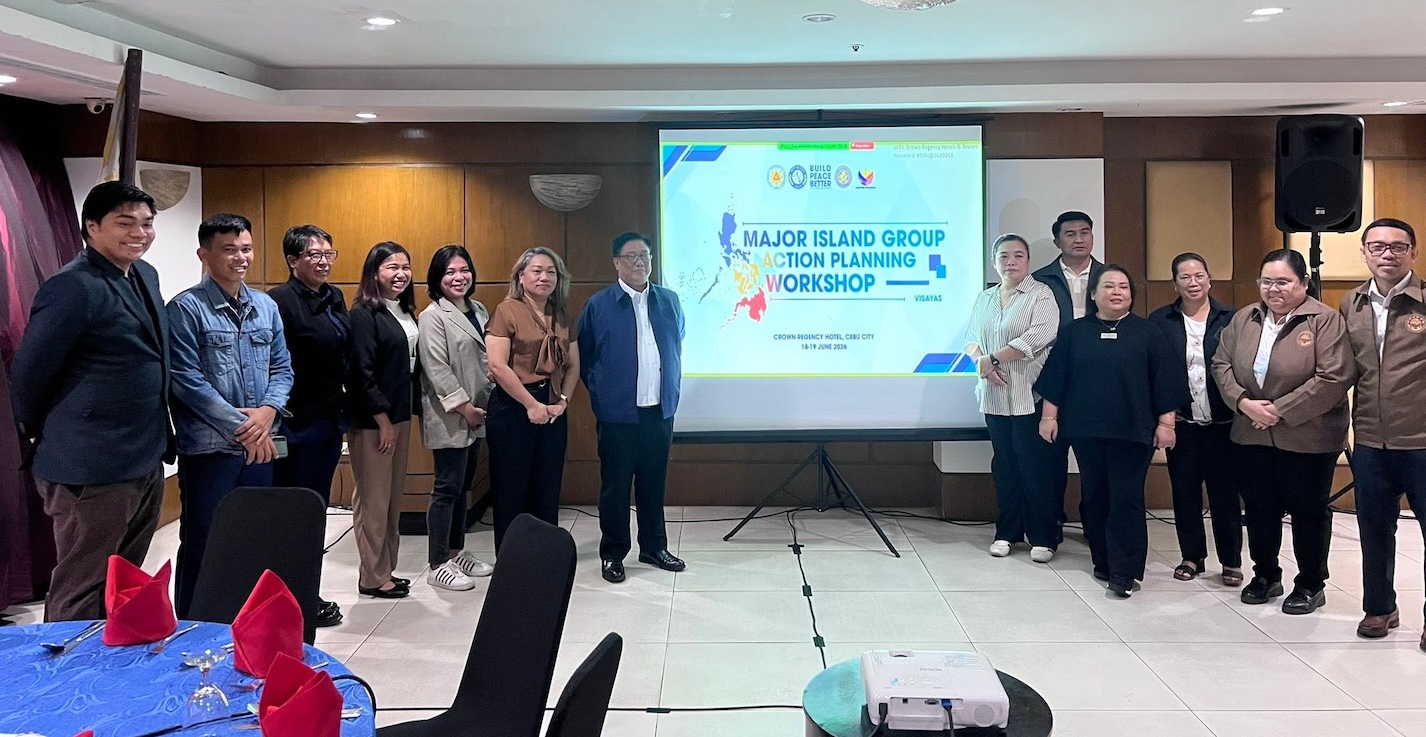
In a significant effort to bolster the government’s peace and development agenda, strategic communication clusters from across the Visayas gathered in Cebu City for the two-day “Major Island Summit Planning Workshop.” Held from June 18–19, 2026, the event served as a critical platform for regional stakeholders to localize the National Task Force to End Local Communist Armed Conflict (NTF-ELCAC) Strategic Communication Plan. Guided by the National Action Plan for Unity, Peace and Development (NAP-UPD), the workshop brought together over 40 representatives from various government agencies and regional task forces, including those from Regions 6, 7, 8, and the newly formed Negros Island Region (NIR).
The initiative, spearheaded by the Strategic Communications Office of the National Security Council (NSC) and the Presidential Communications Office (PCO), aims to move beyond standard information dissemination. By tailoring communication strategies to the specific socio-cultural contexts of the Visayas, the government hopes to create a more unified national message. The workshop’s primary objectives included strengthening inter-agency collaboration, increasing public awareness of ongoing peace initiatives, and establishing robust, evidence-based methods to combat disinformation that often fuels conflict and insecurity in local communities.
Cornelio H. Valencia Jr., assistant director general of the NSC and co-chair of the NTF-ELCAC Strategic Communications Cluster, emphasized that communication is the bedrock of public trust and the sustainability of peace gains. Valencia urged delegates to transition toward a new framework that prioritizes “transformation, inclusion, and hope.” He argued that government narratives must evolve to reflect the genuine realities of the people, framing state interventions not just as policy, but as tangible evidence of progress and inclusive development. This “rebranding” of government messaging is intended to position participating agencies as reliable catalysts for sustainable change.
Throughout the summit, participants engaged in a rigorous curriculum covering social media management, content development, crisis communication, and media relations. The session also featured regional situationers, which provided the participants with a common understanding of the distinct peace and development challenges unique to the Visayas. These insights were crucial for the breakout sessions, where representatives from the different regions collaborated to draft localized communication plans. By integrating their specific agency programs into the broader NAP-UPD framework, the delegates ensured that their upcoming efforts would be both highly relevant and operationally cohesive.
A core component of the workshop was the development of strategies to directly address the divisive narratives often exploited by insurgent groups. Valencia encouraged the attendees to offer clear, positive alternatives to these narratives by spotlighting the success stories of communities that have moved past conflict. By institutionalizing this localized and citizen-centered approach to governance, the NTF-ELCAC hopes to foster an environment where government messaging is not only proactive but also deeply connected to the day-to-day lives and aspirations of Visayan residents.
As the workshop concluded, the newly finalized regional plans were set to serve as the roadmap for strategic communication across the Visayas in the coming months. For regions like Central Visayas (Region 7), these plans will immediately guide the alignment of agency-level communication with the national framework. By delegating the power of strategic messaging to regional clusters, the government aims to ensure that peace and development initiatives are communicated with greater speed, accuracy, and impact, ultimately securing the long-term mandate of the National Action Plan for Unity, Peace and Development.


