









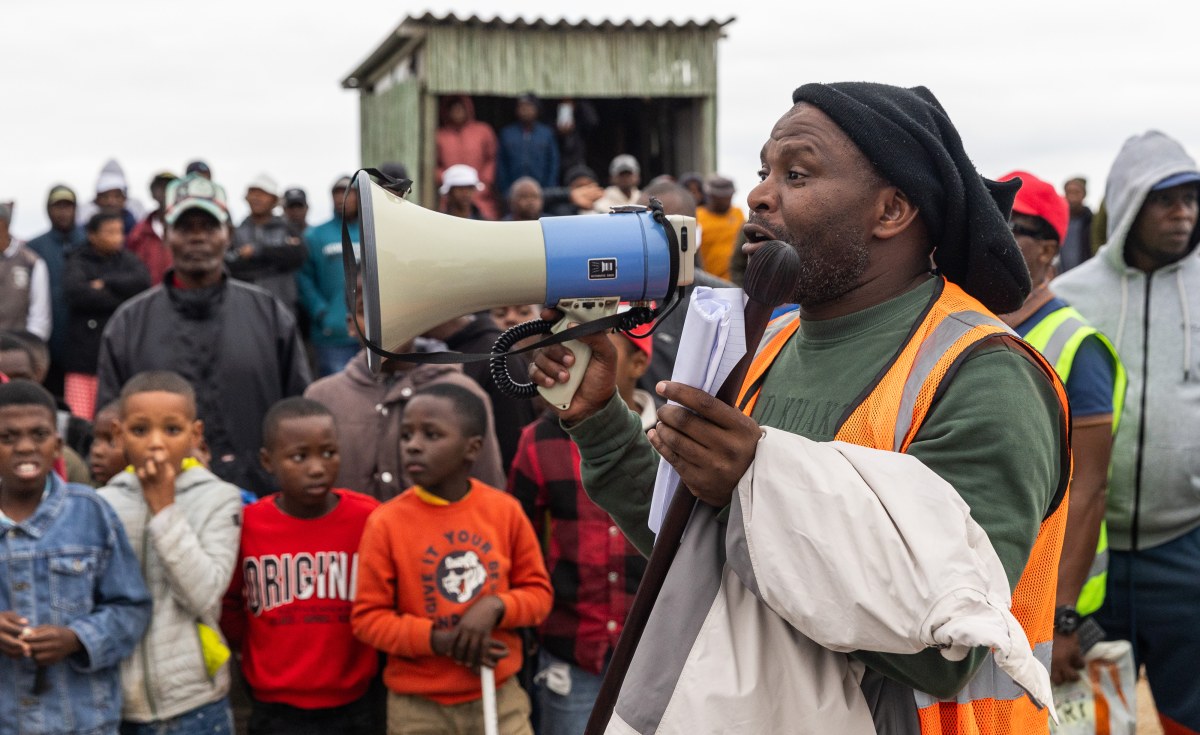
As of June 30, 2026, South Africa finds itself at a critical juncture regarding social cohesion, as anti-immigrant groups have designated this date as an arbitrary “deadline” for undocumented migrants to leave the country. While this date carries no legal weight and does not alter the immigration status of any individual, it has become a flashpoint for intensifying public debate and a surge in malicious disinformation. Following months of growing rhetoric and numerous violent protests across the nation, thousands of migrants have sought refuge in temporary shelters, fearing for their safety amidst a climate of rising xenophobia and widespread social volatility.
Africa Check, a leading fact-checking organisation, has launched a live report to monitor and debunk the most harmful narratives currently saturating social media. These fabrications are specifically designed to incite fear, deepen societal divisions, and mobilize political action through deception. The sheer volume of false information has seen a dramatic spike, ranging from doctored government documents bearing the national coat of arms to recycled, out-of-context video footage, all aimed at manipulating public perception to fuel further marginalization and, in some cases, justify violence.
A primary example of this digital malfeasance is a fraudulent “public notice” circulating online, which falsely claims the Department of Home Affairs is offering a R250 bounty for citizens who capture and report “illegal foreign nationals.” Fact-checkers have confirmed this document is entirely fake, noting glaring grammatical errors, non-existent contact information, and a blatant disregard for official government policy. President Cyril Ramaphosa and the Department of Home Affairs have explicitly distanced themselves from this notice, warning the public that only authorized law enforcement has the mandate to uphold immigration laws and that vigilantism is strictly prohibited.
The disinformation campaign has also weaponized misattributed video footage to construct false narratives of migrant aggression. In one instance, a video showing a crowd hurling stones at a police armored vehicle was shared with claims that foreign nationals in Johannesburg were forming armed “self-defense units” to attack locals. Investigative analysis revealed the footage was actually filmed in August 2019 during a police raid on shops selling counterfeit goods; it has no connection to either the current migrant protests or the year 2026. This recycled visual manipulation is a recurring tactic, intended to shock viewers by stripping away the original context of civil unrest.
Furthermore, investigators debunked a clip showing a private security vehicle being overturned, which was deceptively tagged as evidence of migrants attacking residents in the Mayfair suburb of Johannesburg. Geographic and chronological verification proved the video dated back to May 2020, during the height of the Covid-19 lockdown restrictions. The original incident involved a confrontation between police, residents, and a security company regarding movement restrictions—not a conflict involving migrants. The repeated misuse of such footage highlights a systematic effort by bad actors to repurpose old civil grievances as modern xenophobic “evidence.”
Perhaps most concerning is the emergence of AI-driven manipulation, evidenced by a doctored interview featuring a business owner purportedly claiming she was moving her factory to Mozambique because South Africans are “rude.” Digital forensic analysis revealed the video had been technologically altered: the original interview, conducted by Deutsche Welle, had been slowed, repitched, and overlaid with a fake SABC microphone graphic to lend it credibility. The woman’s speech in the viral version was manipulated to include inflammatory remarks she never actually made. As tensions remain high, experts warn that the use of such sophisticated disinformation tools represents a dangerous evolution in the effort to destabilize public order and incite communal conflict.


