


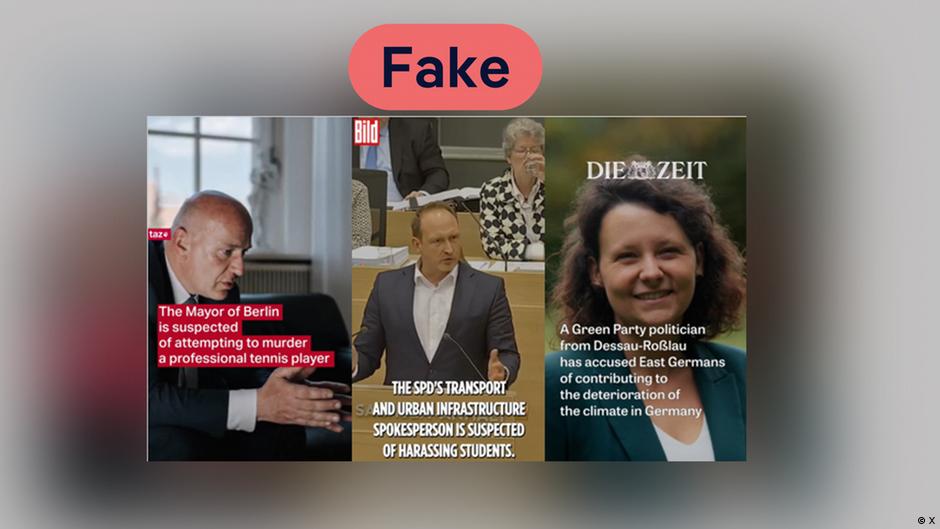
Eric Stehr, a Left Party candidate for the Saxony-Anhalt state parliament, recently became a target of a sophisticated disinformation campaign that utilized AI-generated fake videos to falsely link him to murder allegations and university scandals. The fabricated content was designed to mimic established German media outlets such as Spiegel TV and ARD, creating a convincing, albeit entirely false, narrative. Local authorities and university officials have officially confirmed that these claims are baseless, yet the incident highlights the growing vulnerability of political candidates to high-tech character assassination.
Investigations by DW Fact Check and the investigative collective Antibot4Navalny have traced these attacks to “Operation Matryoshka,” a persistent Russian influence campaign that has produced over 180 fake posts across social media platforms like X, Bluesky, and TikTok. Operating primarily on weekdays, the campaign systematically targets candidates running in upcoming German state elections. Experts believe this represents an escalation in strategy, as influence operations traditionally targeted national or international events rather than focusing on obscure, local-level political figures.
Researchers from the Center for Monitoring, Analysis and Strategy (CeMAS) and the Institute for Strategic Dialogue (ISD) suggest that the campaign is aimed at destabilizing German politics by discrediting parties deemed “unfriendly” to Moscow. Notably, candidates from the far-right Alternative for Germany (AfD) and the Sahra Wagenknecht Alliance (BSW) have been largely spared, signaling a clear political preference. Evidence, including linguistic errors—such as using Russian abbreviations for German political parties—points toward the involvement of actors connected to Russia’s military intelligence, the GRU.
The content disseminated by Operation Matryoshka broadly adheres to two themes: personal character assassination and the exploitation of societal grievances. Beyond targeting individual politicians like Berlin Mayor Kai Wegner with fabricated criminal accusations, the campaign promotes content suggesting a deepening, hostile divide between eastern and western Germany. By manufacturing fake reports of systemic discrimination and even predicting a new “Berlin Wall,” the operation seeks to cultivate internal discord and undermine confidence in the current German government.
Despite the professional polish of the deepfakes, experts argue that the overall impact remains limited. While individual videos may garner thousands of views through artificial amplification, genuine engagement—such as shares and comments—remains low, suggesting the campaign has not yet achieved widespread public traction. Furthermore, platforms like TikTok and Bluesky have shown a greater willingness to remove the disinformation, though X has frequently refused requests to delete the offending content, leaving victims like Stehr frustrated and forced to seek legal remedies.
Ultimately, the Matryoshka operation serves as a warning about the evolution of digital influence campaigns in an election cycle. While the current impact may be modest, the ability of foreign actors to leverage AI for rapid, scalable, and targeted harassment poses a persistent challenge to democratic integrity. For victims like Stehr, the process of clearing one’s name is an uphill battle against an automated, persistent, and often unchecked digital infrastructure, forcing candidates to navigate a landscape where truth is increasingly obscured by the volume of manufactured lies.