


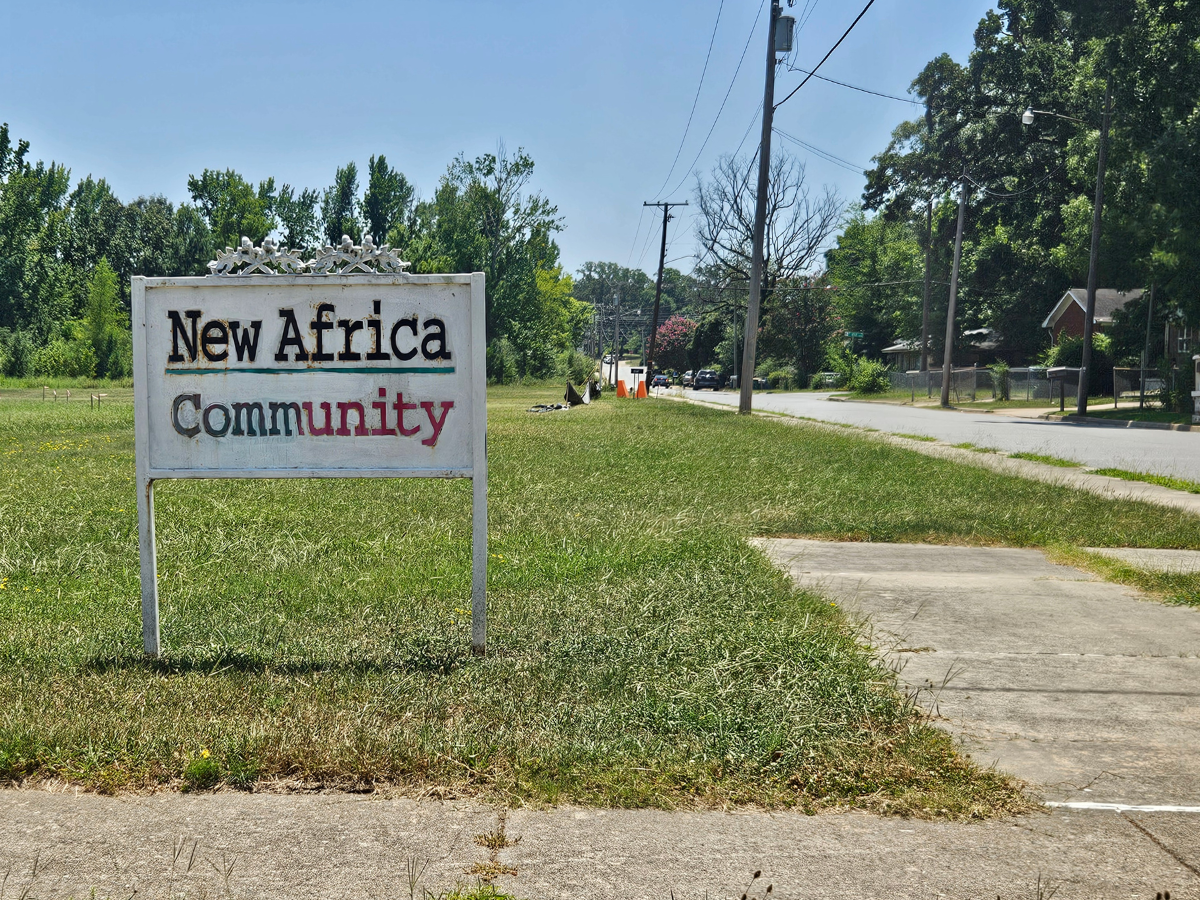
A persistent wave of misinformation has targeted “New Africa,” a small, two-decade-old residential development in Little Rock’s John Barrow neighborhood established by the Islamic Center for Human Excellence. Despite being a modest project consisting of just five houses—some occupied by Christians—the development has been inaccurately characterized on social media as an exclusionary “Islamic enclave” or a radical “sharia law” compound. These false narratives, which suggest residents are forced to adhere to strict religious codes or are being governed by independent, un-American legal systems, have gained significant traction among online influencers and political figures, despite repeated local efforts to debunk them.
The disinformation campaign traces back to an article published by the RAIR Foundation, an organization labeled an anti-Muslim hate group by the Southern Poverty Law Center. In early April 2026, pro-Trump influencer Terrence K. Williams amplified these claims to his millions of followers, triggering a viral chain reaction. The movement eventually reached the highest levels of Arkansas state government; in July, Governor Sarah Huckabee Sanders and Attorney General Tim Griffin issued official statements regarding the project, effectively lending political legitimacy to debunked internet conspiracy theories and further fueling public outrage.
The rhetoric has manifested in legislative attempts to curb imaginary threats, such as the proposed “Arkansas Property Rights Protection From Sharia Law Act.” While the bill failed to pass during the 2026 fiscal session, its introduction signaled that online misinformation had successfully moved from extremist forums into the state capitol. Supporters of the legislation openly cited the “viral posts” about the Islamic Center as their inspiration, and there is growing concern that similar, performative anti-Islamic bills will resurface when the legislature reconvenes in 2027, prioritizing manufactured culture-war grievances over factual reality.
In reality, the developers of New Africa describe the project as a community-driven initiative aimed at urban revitalization and neighborhood improvement. Faruq Rasheed, the resident imam, and development team member Tauheed Salaam emphasize that the “Bill of Assurance” signed by homeowners acts no differently than standard homeowners association (HOA) covenants. These agreements are intended to maintain property values and promote civil conduct—such as discouraging illegal activity—rather than imposing religious mandates. The founders explicitly reject the claims that they govern via sharia law, noting that their goal is to foster a safe, responsible neighborhood for all citizens, regardless of faith.
The developers clarify that their religious principles serve as a moral framework for community engagement, much like the Ten Commandments might for a Christian neighborhood, rather than a system of legal enforcement. They maintain that what occurs within a resident’s private home is strictly personal, and the development is not an isolated bubble, but a participant in the broader growth of the John Barrow district. They compare their efforts to other successful urban renewal projects in Little Rock, focusing on bringing businesses and housing stock back to an area they hope to see flourish as a vibrant, inclusive space.
This controversy serves as a stark case study on the mechanics of modern digital misinformation and its real-world consequences. A false narrative, birthed by an extremist group, was laundered through social media influencers and eventually adopted by government officials who prioritized viral engagement over evidence. While the residents of New Africa have experienced no direct physical incidents, they have been forced to increase security as a precaution against the hostility ignited by these unfounded rumors. As the cycle continues, the experience of the New Africa community underscores how easily local facts can be discarded in favor of fear-based political grandstanding.