


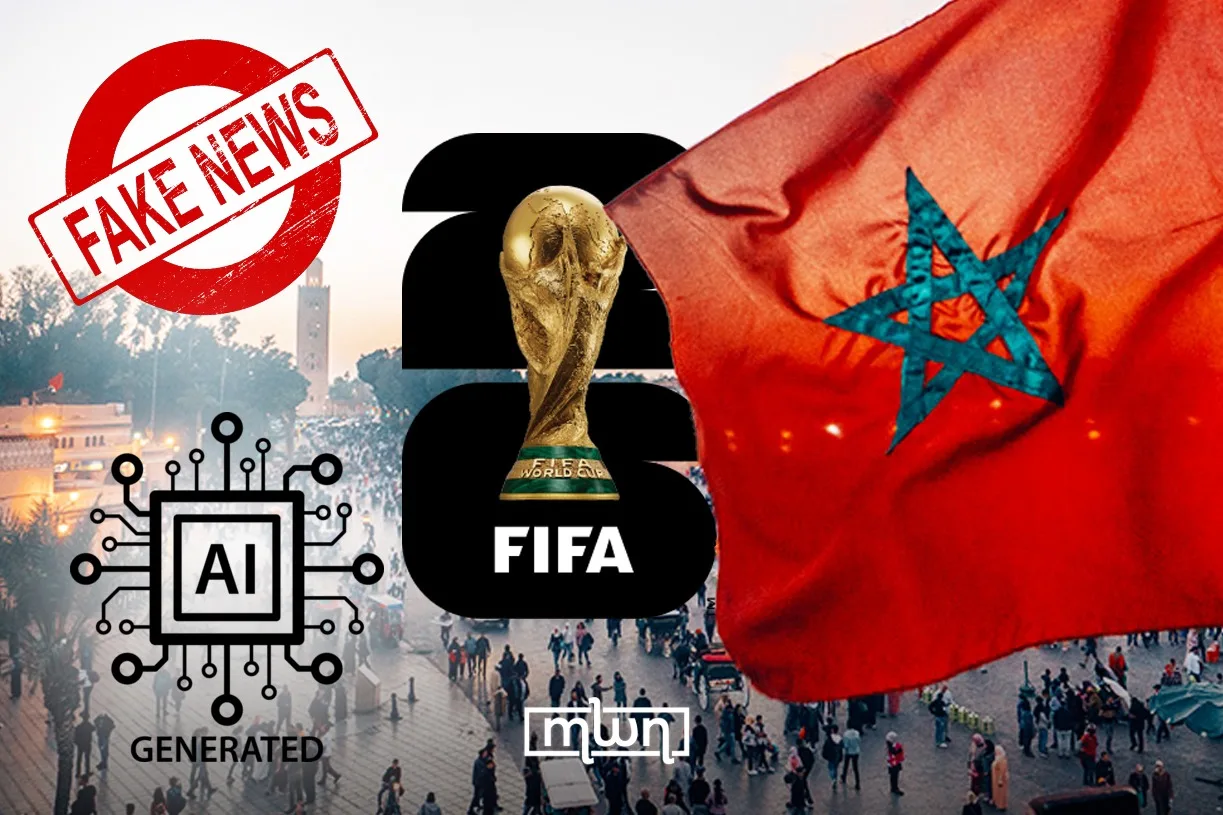
The recent 2026 FIFA World Cup served as a digital battleground for Morocco, where the team’s on-pitch performance was mirrored by intense, often volatile, conflicts taking place across social media. According to a new report by the Moroccan Observatory of Media and Digital Vigilance (OMVMN), Morocco’s digital presence transcended sports, evolving into a venue for “symbolic competition” regarding national identity, reputation, and soft power. Monitoring over 500 digital touchpoints across North Africa, the Middle East, and Europe, the study reveals that the tournament acted as a catalyst for fans, influencers, and organized entities to utilize the national team as a proxy for broader geopolitical and media-driven agendas.
This digital footprint was characterized by a distinct duality: Morocco was simultaneously celebrated as a modern sporting and organizational model, while also being subjected to systematic campaigns of bias, skepticism, and mockery. The observatory notes that the national team has become a primary vehicle for national pride, with flags, anthems, and team success being used as digital markers for Morocco’s international standing. However, this visibility made the country a frequent target for adversarial accounts, proving that a nation’s online image is now inextricably linked to the complex, often fractured political and cultural landscapes of the digital platforms where these debates unfold.
The report identifies disinformation—specifically fake news and AI-generated content—as the most significant challenge to Morocco’s image during the tournament. Malicious actors utilized fabricated statements and manipulated visual media to target Morocco’s national identity and foreign relations, with AI-driven content becoming increasingly difficult to distinguish from authentic reports. These efforts were amplified by identity-based polarization, specifically involving accounts from Egypt and Algeria. Furthermore, the observatory highlights how “emotional reactivity” among Moroccan social media users unwittingly fueled these campaigns; by engaging heavily with provocative content, fans inadvertently granted these inflammatory posts the viral momentum their creators desired.
The findings underscore a fundamental shift in how public opinion is shaped, moving away from traditional journalism toward an ecosystem dominated by influencers and individual content creators. These digital actors frequently prioritize the “logic of the digital economy”—maximizing engagement and viewership—over factual integrity. While support for Morocco remained strong across various African and Middle Eastern digital spheres, it was often tempered or redirected by the political climates of those respective countries. The observatory warns that the tendency of Moroccan users to judge entire nations based on their online reactions to the national team has introduced a volatile, emotional dimension to international relations that can be easily exploited.
To combat these challenges, the OMVMN has issued a comprehensive 12-point recommendation plan aimed at fortifying Morocco’s “digital diplomacy.” The cornerstone of this strategy is the establishment of a permanent, high-tech monitoring system designed to detect and neutralize disinformation campaigns in their early stages. The observatory emphasizes that waiting for misinformation to go viral is no longer a viable strategy; instead, Morocco must proactively invest in AI-powered verification tools and nurture a coordinated digital strategy that aligns national institutions, experts, and content creators to effectively tell the country’s own story on the global, multilingual stage.
Ultimately, the report argues that safeguarding Morocco’s image in the digital age requires a shift from passive observation to active, strategic engagement. By fostering public digital literacy and building the capacity for rapid, evidence-based responses to fake news, Morocco can better protect its reputation from external influence campaigns. As the line between sporting competition and digital warfare continues to blur, the observatory’s findings serve as a critical wake-up call for the nation to secure its digital sovereignty and ensure that the narrative surrounding its international presence is grounded in reality rather than manipulation.