


Local Leaders Convene in Brussels to Forge Front Against Disinformation as EU Enlargement Gains Momentum
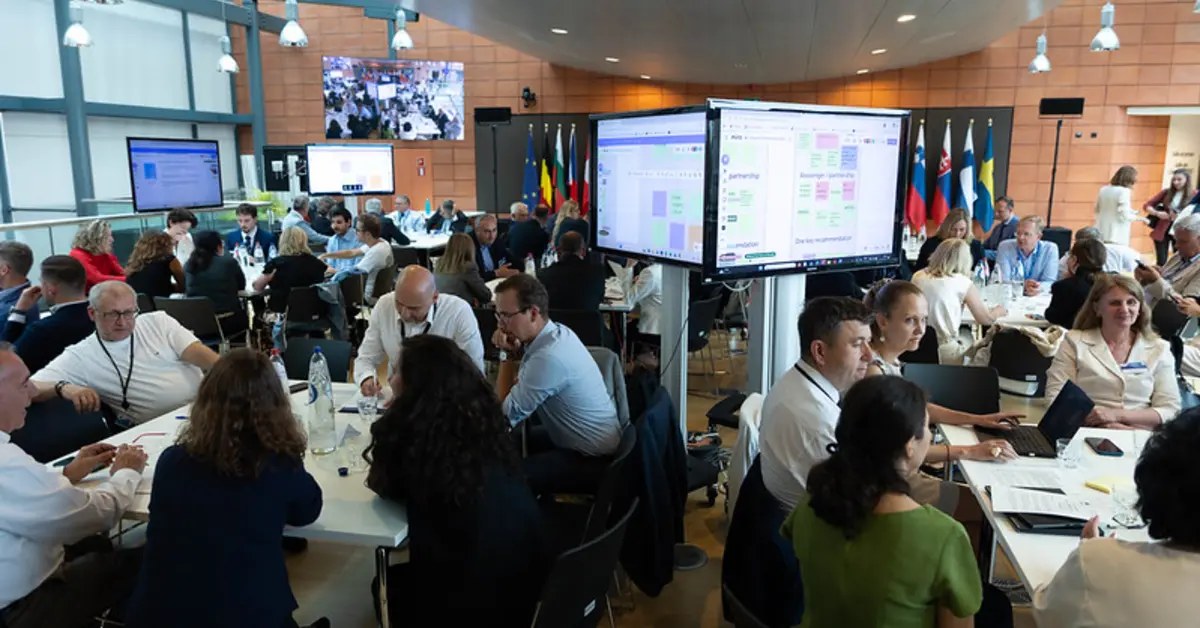
Local and regional leaders from across the European Union and candidate countries gathered in Brussels on June 2–3 for the European Committee of the Regions’ (CoR) annual “Enlargement Days.” Held at a pivotal juncture preceding crucial June 15 negotiations on the accession of Ukraine and Moldova, the conference served as a strategic forum for discussing the mechanisms of EU expansion. Beyond the logistics of integration, the event centered on an urgent collective priority: safeguarding democratic resilience against the rising tide of foreign information manipulation and interference (FIMI). As the EU prepares to welcome new members, attendees emphasized that the process is not merely a geopolitical policy, but a cultural and information war that must be fought at the grassroots level.
Keynote speaker Vitaliy Klitschko, Mayor of Kyiv and President of the Association of Ukrainian Cities, provided a sobering look at the reality of this “four-front” war. Highlighting the stark contrast between official Russian messaging and the physical destruction visited upon civilian infrastructure—including hospitals and schools—Klitschko underscored that objective, timely communication is as vital to national survival as military defense. Through his leadership in the war-torn capital, Klitschko articulated that the Ukrainian pursuit of European integration is a direct reflection of a desire for democracy, framing clear and transparent information as the ultimate remedy to the weaponized disinformation deployed by the Kremlin.
The conference highlighted that the battle against disinformation cannot be conducted solely by central governments. Magali Altounian, Chair of the CoR’s CIVEX commission, argued that because disinformation exploits societal divisions and erodes trust, the most effective response originates from local authorities—the closest link between governance and citizens. Participants stressed that local leaders are often the most trusted voices in their communities, making them essential partners in identifying and neutralizing hostile narratives. To this end, the CoR is currently developing recommendations for the “European Democracy Shield,” an initiative designed to provide local governments with the necessary capacity, technical resources, and knowledge to protect public discourse.
The urgency of this cooperation is underscored by the shifting geopolitical landscape. With Moldova securing enhanced institutional standing and Montenegro maintaining its position as a frontrunner for accession, the conference emphasized that administrative integration will fail without public buy-in. Petras Auštrevičius, the European Parliament’s rapporteur on enlargement, warned that the EU must remain both innovative and strategic in its communication, cautioning that in an era of intense global competition, the European community will either “win together or lose together.” The participants agreed that illustrating the economic and social stability of accession is the most effective way to counter foreign interference.
The discussions also served as a catalyst for future policy, with the CoR finalizing its position on the European Democracy Shield ahead of an October plenary vote. The initiative aims to enhance media literacy, broaden civil society support, and strictly monitor the risks posed by emerging technologies such as artificial intelligence. By integrating local and regional authorities into the broader European framework, policymakers hope to create a cohesive defense that shields citizens from manipulation and maintains a unified front. The insights from these days of dialogue are set to inform subsequent high-level gatherings, including the EuroPCom conference, ensuring that the fight against information warfare remains firmly at the center of the European agenda.
Ultimately, the consensus at Enlargement Days was that transparency is the bedrock of future expansion. Whether addressing the concerns of citizens about the economic impacts of enlargement or defending institutional legitimacy, the participants maintained that “constant, honest, and local” communication is the only way to sustain European cohesion. By elevating the role of local leaders, the EU is moving toward a more decentralized, resilient, and inclusive model of democratization. As the bloc inches closer to adding new states, the lesson remains clear: the success of the EU’s future relies not only on treaties in Brussels but on the strength of democracy in every village, town, and city across the continent.