








The Digital Frontlines: Vladyslav Novikov on War, Truth, and Technology
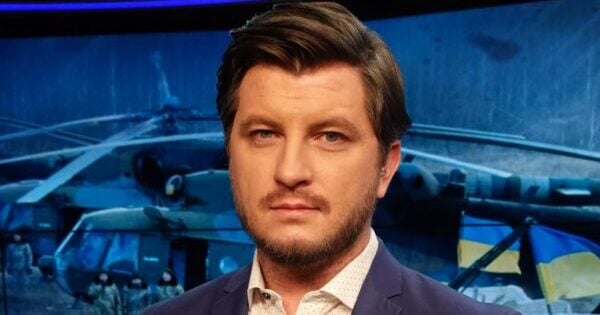
Ukrainian journalist and investigator Vladyslav Novikov, a key figure at 24 Channel, has dedicated his career to navigating the treacherous landscape of modern warfare through open-source intelligence (OSINT). As the creator of the Alabuga Case Archive, Novikov meticulously documents Russia’s drone-production network, analyzing sanctions loopholes and wartime recruitment strategies. His work serves as a critical bridge between raw digital evidence and public clarity, positioning him as an essential witness to the Russian state’s information operations and institutional tactics during the full-scale invasion.
In an intimate discussion with writer Scott Douglas Jacobsen, Novikov reflects on the profound psychological toll of the conflict. He notes that the war has fundamentally altered his perception of reality, dampening his emotional responsiveness to both positive and negative stimuli. Rather than dwelling on personal distress, Novikov has channeled his experiences into a disciplined, mission-driven approach to journalism. He maintains that while the war has upended his career and personal life, his responsibility to document the truth remains a constant, necessary directive in an environment defined by crisis.
Addressing Western policymakers, Novikov warns that the defense of democracy must extend beyond the supply of conventional weaponry. He argues that the future of the war rests on technological parity, specifically regarding access to semiconductors, artificial intelligence, and advanced computing. According to Novikov, Western analysts must recognize that democratic openness—while a virtue—is also a strategic vulnerability that Russia exploits through sophisticated influence operations. He stresses that whoever secures a lead in emerging technologies will hold the decisive advantage, not just in kinetic combat, but in the pervasive sphere of digital influence.
A major focus of Novikov’s research is the systemic nature of Russian disinformation, exemplified by campaigns like Storm-1516. Unlike traditional propaganda, these operations aim to overwhelm the information environment with a high volume of conflicting narratives, making it difficult for the public to discern fact from fiction. Novikov emphasizes that the strategy is not necessarily to convince users of one specific lie, but to drown the truth in a sea of ambiguity. By exposing these tactics, he views his work as a, albeit small, necessary defense of democratic coherence and public trust.
Novikov identifies a significant bottleneck in the Ukrainian research community: the lack of systemic coordination. While there is an abundance of brilliant, independent initiatives—such as “Stars About War,” which tracks the wartime rhetoric of Russian public figures—many of these projects operate in total isolation. He suggests that the next phase of Ukraine’s resistance requires creating stronger feedback loops between independent researchers, journalists, and state institutions. Greater collaboration, he argues, would allow grassroots efforts to scale their impact and better align with the strategic goals of the state.
Despite the inherent risks of investigative journalism, Novikov dismisses the notion that his work puts him in danger from Ukrainian authorities. He maintains that the common cause of national survival aligns the goals of journalists, activists, and government bodies. Looking toward the future, Novikov underscores that while the war presents insurmountable challenges, it has also forged a resilient community of researchers and communicators. For Novikov, the work is never finished; it is a relentless, evolving commitment to ensuring that the record of Russia’s actions is preserved, no matter how emotionally taxing the reality may be.


