


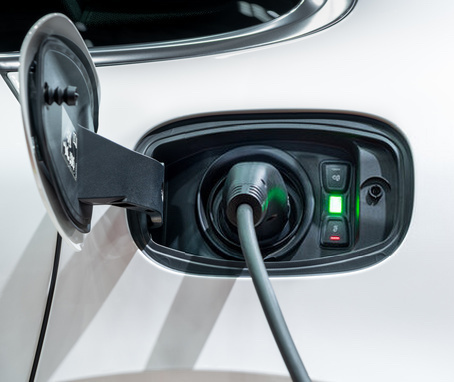
A new report from the Victorian Legislative Council Economy and Infrastructure Committee has identified a widespread crisis of misinformation as the primary roadblock to electric vehicle (EV) adoption in the state. Despite the growing popularity of EVs—which accounted for over 16% of new car sales in Australia by April 2026—public perception remains clouded by myths regarding range, infrastructure, safety, and battery longevity. To combat these persistent misconceptions, the committee has issued 109 findings and 40 recommendations, most notably urging the Victorian Government to launch a comprehensive public education campaign to align consumer understanding with modern technological realities.
Central to these public concerns is the issue of “range anxiety,” which the inquiry posits is increasingly disconnected from the capabilities of modern vehicles. While many Australians fear being stranded, the committee noted that contemporary EVs typically offer a range of 400 to 600 kilometers per charge, far exceeding the average daily commute of just 40 kilometers for most Victorian drivers. Industry experts, such as Ross De Rango of Vehicle Charging Solutions Australia, emphasized that high-speed charging infrastructure is already well-dispersed across regional routes, and further reinforced that the vast majority of charging—roughly 80%—occurs conveniently at home overnight rather than at public stations.
Safety concerns, particularly regarding fire risks, also emerged as a significant barrier that the committee aims to dismantle. Experts testified that EVs are statistically less likely to catch fire than internal combustion engine vehicles, and that public alarm is often fueled by a conflation of high-standard EV batteries with the unregulated lithium-ion units found in e-scooters and e-bikes. By distinguishing between these technologies, the inquiry seeks to neutralize fear-based hurdles that have historically stunted consumer confidence in electric mobility.
The report also addressed long-term worries regarding battery lifespan, citing evidence that modern EV batteries are proving to be exceptionally durable. According to testimonies from the Australian Electric Vehicle Association, batteries are often outliving the vehicles themselves, with many retaining up to 95% of their capacity even after 200,000 kilometers of use. Furthermore, the report highlights that the burgeoning battery recycling sector in Australia is already a major economic engine, contributing $2.1 billion annually and expected to triple its workforce by 2050, effectively debunking the myth that EV batteries create an unmanageable disposal problem.
Beyond the individual benefits, the inquiry challenged the narrative that a surge in EV ownership would crash the state’s electricity grid. Instead, the evidence presented suggests that EVs could function as a critical tool for energy stability. Through vehicle-to-grid (V2G) and vehicle-to-home technology, parked electric cars can act as mobile batteries, storing excess renewable energy and feeding it back into the grid during peak usage hours. Experts from the Monash Energy Institute noted that “smart” or coordinated charging could actually halve future peak energy demand, turning the perceived threat of EVs into a powerful asset for grid reliability.
Ultimately, the committee’s findings point toward a future where the integration of EVs into Victoria’s energy system is not a burden, but a solution to many of the state’s energy infrastructure challenges. By recommending that the government fund more trials for bidirectional charging and invest heavily in correcting public misinformation, the inquiry aims to pivot the conversation from fear to opportunity. As the global market shifts toward electrification, the report serves as a roadmap for Victoria to shed outdated myths and embrace the economic and environmental advantages of a cleaner, more efficient transportation network.